
In modern municipal and large-scale infrastructure projects, High-Quality Steel Light Poles serve as the critical backbone for ensuring public safety and supporting smart city technologies. This comprehensive guide explores the engineering standards, material durability, and selection criteria for Steel Light Poles. By understanding these technical specifications, project managers can make data-driven decisions that ensure long-term structural reliability and maximize the return on investment for any infrastructural development.
Core Definitions and Material Advantages
Steel Light Poles are precision-engineered tubular or tapered structures manufactured to withstand high wind loads and support heavy illumination equipment. High-carbon and low-carbon steel variants offer superior tensile strength compared to traditional wood or lightweight aluminum alternatives. This exceptional structural rigidity makes heavy-duty steel light poles indispensable for massive infrastructural deployments requiring immense load-bearing capabilities.
The physical limitations of raw materials directly dictate the maximum capacity and safety of High-Quality Steel Light Poles. According to the AASHTO 2024 Guidelines for Structural Supports, steel components in highway applications must meet stringent fatigue design criteria to prevent structural micro-cracks. Strict compliance with these federal specifications guarantees absolute engineering safety over decades of continuous environmental exposure.
Primary Applications in Modern Infrastructure
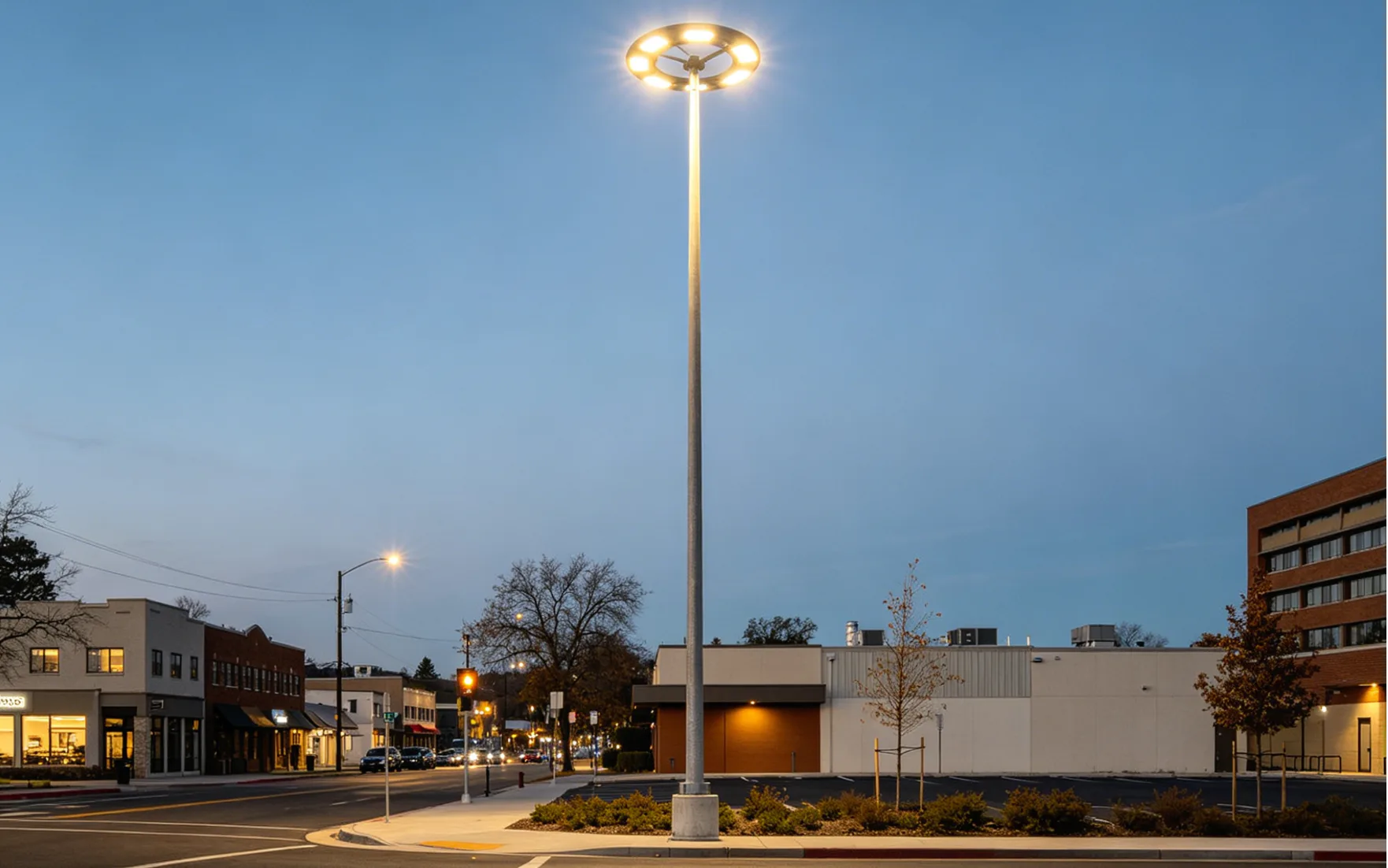
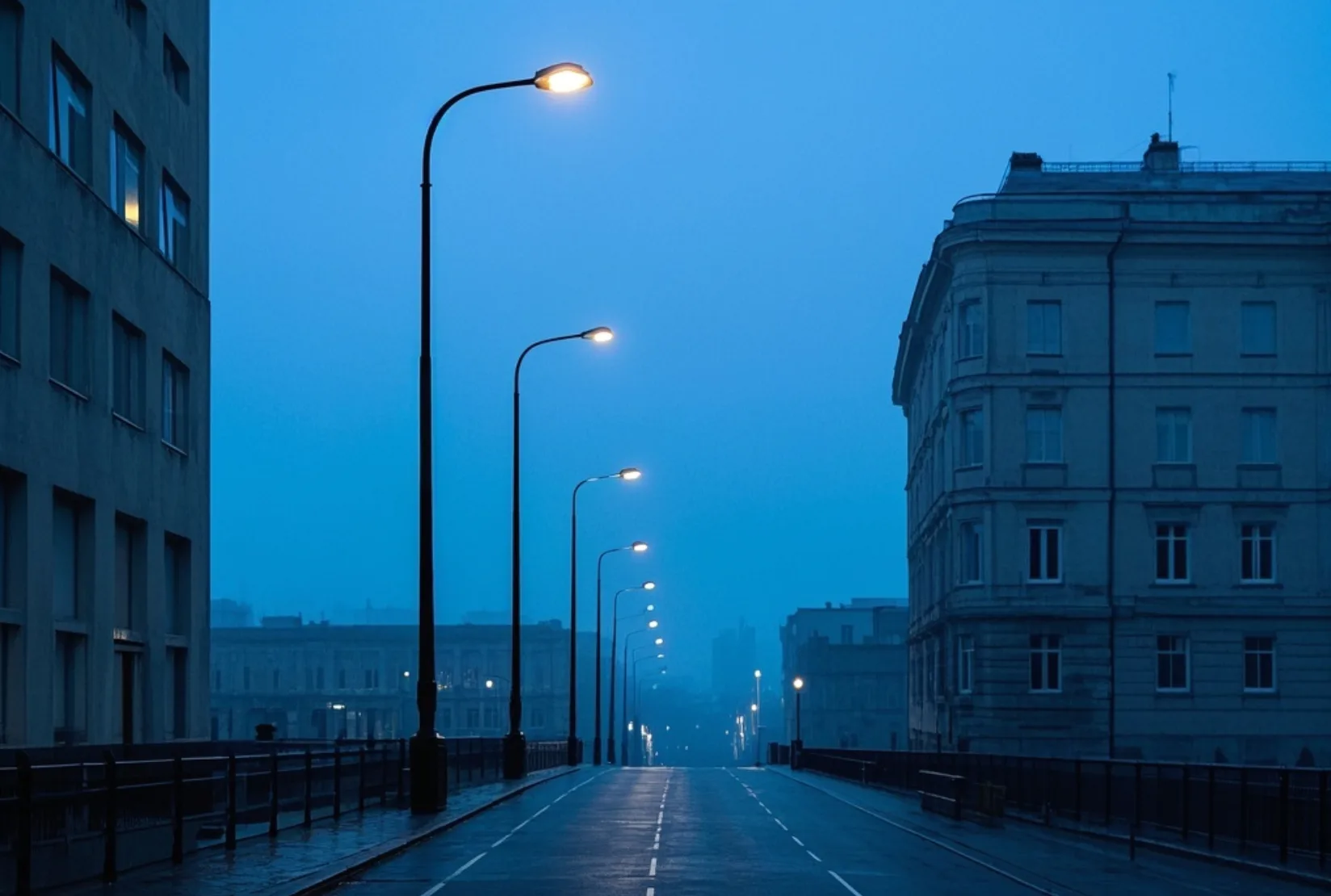
Roadway lighting poles are primarily deployed along highways and major urban arteries to guarantee optimal nighttime visibility for drivers. These commercial steel lighting structures typically range from 15 to 40 feet in height, securely supporting high-lumen industrial LED fixtures. The engineering focus remains on broad illumination coverage and breakaway safety mechanisms to significantly reduce secondary collision injuries.
For premium commercial developments and historical districts, a Decorative Pole provides essential illumination while significantly elevating the aesthetic value of the urban landscape. High-Quality Steel Light Poles in this category feature intricate European-inspired or modern minimalist geometries. They undergo rigorous powder-coating processes to maintain superior rust resistance without sacrificing architectural beauty.
Smart poles represent the digital future of municipal infrastructure by physically integrating lighting, 5G micro-basestations, surveillance cameras, and environmental sensors. Because of their unmatched physical resilience, Steel Light Poles remain the ideal carriers for these heavy, multi-functional modules. This integrated approach drastically reduces the excavation and construction costs associated with redundant city planning.
Engineering Specifications and Load Calculations
Precise environmental load calculations determine the long-term viability of High-Quality Steel Light Poles. Engineers must rigorously evaluate local wind zone ratings, the Effective Projected Area (EPA) of the luminaires, and the specific geological soil conditions. The EPA serves as the most critical variable dictating the necessary wall thickness and foundation depth for galvanized steel light poles.
Miscalculating the EPA or wind load parameters can cause the support structure to experience catastrophic mechanical failure during extreme weather events. Consequently, procurement teams must verify that the rated capacity of the Steel Light Poles exceeds the combined EPA of all attached fixtures plus a standard safety margin. Rigorous mathematical modeling prevents dangerous structural bending.
Table 1: Material Comparison for Infrastructure Poles
| Evaluation Criteria | Steel Light Poles | Aluminum Poles | Concrete Poles |
|---|---|---|---|
| Tensile Strength | Extremely high; ideal for heavy equipment | Moderate; suited for lightweight fixtures | High compression, low tensile strength |
| Average Lifespan | 15–50 years (depends on surface treatment) | 50+ years (natural oxidation resistance) | 40+ years (prone to micro-cracking) |
| Installation Cost | High; requires heavy lifting machinery | Low; lightweight and easy to handle | Very high; extremely heavy logistics |
| Max Safe Height | Can exceed 60 feet (sports hubs) | Usually restricted to under 30 feet | Typically limited to 40 feet |
Geotechnical Foundations and Installation
The foundation design for High-Quality Steel Light Poles requires meticulous geotechnical surveying prior to installation. Engineers analyze soil bearing capacity, groundwater levels, and frost depth to determine the appropriate concrete footing dimensions. Anchor-base steel light columns rely heavily on precisely cast-in-place concrete foundations reinforced with industrial rebar to maintain vertical alignment.
Direct burial Steel Light Poles offer an alternative installation method suitable for specific soil conditions and rigid budget constraints. This technique involves embedding the lower portion of the tubular steel light pole directly into the earth. While this reduces initial hardware costs, it necessitates specialized below-ground anti-corrosion coatings to effectively combat soil-borne acidity and moisture.
Corrosion Protection and Longevity
Hot-dip galvanizing stands out as the most effective anti-corrosion treatment for extending the physical lifespan of Steel Light Poles. This metallurgical process creates a dense zinc-alloy protective barrier that successfully repels ground moisture and airborne salt spray. Industry estimates suggest that dual-treated outdoor steel lighting poles can easily surpass 40 years of maintenance-free service.
Powder coating over galvanized High-Quality Steel Light Poles provides an additional layer of protection against ultraviolet degradation and chemical exposure. This duplex coating system not only enhances the visual appearance but also seals any microscopic pores in the underlying zinc layer. Such redundant protection proves vital for infrastructure located in highly corrosive industrial zones.
Vibration Mitigation and Fatigue Resistance
Aeroelastic phenomena, such as vortex shedding, pose significant fatigue risks to High-Quality Steel Light Poles in open terrain. When steady, low-velocity winds strike the cylindrical structure, alternating vortices create transverse oscillations. Over millions of cycles, these vibrations can induce microscopic cracks near the heat-affected zones of the heavy-duty steel light poles.
Installing internal or external vibration dampeners drastically extends the operational lifespan of Steel Light Poles. First-mode and second-mode dampeners absorb kinetic energy, preventing the structural shaft from reaching its resonant frequency. Engineers routinely specify these protective devices for poles exceeding 30 feet, particularly in coastal regions or wide-open highway interchanges.
Table 2: High-Quality Steel Light Poles Selection Checklist
| Checklist Item | Key Engineering Metrics | Project Manager Recommendation |
|---|---|---|
| Wind Rating | 80 mph to 180 mph | Coastal areas require a minimum 150 mph structural rating with thicker gauge steel walls. |
| EPA Capacity | Total windward area | Ensure the pole’s rated EPA exceeds the total fixture EPA plus a 20% safety margin. |
| Surface Finish | Galvanized / Powder Coated | Select a duplex coating (hot-dip + powder coat) for maximum longevity in public works. |
| Base Type | Anchor Base / Direct Burial | Prioritize anchor bases for urban roadways to allow rapid replacement after vehicle collisions. |
Industry Compliance and Energy Efficiency
Large-scale lighting systems must strictly adhere to local and international engineering codes to mitigate systemic infrastructural risks. The U.S. Department of Energy (DOE) strongly advocates pairing high-efficiency LED technology with robust structural supports. This combination reduces overall energy consumption by nearly half while precisely controlling harmful light pollution.
High-Quality Steel Light Poles facilitate the exact optical positioning required to meet these stringent energy efficiency mandates. By maintaining rigid stability under heavy wind loads, these municipal steel light poles ensure that the photometric distribution remains perfectly aligned. Consistent alignment prevents energy waste associated with misdirected illumination.
Long-Term Maintenance and Inspection Protocols
Continuous and standardized maintenance inspections hold the key to preserving the structural integrity of Steel Light Poles. According to technical guidelines from authoritative lighting institutions like Acuity Brands, maintenance crews must routinely inspect the basal welds and anchor bolts. Early detection of hidden corrosion prevents disastrous and costly infrastructural collapses.
Routine structural assessments should utilize non-destructive testing methods to evaluate High-Quality Steel Light Poles. Ultrasonic testing and magnetic particle inspection can reveal microscopic structural anomalies before they propagate through the steel shaft. Implementing these proactive maintenance protocols ensures the public safety of aging infrastructure networks.
Supply Chain and Procurement Considerations
Globally competitive manufacturers of Steel Light Poles must possess comprehensive in-house fabrication capabilities, ranging from CNC steel cutting to automated laser welding. This stringent end-to-end quality control system keeps physical defect rates of industrial steel light poles below standard industry thresholds. Consistent manufacturing quality directly correlates with field safety.
The reliability of the global supply chain directly impacts the execution timelines of massive infrastructure projects. Selecting a Steel Light Pole vendor capable of transparent pricing and rapid technical support minimizes procurement friction. For bulk deployments involving Flag poles or standard Garden poles, robust manufacturing capacity acts as the project’s critical lifeline.
Conclusion
Deploying High-Quality Steel Light Poles at scale represents a profound long-term capital investment in public infrastructure. By strictly adhering to international structural codes and precisely matching EPA environmental loads, engineering teams guarantee the absolute reliability of urban lighting systems. Making informed choices regarding materials, structural dampening, and reputable suppliers lays the strongest physical foundation for nighttime safety and future smart city integrations.
Frequently Asked Questions (FAQ)
Q1: What is the average expected lifespan of standard steel light poles?
The operational lifespan of steel light poles generally ranges from 15 to 50 years. This longevity relies heavily on the installation environment and the specific anti-corrosion treatments applied. Utilizing hot-dip galvanization combined with polyester powder coating effectively prevents rust, ensuring the structural integrity remains intact for decades.
Q2: How do engineers determine the correct height for infrastructure poles?
Pole height is dictated by the specific application and the required photometric coverage area. Standard urban roadways utilize 15 to 30-foot poles for uniform visibility. Conversely, large highway interchanges or sports complexes often require high-mast structures exceeding 60 feet to eliminate dangerous dark zones across massive areas.
Q3: Why is calculating the EPA essential for procuring steel light poles?
The Effective Projected Area (EPA) mathematically measures the wind resistance of the luminaires and brackets attached to the pole. Accurate EPA calculations guarantee the support structure possesses sufficient tensile strength. This metric prevents mechanical bending or catastrophic failure during severe storms or sustained high-wind events.
Q4: Are traditional steel poles compatible with modern smart city technologies?
Yes. Due to their exceptional structural rigidity, steel light poles serve as the optimal physical foundation for Internet of Things (IoT) deployments. Their hollow, heavy-duty tubular design safely supports the substantial added weight of EV charging modules, 5G micro-antennas, and environmental sensors without compromising mechanical stability.
Q5: What are the primary differences between steel and aluminum support poles?
Aluminum poles offer natural corrosion resistance and are lightweight, making manual installation easier. However, steel poles dominate in yield strength and maximum load-bearing capacity. For infrastructure requiring heavy illumination arrays or facing extreme wind zones, steel provides unmatched physical toughness and superior cost-effectiveness.