
Selecting the optimal material for municipal or commercial lighting infrastructure involves evaluating long-term durability, structural integrity, and total cost of ownership. Steel light poles offer superior mechanical strength and wind resistance, while aluminum alternatives prioritize corrosion resistance and lightweight handling. This guide provides a technical comparison to help project managers determine which material serves their specific environmental and budgetary requirements.
Definition of Steel and Aluminum Lighting Structures
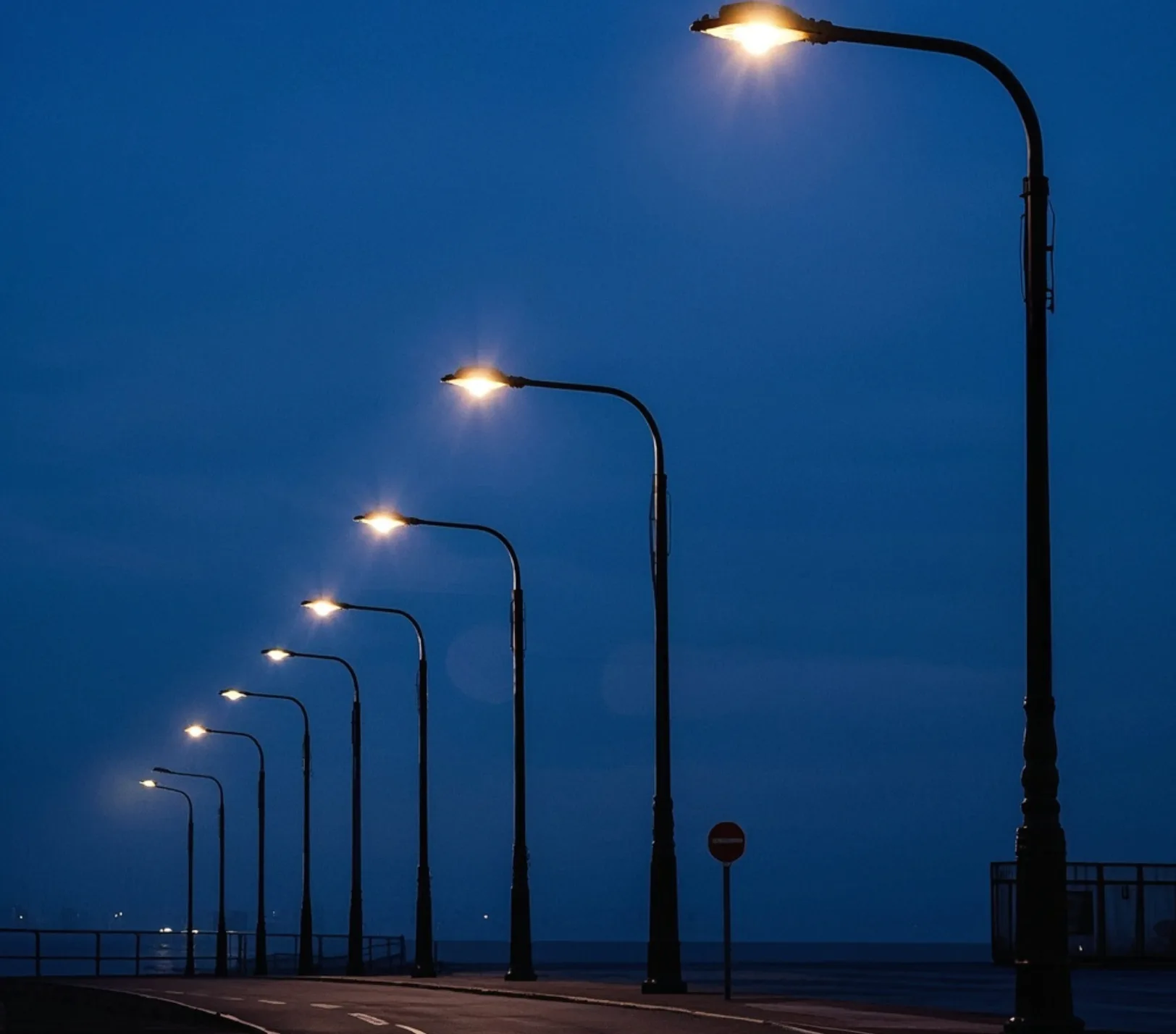
A Steel Light Pole is a structural support column manufactured from high-strength carbon steel, typically finished with hot-dip galvanization to prevent oxidation. In contrast, an aluminum pole is extruded from 6000-series alloys, offering a natural oxide layer that resists rust without additional coatings. While both serve the primary function of supporting luminaires, their performance diverges significantly under extreme weather conditions and mechanical loads.
Structural Strength and Load-Bearing Capacity
Steel remains the industry standard for high-mast and heavy-duty applications due to its high tensile strength and modulus of elasticity. Standard Steel Light Poles can support larger EPA (Effective Projected Area) ratings, allowing for multiple heavy LED fixtures or 5G small cell equipment on a single shaft. Aluminum, being a more ductile metal, has a lower vibration dampening capacity and may require internal dampers in high-wind zones to prevent fatigue cracking.
Comparison Table: Material Properties and Performance
| Feature | Galvanized Steel Light Poles | Anodized Aluminum Poles |
|---|---|---|
| Tensile Strength | High (Up to 50,000+ PSI) | Moderate (Approx. 35,000 PSI) |
| Corrosion Resistance | Excellent (with Hot-Dip Galvanizing) | Superior (Natural Oxide Layer) |
| Weight | Heavy (Requires Cranes) | Lightweight (Manual Handling Possible) |
| Lifespan | 25–50 Years | 50+ Years |
| Initial Cost | Lower | Higher |
| Best Application | Highways, Stadiums, Smart Cities | Coastal Roads, Residential Areas |
Corrosion Resistance in Diverse Environments
Environmental factors are the primary drivers of material degradation. In inland environments with low humidity, a Steel Light Pole protected by ASTM A123 hot-dip galvanization provides a virtually maintenance-free service life of over 30 years. However, in coastal regions with high salinity, aluminum is often preferred because it does not require a protective coating to resist salt spray. For projects requiring the strength of steel in corrosive areas, specialized powder coatings over galvanization (Duplex System) are recommended.
Cost Analysis: Initial Investment vs. Lifecycle Value
From a procurement perspective, steel is significantly more cost-effective regarding initial material costs. For large-scale infrastructure projects, using Standard Steel Light Poles can reduce the capital expenditure by 20-30% compared to aluminum. However, when factoring in the “Total Cost of Ownership,” aluminum can be more economical in specific niches due to lower installation costs (no heavy machinery required) and high scrap value at the end of its lifecycle.
Installation and Logistics Considerations
The weight of a Steel Light Pole necessitates heavy-duty logistics and specialized lifting equipment during installation. This weight provides a robust foundation against vehicle impacts, often meeting higher safety ratings for roadside “breakaway” requirements when equipped with specific transformer bases. Aluminum poles are easier to transport to remote locations or tight urban spaces, but they lack the sheer impact resistance of reinforced steel structures.
Sustainability and Environmental Impact
Steel is the most recycled material on the planet, with nearly 100% of a decommissioned Steel Light Pole being reusable in new steel production. The energy intensity of recycling steel is significantly lower than that of primary smelting. While aluminum is also highly recyclable, the initial smelting process is more energy-intensive. Modern urban planners prioritize steel for its “circular economy” benefits and its ability to support renewable energy components like solar panels and wind turbines.
Selection Checklist for Project Managers
To ensure the correct choice between these two dominant materials, consider the following technical parameters:
- Mounting Height: Heights above 40 feet (12 meters) almost exclusively require steel for stability.
- Wind Zone: Check local AASHTO wind maps; steel is the preferred choice for hurricane-prone areas.
- Fixture Weight: Calculate the total weight of the LED luminaires and brackets.
- Budgetary Constraints: Steel offers the best “strength-to-dollar” ratio for mass-scale deployment.
Why Choose Morelux for Your Infrastructure Needs?
As a leading manufacturer, Morelux specializes in Steel Pole solutions that adhere to international quality standards. Whether you require a Steel Light Pole for a highway project or a Decorative Pole for an urban park, our engineering team ensures every product meets the necessary wind load and safety certifications. Our Capabilities include advanced CNC cutting and hot-dip galvanization to guarantee long-term performance.
Frequently Asked Questions (FAQ)
1. Is steel more durable than aluminum for street light poles?
Steel provides significantly higher mechanical durability and impact resistance, making it ideal for high-traffic areas and heavy-duty infrastructure. While aluminum is better at resisting surface rust in salty air, a properly galvanized steel pole can match its lifespan in most temperate and inland climates.
2. How long does a galvanized steel light pole typically last?
According to industry data from the American Galvanizers Association, a hot-dip galvanized steel light pole can last between 35 and 50 years in most environments. In extremely arid regions, this lifespan can exceed 75 years without structural failure, provided there is no mechanical damage to the coating.
3. Why are steel poles preferred for smart city technology integration?
Smart city devices, such as 5G small cells, CCTV cameras, and EV chargers, add significant weight and wind surface area to a pole. Steel possesses the necessary structural rigidity and tensile strength to support these multi-functional loads without excessive swaying or risk of catastrophic fatigue failure.
4. Can steel light poles be used in coastal areas?
Yes, but they require a “Duplex System.” This involves applying a high-grade powder coating over the hot-dip galvanized layer. This double-layered protection provides a synergistic effect, where the exterior paint protects the zinc, and the zinc protects the steel, offering superior longevity even in salty environments.
5. Which material is easier to install in urban environments?
Aluminum is lighter and easier to maneuver in tight city streets without large cranes. However, steel’s superior strength allows for wider spacing between poles (longer spans) because it can support more powerful luminaires at greater heights, potentially reducing the total number of poles needed for a project.