
When planning urban infrastructure, selecting the correct Standard Steel Light Poles ensures both structural integrity and long-term cost efficiency for city projects. This comprehensive guide outlines the critical specifications, material standards, and structural design considerations necessary for engineers, architects, and municipal planners. By thoroughly mastering these technical parameters, project managers can accurately source and specify the appropriate fixtures for optimal roadway, pedestrian, and commercial illumination.
Understanding Material Standards and Steel Grades
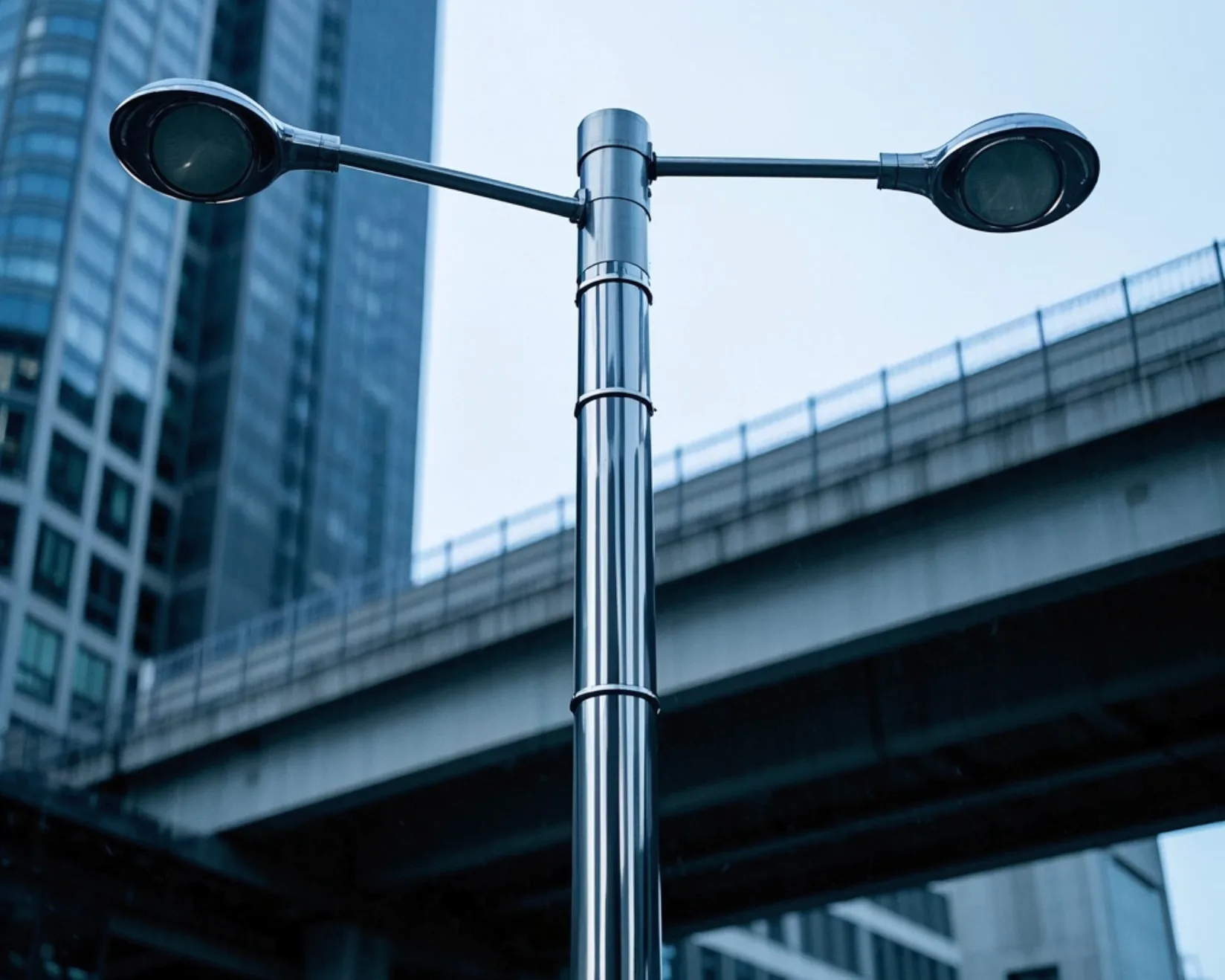
Selecting the appropriate material grade fundamentally dictates the structural durability and environmental resistance of the entire lighting system. Standard Steel Light Poles provide reliable tensile strength and rigidity for typical urban environments, making them an economically viable choice. However, specialized metal alloys offer necessary protection when deployed in corrosive conditions. Planners must evaluate the specific climate, humidity levels, and pollution indexes of the installation site before finalizing the core material specifications. For coastal regions or corrosive industrial environments, utilizing Stainless Steel Light Poles significantly reduces long-term maintenance costs and structural failure risks.
Standardized grading systems, such as ASTM international standards, ensure that the procured materials meet minimum yield strength requirements for public safety. Municipalities typically mandate adherence to specifications like ASTM A595 or ASTM A500 for carbon steel tubular structures. These standards guarantee that the steel possesses the necessary metallurgical properties to withstand continuous physical stress without permanent deformation. When specifying materials, engineering documents must explicitly state the required standard to prevent manufacturers from substituting non-compliant steel grades. This adherence to established industry material benchmarks protects city investments and minimizes future liabilities.
| Material Type | Typical Yield Strength | Corrosion Resistance Level | Best Project Application |
|---|---|---|---|
| Standard Carbon Steel | High (e.g., 55,000 psi) | Moderate (Requires Surface Coating) | Inland urban roadways, highways |
| 304 Stainless Steel | Medium-High (30,000 psi) | High (Chromium Oxide Layer) | General commercial street light poles |
| 316 Stainless Steel | Medium-High (30,000 psi) | Very High (Added Molybdenum) | Coastal zones and industrial parks |
Standard Carbon Steel vs. Stainless Steel
A comparative economic analysis between standard carbon and stainless variants reveals distinct differences in lifecycle costs and visual aesthetics. While Standard Steel Light Poles offer a lower initial procurement cost, they strictly require regular inspection and re-coating to prevent rust. Conversely, Stainless Steel Light Poles feature inherent chromium-based oxidation resistance, virtually eliminating the need for frequent surface treatments. According to the Department of Energy (DOE) Roadway Lighting Research, optimizing physical hardware characteristics directly impacts the total lifecycle financial burden of urban infrastructure. Cities must balance upfront municipal budgets with projected long-term maintenance expenditures.
For aesthetic-driven urban zones and historic districts, a specialized Decorative Pole manufactured from stainless materials provides the best visual longevity. These premium fixtures maintain a sleek, modern appearance without the risk of paint peeling or rust bleeding onto adjacent pedestrian walkways. While standard carbon variants can be powder-coated to mimic this look, any deep scratches exposing the bare metal will inevitably lead to localized corrosion. Therefore, specifying stainless alloys for high-traffic, visually critical commercial street light poles represents a prudent investment strategy for city planners.
Key Structural and Design Specifications
Height, Wind Load, and Mounting Considerations
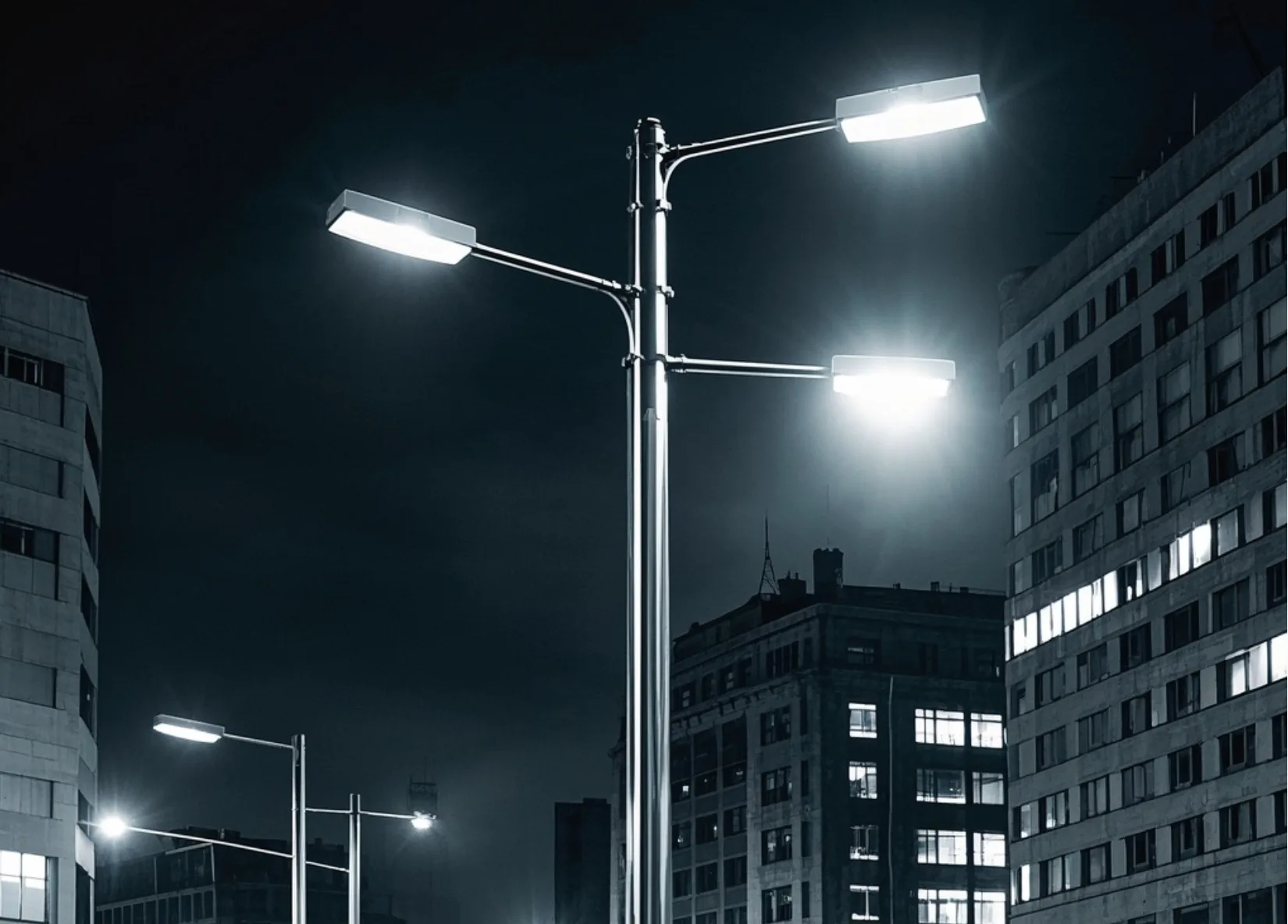
Properly defining the pole height and wind load capacity is legally required to comply with national transportation and pedestrian safety standards. The physical dimensions of Standard Steel Light Poles must precisely align with the intended luminaire mounting height to achieve uniform light distribution. Structural engineers calculate the Effective Projected Area (EPA) to ensure the entire structure withstands localized maximum wind speeds without mechanical failure. The Federal Highway Administration (FHWA) Lighting Handbook provides extensive, data-driven guidance on matching pole configurations to specific roadway classifications. For primary highways, taller Roadway lighting poles are specified to maximize the illumination footprint and enhance driver safety.
Luminaire compatibility serves as another primary determining factor when specifying the mounting configuration of municipal light poles. The geometric design of the pole arm or tenon must securely accommodate the selected LED fixtures while effectively minimizing wind-induced vibration. The DOE Model Specification for LED Roadway Luminaires highlights the critical importance of hardware interchangeability to simplify future technological upgrades. Planners must specify whether the Steel Light Pole requires a vertical tenon mount or a horizontally drilled side-mount configuration based precisely on the luminaire type. Proper mounting geometry drastically reduces mechanical stress on the electronic fixture, thereby extending the operational lifespan.
The design of the base plate and anchor bolt system is the most critical structural component of the entire installation. Specifications must detail the exact bolt circle diameter, plate thickness, and anchor bolt dimensions required to transfer physical loads into the subterranean concrete foundation safely. Inadequate base plate design is a leading cause of premature leaning or structural collapse during severe weather events. Engineers must also specify whether anchor bolt covers or decorative base shrouds are required to protect the mounting hardware from vandalism and environmental exposure on galvanized steel light poles.
Surface Treatments and Corrosion Protection
Applying a surface treatment is the primary method to prevent structural degradation in Standard Steel Light Poles. Hot-dip galvanization represents the industry standard, creating a metallurgical bond of zinc that acts as a reliable sacrificial anode against corrosion. This process, governed by stringent standards like ASTM A123, ensures that both the interior and exterior surfaces of the tubular steel receive complete, uniform protection. Specifying a minimum zinc coating thickness is mandatory to guarantee the calculated 30 to 50-year lifespan of the municipal lighting asset under normal environmental conditions.
For enhanced aesthetic appeal and superior secondary protection, powder coating is frequently applied directly over the galvanized layer in a process known as duplex coating. This comprehensive approach is recommended for urban roadway lighting poles constantly exposed to aggressive road salts, moisture, and vehicular emissions. The powder coating process creates a durable, UV-resistant barrier that prevents the underlying zinc layer from premature oxidation. While Stainless Steel Light Poles naturally resist oxidation, they may still undergo chemical passivation treatments to remove microscopic surface contaminants and optimize their visual finish.
| Treatment Method | Technical Process Description | Lifespan Expectancy | Primary Structural Benefit |
|---|---|---|---|
| Hot-Dip Galvanizing | Complete immersion in molten zinc bath | 30-50+ years | Unmatched cathodic interior/exterior protection |
| Powder Coating | Electrostatically applied dry thermoset powder | 15-20 years | Expansive aesthetic variety and UV resistance |
| Duplex System | Powder coating bonded over galvanization | 50+ years | Maximum possible durability and appearance retention |
| Passivation | Chemical removal of free iron particles | Indefinite (for Stainless) | Maximizes natural inherent corrosion resistance |
Smart City Integration and Technological Adaptability
Modern municipal public works projects increasingly demand infrastructure fully capable of supporting interconnected digital and environmental technologies. Specifying adaptable Smart poles allows modern cities to consolidate street lighting, cellular antennas, environmental sensors, and electric vehicle charging stations into a single vertical structure. This advanced integration requires poles with larger internal diameters to accommodate complex electrical wiring and reinforced access handholes for maintenance personnel. Structural engineers must rigorously account for the additional weight, wind drag, and power consumption introduced by these supplementary digital devices. By correctly anticipating future technological needs, cities avoid the costly replacement of existing Standard Steel Light Poles when upgrading networks.
Integrating advanced digital technologies directly supports municipal safety, traffic optimization, and long-term environmental sustainability goals. Adaptive lighting controls dynamically adjust illumination levels based on real-time pedestrian presence and vehicular traffic data. The FHWA Street Lighting for Pedestrian Safety guidelines highlight exactly how proper luminaire placement and responsive control systems significantly improve crosswalk visibility and reduce accidents. When specifying Garden poles for public parks, incorporating unobtrusive motion sensors ensures high energy efficiency without compromising citizen security. Therefore, the procurement specification document must clearly outline the internal volume and structural reinforcements required to house these intelligent control modules safely.
Selection Checklist for Municipal Procurement
A highly standardized municipal procurement checklist effectively minimizes costly errors and ensures all technical requirements are communicated to manufacturers. Developing a rigid specification framework is crucial for maintaining strict accountability during the bidding, manufacturing, and delivery phases. City planners and engineers must rigorously verify that the submitted Standard Steel Light Poles or stainless variants strictly adhere to the requested dimensional tolerances and material certifications. Requiring independent, third-party laboratory testing reports for wind load resistance and coating thickness is an accepted industry practice. This systematic approach guarantees that the delivered infrastructure aligns perfectly with the initial engineering designs and public safety mandates.
| Specification Category | Key Verification Data Points | Mandatory Action Required |
|---|---|---|
| Material Grade & Alloy | ASTM standard compliance, carbon vs. stainless type | Formally request certified material test reports (MTR) |
| Structural Capacity | Wind load rating, Effective Projected Area (EPA) | Review and approve stamped engineering calculations |
| Dimensional Accuracy | Total pole height, wall thickness, base plate geometry | Strictly verify against approved CAD shop drawings |
| Surface Finish Quality | Galvanization thickness, exact color matching standard | Physically inspect coating and galvanization certificates |
| Smart Compatibility | Internal conduit space, accessory mounting bracket locations | Confirm all digital device integration points and loads |
Frequently Asked Questions (FAQ)
-
What dictates the required wall thickness for municipal light infrastructure?
Wall thickness is determined by calculating the necessary structural capacity to withstand local maximum wind speeds and the heavy weight of attached fixtures. Structural engineers utilize regional meteorological data and the luminaire’s Effective Projected Area (EPA) to specify a thickness that ensures long-term stability and absolute public safety.
-
How do environmental factors influence the specific choice of pole materials?
High ambient humidity, coastal salt spray, and aggressive industrial pollution dramatically accelerate the rate of metallic degradation. In such aggressive environmental conditions, specifying highly corrosion-resistant alloys effectively mitigates rapid structural deterioration. Conversely, standard inland geographic locations with moderate climates permit the use of adequately coated carbon materials.
-
Are there specific base plate dimensions universally standardized across all city projects?
No, base plate geometric dimensions vary significantly based entirely on the pole’s total height, structural weight, and intended maximum wind load rating. Each unique structural design mathematically dictates a specific bolt circle diameter and steel plate thickness to safely transfer physical loads into the subterranean concrete foundation.
-
What is the standard manufacturing lead time for highly customized urban lighting structures?
Manufacturing lead times generally range from six to twelve full weeks, heavily depending on structural design complexity and current global supply chain variables. Specialized surface treatments, custom fabricated bracket designs, and complex smart technology integration points typically extend the manufacturing process significantly when compared to standard tubular configurations.
-
Do these vertical structures require routine physical inspections after initial installation?
Yes, routine physical inspections are highly recommended by industry professionals to continually assess ongoing structural integrity. Maintenance teams visually evaluate the condition of steel anchor bolts, carefully chec