
Coastal environments present unique challenges for infrastructure due to high salt concentrations, humidity, and constant wind exposure. This guide explores how Stainless Steel Light Poles provide the most durable solution for mitigating coastal corrosion compared to traditional materials. Using professional-grade Steel Light Poles ensures long-term structural integrity and aesthetic preservation in harsh maritime climates.
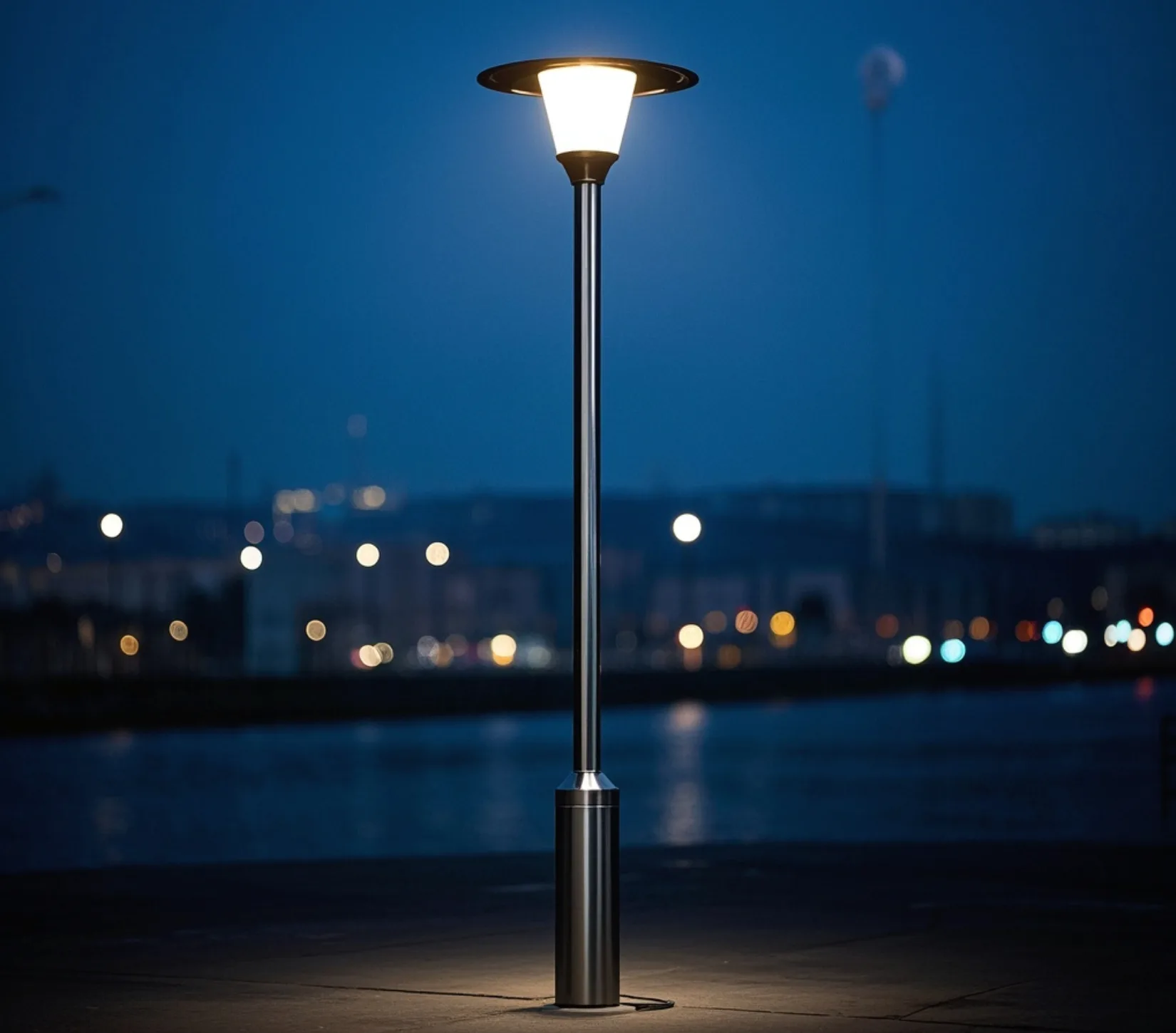
Understanding Atmospheric Corrosion in Coastal Zones
Coastal corrosion is primarily driven by chloride ions from sea spray, which penetrate the protective layers of standard metals. When evaluating Steel Light Poles, engineers must consider the “C5-M” corrosivity category defined by ISO 12944, which represents very high marine salinity. Standard galvanized steel often lacks the localized resistance required to prevent “pitting,” making Stainless Steel Light Poles the industry standard for beachfront installations.
Material Selection: Grade 304 vs. Grade 316
Not all stainless alloys are equal when facing saltwater exposure. Grade 316 Stainless Steel Light Poles contain molybdenum, which significantly enhances resistance to chloride-induced pitting. While Grade 304 is suitable for inland regions, coastal projects should prioritize Grade 316 to ensure the longevity of their Outdoor Lighting Poles.
| Feature | Grade 304 Stainless Steel | Grade 316 Stainless Steel |
|---|---|---|
| Molybdenum Content | 0% | 2.0% – 3.0% |
| Chloride Resistance | Moderate | High (Excellent) |
| Best Application | Urban/Inland Parks | Coastal/Harbor Fronts |
| Surface Finish | Polished/Satin | Electropolished/Satin |
The Role of Surface Finishes in Preventing Rust
Surface roughness directly impacts the rate at which salt particles accumulate on Steel Light Poles. A smoother finish, such as a brushed or electropolished surface on Stainless Steel Light Poles, allows rainwater to naturally wash away contaminants. According to the International Stainless Steel Forum (ISSF), smoother surfaces reduce the “crevice corrosion” risk where salt often settles.
Structural Maintenance Protocols for Marine Environments
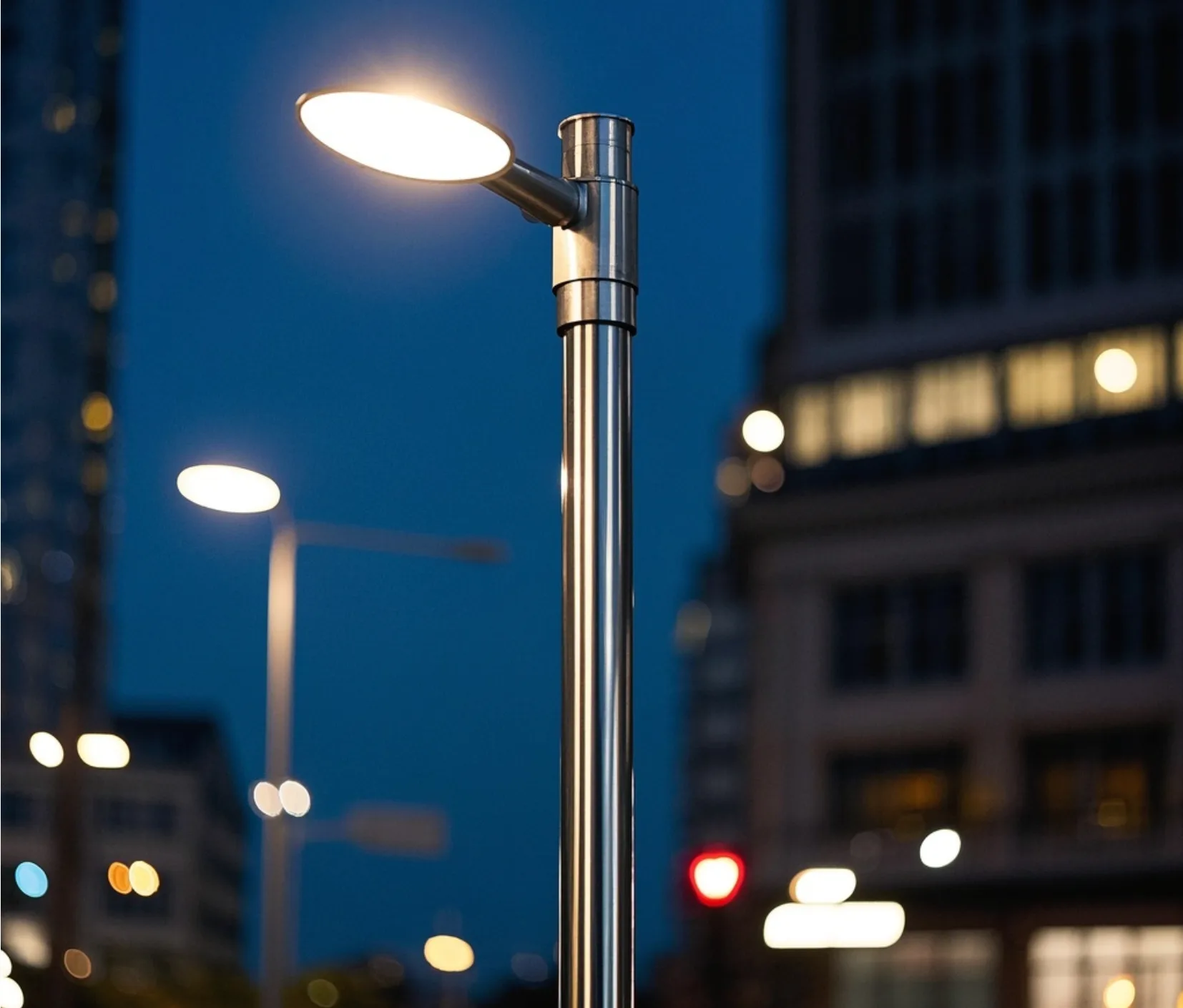
Regular maintenance is essential even for high-quality Stainless Steel Light Poles. A biannual “freshwater rinse” program helps remove crystalline salt deposits that can lead to tea-staining, a cosmetic discoloration that does not necessarily compromise the structural strength of Street Light Poles. Utilizing high-performance Steel Light Poles with proper drainage holes at the base prevents internal moisture buildup.
Comparative Lifecycle Cost Analysis
While the initial investment in Stainless Steel Light Poles is higher than galvanized options, the total cost of ownership (TCO) is lower over a 25-year period. Galvanized Steel Light Poles in coastal areas typically require recoating or replacement every 10–12 years, whereas stainless options can last 50+ years with minimal intervention.
| Metric | Galvanized Steel Pole | Stainless Steel Pole |
|---|---|---|
| Initial Cost | Low | High |
| Maintenance Frequency | High (Recoing/Touch-ups) | Low (Periodic Cleaning) |
| Typical Lifespan (Coastal) | 10–15 Years | 50+ Years |
| Sustainability/Recyclability | Moderate | High (100% Recyclable) |
Environmental Impact and Sustainability
Modern urban planning prioritizes materials that are 100% recyclable. Stainless Steel Light Poles are often manufactured from 60–80% recycled scrap metal, reducing the carbon footprint of municipal Smart City Poles projects. The durability of these Steel Light Poles means fewer replacements and less material waste over the city’s infrastructure lifecycle.
FAQ
-
Does “stainless” mean the pole will never rust in coastal areas?
No, “stainless” refers to the material’s high resistance to oxidation. In high-salinity zones, Grade 316 poles may experience “tea-staining” if not rinsed occasionally, but the structural core remains intact far longer than carbon steel counterparts.
-
Can I use Grade 304 poles if they are powder-coated?
Powder coating adds a layer of protection, but if the coating is scratched (by wind-blown sand or debris), the Grade 304 substrate will corrode quickly. For coastal zones, Grade 316 is always the safer technical choice.
-
How often should coastal light poles be inspected?
The American Galvanizers Association and lighting experts recommend annual inspections for coastal hardware to check for base plate integrity and electrical compartment seals which are most vulnerable to salt air.
-
Is electropolishing necessary for marine light poles?
Electropolishing is highly recommended as it creates a microscopically smooth surface. This prevents salt ions from “hooking” onto the metal surface, significantly extending the time between required cleanings for your infrastructure.
-
What is the typical lead time for custom marine-grade poles?
Due to the specialized alloy requirements and surface treatments, Grade 316 custom poles usually have a lead time of 8–12 weeks, depending on the complexity of the integrated technology or mounting brackets.