
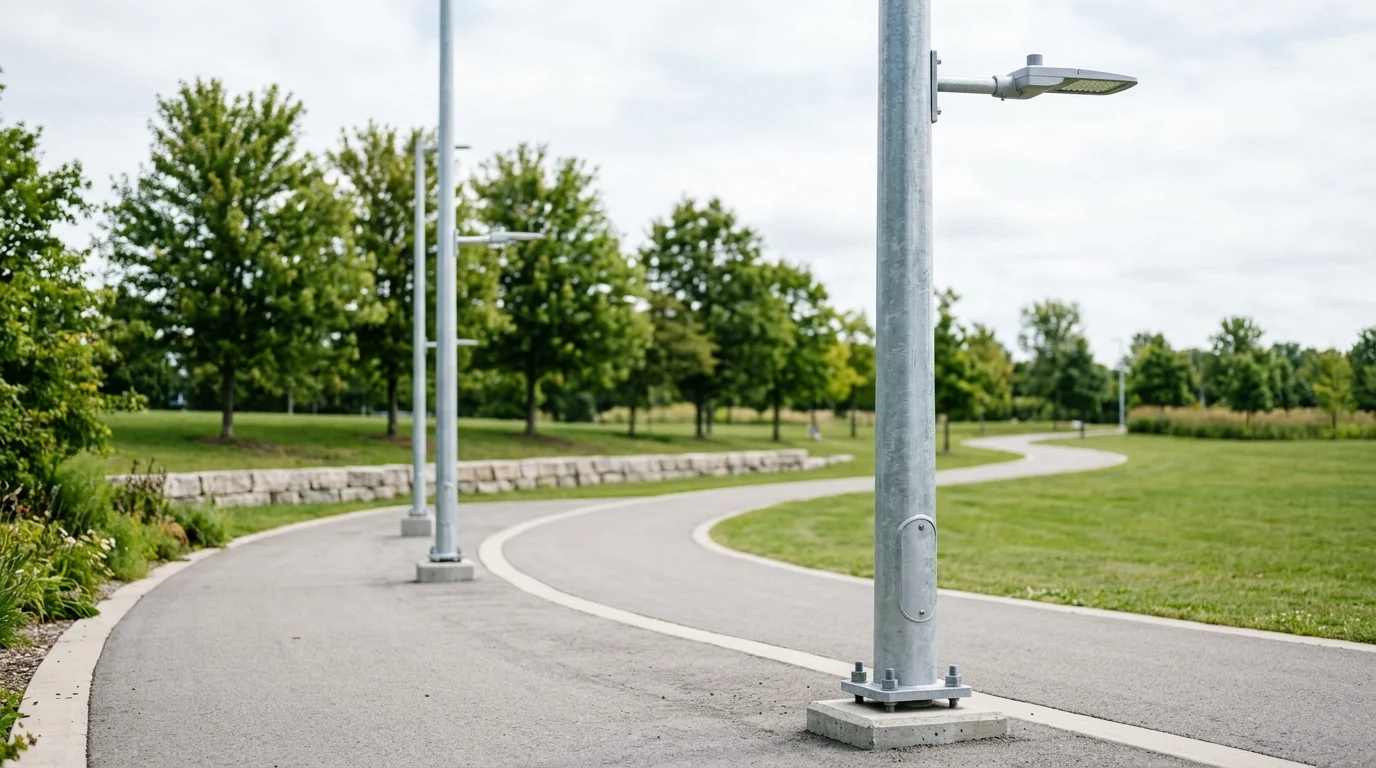
Strategic Considerations for Steel vs. Aluminum Light Poles
Procurement teams and infrastructure developers face a critical decision when specifying materials for large-scale lighting projects. The choice between steel light poles and their aluminum counterparts dictates initial capital expenditure, long-term maintenance schedules, structural integrity under environmental stress, and overall total cost of ownership. For municipalities, architects, and urban planners, understanding the strategic nuances of these materials is foundational to project success.
As global urban beautification and smart city initiatives accelerate toward 2026, manufacturers increasingly offer advanced finishing and fabrication techniques. Whether opting for heavy-duty steel or corrosion-resistant aluminum, wholesale buyers must align material selection with exact project specifications, localized weather patterns, and logistical constraints.
Buyer priorities in material selection
In the B2B procurement landscape, material selection is driven by a matrix of priorities including initial unit cost, expected lifespan, and environmental resilience. Steel remains the dominant choice for budget-conscious projects requiring maximum structural strength, often presenting a 20% to 30% lower initial purchase price compared to aluminum. However, buyers must weigh this against aluminum’s inherent resistance to oxidation, which drastically reduces long-term maintenance costs.
Weight is another primary consideration. Steel is approximately 2.5 to 3 times heavier than aluminum. This variance directly impacts installation logistics; heavier steel poles often require heavy-duty cranes and specialized rigging crews, whereas lighter aluminum poles can sometimes be maneuvered with minimal machinery, reducing on-site labor costs and installation timelines.
Best-fit applications and project types
Different urban and infrastructure scenarios demand specific material properties. Steel light poles are the standard for high-wind environments, major highway interchanges, and heavy-duty commercial zones. Their superior rigidity allows them to support massive lighting fixtures, heavy traffic signals, and smart city attachments, even in zones subjected to wind loads exceeding 120 mph.
Conversely, aluminum poles excel in coastal applications, marine environments, and regions with heavy winter salt usage. Because aluminum naturally forms a protective oxide layer, it resists the rapid degradation that salt spray inflicts on standard steel. Additionally, aluminum is frequently specified for bridge installations and elevated structures where strict weight limits dictate the use of lighter infrastructure components.
Technical Comparison of Steel and Aluminum Poles
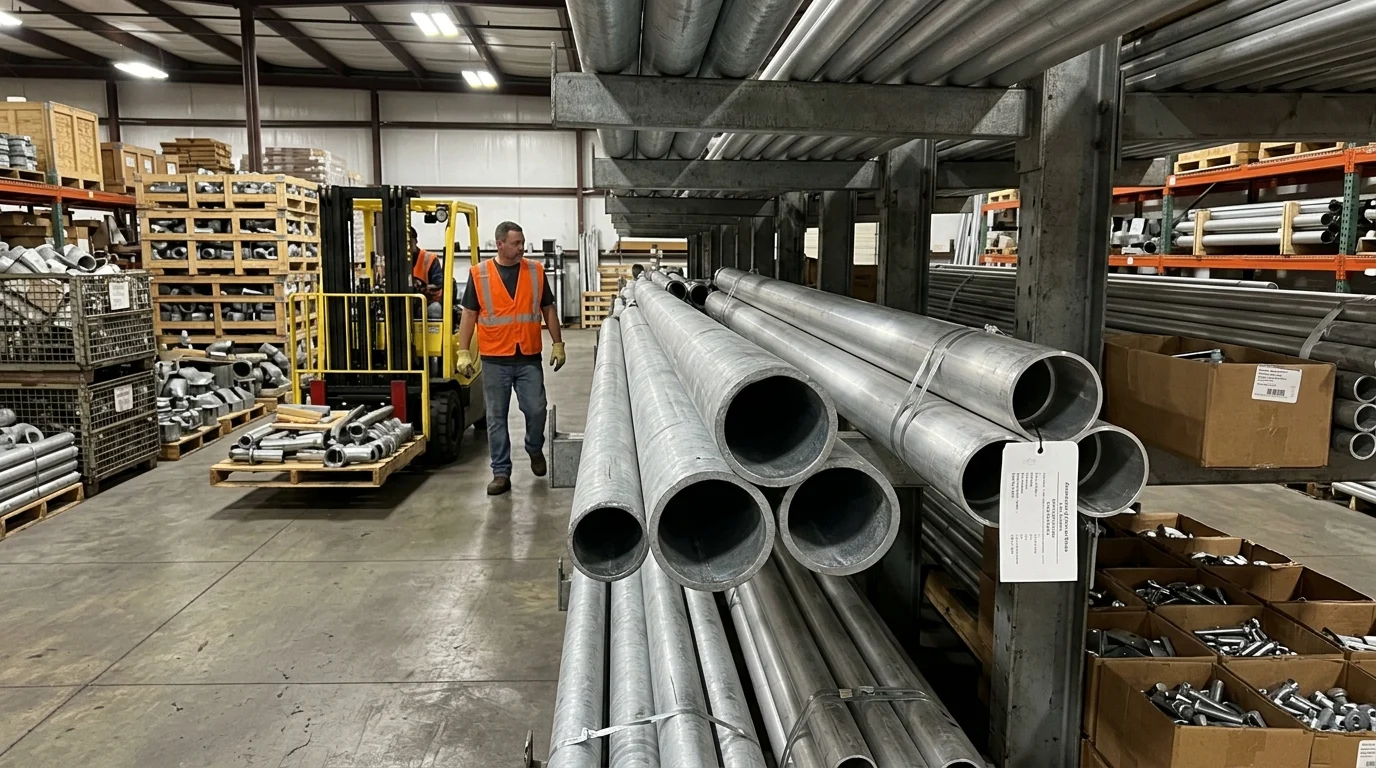
A rigorous technical evaluation is essential to match pole specifications with the structural demands of a given site. Both materials offer distinct engineering profiles that dictate their performance under load, their capacity for customization, and their response to specialized manufacturing processes.
Key performance and specification factors
The core performance metric for lighting poles is yield strength, which determines how much stress the material can endure before permanent deformation. Standard carbon steel poles typically offer a yield strength ranging from 36,000 to 50,000 PSI, making them incredibly rigid. Aluminum alloys commonly used in pole manufacturing, such as 6061-T6, generally provide a yield strength of 25,000 to 35,000 PSI.
Another critical factor is the Effective Projected Area (EPA) rating, which calculates the wind load a pole can handle based on the surface area of the attached fixtures. Steel’s higher tensile strength allows for slimmer pole profiles (e.g., 11-gauge wall thickness) to achieve the same EPA rating that would require a thicker wall (e.g., 0.156 to 0.188 inches) in an aluminum pole.
| Specification Metric | Steel Light Poles | Aluminum Light Poles |
|---|---|---|
| Typical Yield Strength | 36,000 – 50,000 PSI | 25,000 – 35,000 PSI |
| Base Material Weight | ~490 lbs/cu ft | ~170 lbs/cu ft |
| Primary Corrosion Defense | Hot-Dip Galvanization | Natural Oxidation / Anodizing |
| Vibration Dampening | Moderate | High (more flexible) |
Manufacturing and customization capabilities
Leading manufacturers operate comprehensive in-house facilities to transform raw materials into finished urban infrastructure. The fabrication of steel poles often involves heavy plasma cutting, automated brake-press bending to create tapered or polygonal shafts, and submerged arc welding. To mitigate rust, steel requires rigorous hot-dip galvanization or specialized powder coating.
Aluminum manufacturing leverages different techniques, notably rotary spinning, which allows for seamless, elegantly tapered poles highly sought after in decorative and architectural applications. Aluminum’s softer nature makes it highly workable for intricate city beautification designs. Furthermore, aluminum can be anodized—an electrochemical process that thickens the natural oxide layer, providing an exceptionally durable and aesthetically pleasing finish that cannot be replicated on steel.
Comparison criteria for supplier evaluation
When evaluating suppliers for technical competence, buyers should scrutinize the factory’s welding standards and coating consistency. For steel, verify that the hot-dip galvanization meets standard thickness requirements—typically a minimum of 85 microns to ensure adequate rust protection. For aluminum, examine the penetration and cleanliness of the TIG or MIG welds, as aluminum welding requires higher technical precision to avoid porosity.
Distributors must also assess a supplier’s engineering support. The ability to calculate localized wind loads, provide PE (Professional Engineer) stamped drawings, and customize base plates to match existing anchor bolt patterns is a critical differentiator between a standard fabricator and a top-tier infrastructure partner.
Sourcing and Supplier Evaluation
Transitioning from technical specifications to procurement strategy requires a thorough vetting of supplier capabilities. B2B buyers must partner with manufacturers that not only deliver high-quality products but also offer stable commercial terms, scalable production capacity, and rigorous quality assurance protocols.
Supplier capability and quality control checks
A reliable supplier must demonstrate end-to-end control over the manufacturing process. Buyers should look for ISO 9001:2015 certifications and documented quality control plans. Factory audits should focus on raw material traceability, checking whether the supplier uses certified mill test reports (MTRs) for their steel and aluminum coils.
Quality control checks should include non-destructive testing (NDT) on critical weld seams and adhesion testing for powder-coated finishes. Top-tier manufacturers typically maintain a defect rate of less than 0.5% on large production runs. The presence of in-house testing equipment, such as salt spray chambers for corrosion testing and spectrometers for material analysis, is a strong indicator of supplier maturity.
Commercial terms for B2B orders
Commercial terms in the structural lighting sector are heavily influenced by raw material commodity markets. Because steel and aluminum prices fluctuate, quotations are usually valid for a limited window, often 15 to 30 days. Standard B2B payment terms typically involve a 30% T/T (Telegraphic Transfer) deposit upon order confirmation, with the remaining 70% payable against the Bill of Lading (B/L) copy.
Minimum Order Quantities (MOQs) vary based on customization. Standard tubular or tapered poles might have an MOQ of just 10 to 20 units, whereas highly customized architectural designs requiring new tooling may demand an MOQ of 50 to 100 units. Lead times for standard production generally range from 30 to 45 days, though specialized finishing processes like custom anodizing can extend this schedule.
Quotation and sample comparison process
Procurement teams should never rely solely on unit price when comparing quotations. A comprehensive quote must detail the material grade, wall thickness, shaft dimensions, base plate specifications, and the exact finishing process. A supplier offering a price 15% below the market average is often compromising on wall gauge or galvanization thickness.
Requesting physical samples is vital, particularly for assessing finish quality. While shipping a full 30-foot pole as a sample is cost-prohibitive, buyers should request cut sections that demonstrate the longitudinal weld quality, the smoothness of the powder coating, and the integrity of the base plate gusset welds. This hands-on comparison protects the buyer from substandard fabrication that could lead to catastrophic field failures.
Compliance, Packaging, and Logistics
Successfully manufacturing the poles is only half the battle; delivering them across global supply chains without damage requires meticulous planning. Lighting poles are oversized, awkwardly shaped, and susceptible to surface damage during transit, making packaging, logistics, and regulatory compliance vital components of the procurement cycle.
Required standards and documentation
International infrastructure projects require strict adherence to regional safety and engineering standards. In North America, poles must frequently comply with AASHTO (American Association of State Highway and Transportation Officials) standards for structural supports. In the European market, EN 40 standards dictate the design and safety requirements for lighting columns.
Documentation is equally critical for customs clearance and project sign-off. Suppliers must provide commercial invoices, packing lists, Certificates of Origin, and specialized compliance documents such as ASTM A123 certificates for zinc coatings on steel poles. Failure to produce these documents can result in customs holds, project delays, and rejected deliveries at the job site.
Packaging and container optimization
To prevent scratching, denting, or finish degradation during shipping, poles must be expertly packaged. Premium packaging involves wrapping individual shafts in heavy-duty bubble wrap, woven sacks, or felt tape, paying special attention to the base plates and tenons where friction is highest. Poles are then bundled using steel or heavy-duty PET strapping, separated by wooden dunnage to prevent metal-on-metal contact.
Container optimization is a mathematical necessity to control freight costs. Because poles are lengthy, 40-foot High Cube (40HQ) or Open Top containers are standard.
| Container Type | Max Payload Weight | Typical Capacity (Standard 30ft Poles) | Best For |
|---|---|---|---|
| 40ft High Cube (40HQ) | ~26 – 28 Metric Tons | 80 – 120 units (depending on diameter) | Standard global shipping, cost-efficiency |
| 40ft Open Top | ~26 Metric Tons | 80 – 100 units | Easy overhead crane loading/unloading |
| Flat Rack | ~30 Metric Tons | Highly variable | Oversized, extreme-height mast poles |
Import risks and delivery planning
Importers must balance volume and weight limits when planning shipments. Steel’s high density means a container will often “weigh out” (hit the 26-28 metric ton legal road limit) long before it “cubes out” (fills the physical space). Conversely, a container of aluminum poles will almost always cube out before reaching maximum weight limits, allowing buyers to maximize the unit count per shipment.
Delivery planning must also account for unloading capabilities at the destination. Buyers must ensure that the receiving yard or job site has the appropriate forklifts or cranes to handle bundled poles safely. Improper unloading is a leading cause of damage to protective coatings, which can immediately void warranties and initiate premature rusting on steel products.
Choosing the Right Material for ROI
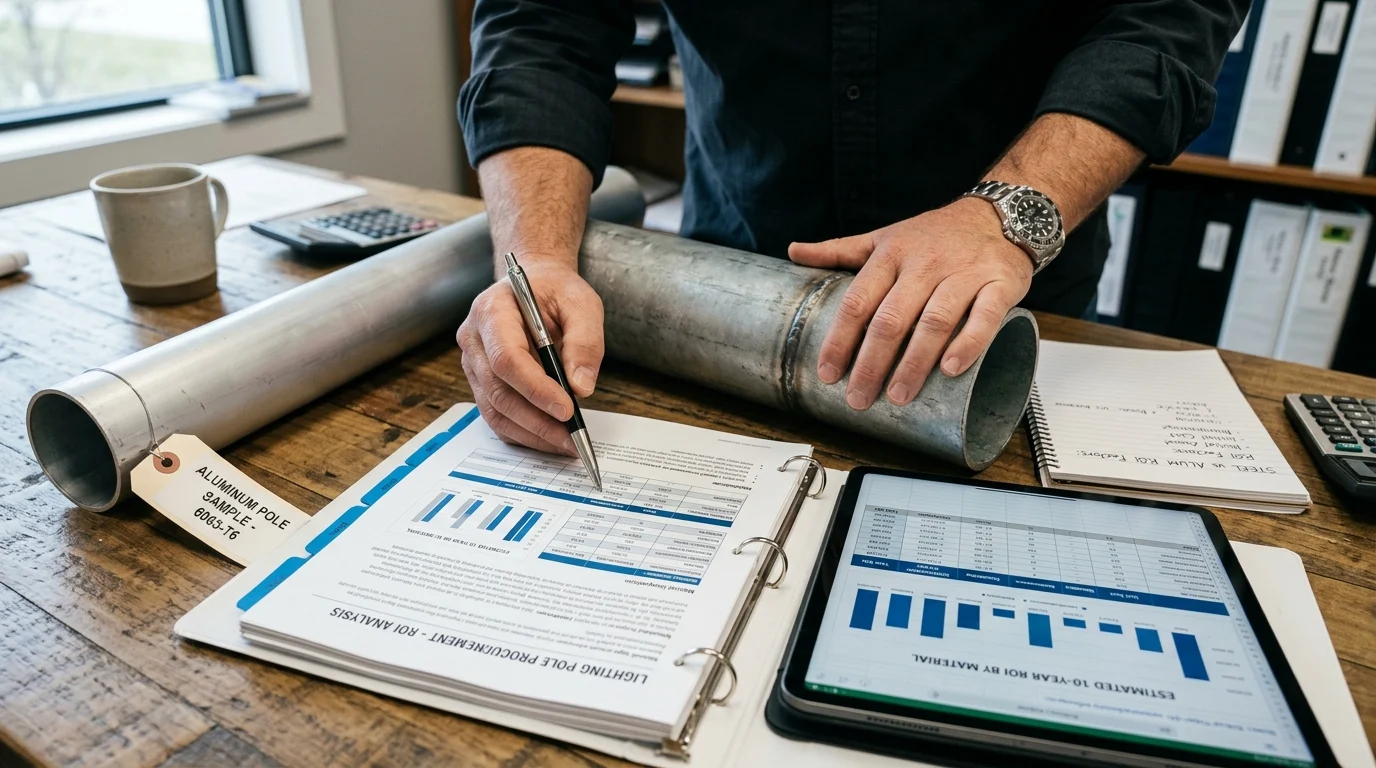
Ultimately, the decision between steel and aluminum light poles comes down to maximizing Return on Investment (ROI) over the lifespan of the project. Procurement teams must look beyond the initial purchase order and calculate the total cost of ownership, factoring in installation labor, routine maintenance, and expected longevity.
When steel poles offer better value
Steel light poles offer the best value for projects where upfront budget constraints are tight and structural demands are exceptionally high. For massive infrastructure rollouts—such as hundreds of miles of highway lighting or sprawling industrial complexes—the 20% to 30% savings on the initial unit price translates into massive capital preservation.
Furthermore, in high-impact zones like commercial parking lots or urban intersections, steel’s sheer durability allows it to withstand minor vehicular impacts better than aluminum. When properly hot-dip galvanized and maintained, a steel pole can easily achieve a 30- to 40-year lifespan, making it a highly cost-effective workhorse for traditional municipal infrastructure.
When aluminum poles are the better choice
Aluminum light poles deliver superior ROI in environments where maintenance costs and environmental degradation are the primary financial risks. While the initial capital outlay is higher, aluminum’s zero-rust property eliminates the need for periodic scraping, repainting, or rust mitigation over its 50-year potential lifespan.
This makes aluminum the undisputed choice for coastal municipalities, luxury architectural projects, and smart city developments where aesthetic longevity is paramount. Additionally, the lighter weight reduces freight costs per unit, lowers the expense of heavy lifting equipment during installation, and inherently provides a safer, breakaway-friendly option for specific roadway safety requirements. For buyers prioritizing low lifetime maintenance and premium aesthetics, aluminum presents the smarter long-term investment.
Key Takeaways
- Wholesale sourcing and supply-chain implications for Steel Light Poles
- Specifications, compliance, and commercial terms buyers should validate
- Actionable recommendations for distributors and procurement teams
Frequently Asked Questions
When should I choose steel light poles over aluminum?
Choose steel for highways, intersections, and high-wind sites needing higher strength, larger EPA capacity, or support for traffic signals and smart devices.
Are steel light poles cheaper than aluminum poles?
Usually yes. Steel often costs 20% to 30% less upfront, but coatings and future maintenance should be included when comparing total ownership cost.
How do steel poles resist rust in outdoor projects?
Steel poles typically use hot-dip galvanizing or powder coating. For harsh or humid environments, specify the coating system based on local weather and maintenance plans.
What projects are better suited to aluminum poles?
Aluminum is better for coastal areas, bridge decks, and salt-exposed roads because it resists corrosion naturally and reduces transport and installation weight.
Can Morelux customize both steel and aluminum light poles?
Yes. Morelux manufactures both materials in-house, with cutting, bending, welding, polishing, coating, anodizing, and testing for tailored municipal and commercial projects.