
Introduction
From alloy selection to final surface treatment, the way stainless steel light poles are made directly affects strength, corrosion resistance, appearance, and service life. This article explains the key production stages, including material choice, cutting and forming, welding, polishing, and quality inspection, so readers can see how each step contributes to long-term performance. By understanding the manufacturing process, buyers, engineers, and project planners can better evaluate product quality, compare suppliers, and judge whether a pole is built to withstand demanding urban, industrial, or coastal environments.
Why Stainless Steel Light Pole Manufacturing Matters
The manufacturing of stainless steel light poles represents a crucial intersection of urban design, public safety, and structural engineering. Compared to traditional materials like aluminum or standard carbon steel, stainless steel requires a more specialized fabrication process but yields an infrastructure asset with an exceptional lifecycle. When properly manufactured, these poles routinely exceed a 50-year operational lifespan with minimal maintenance.
Understanding this manufacturing process is essential for urban planners, municipal engineers, and commercial developers. The initial capital expenditure for stainless steel is higher than that of alternatives, meaning buyers must ensure that the fabrication, welding, and finishing processes justify the investment through long-term structural resilience and reduced total cost of ownership.
Durability and appearance benefits
The primary structural and aesthetic advantage of stainless steel lies in its passive chromium oxide layer. This invisible, self-healing shield forms naturally when the alloy contains a minimum of 10.5% chromium. Throughout the manufacturing process, protecting and enhancing this layer is paramount to ensuring the final product resists rust, smog degradation, and chemical exposure in harsh urban or coastal environments.
| Material | Estimated Lifespan (Years) | Typical Tensile Strength (MPa) | Relative Cost Index |
|---|---|---|---|
| Stainless Steel (304/316) | 50+ | 500 – 600 | High (1.8x) |
| Aluminum Alloy | 30 – 40 | 270 – 310 | Medium (1.3x) |
| Galvanized Carbon Steel | 20 – 25 | 400 – 550 | Base (1.0x) |
Project requirements to define first
Before initiating the manufacturing cycle, procurement teams must define stringent project requirements that dictate the engineering phase. Wind load specifications are the most critical variable; poles must be geometrically designed and manufactured to withstand base wind speeds ranging from 120 mph to 180 mph (193 to 290 km/h), depending on local meteorological codes and hurricane zone classifications.
Additionally, dimensional requirements directly dictate the manufacturing approach. Height requirements typically span from 3 meters for pedestrian pathways up to 12 meters or more for highway and intersection illumination. These height parameters, combined with the weight of the luminaire and the required wind rating, determine the necessary wall thickness and the base diameter of the raw steel tube.
How Stainless Steel Light Poles Are Manufactured
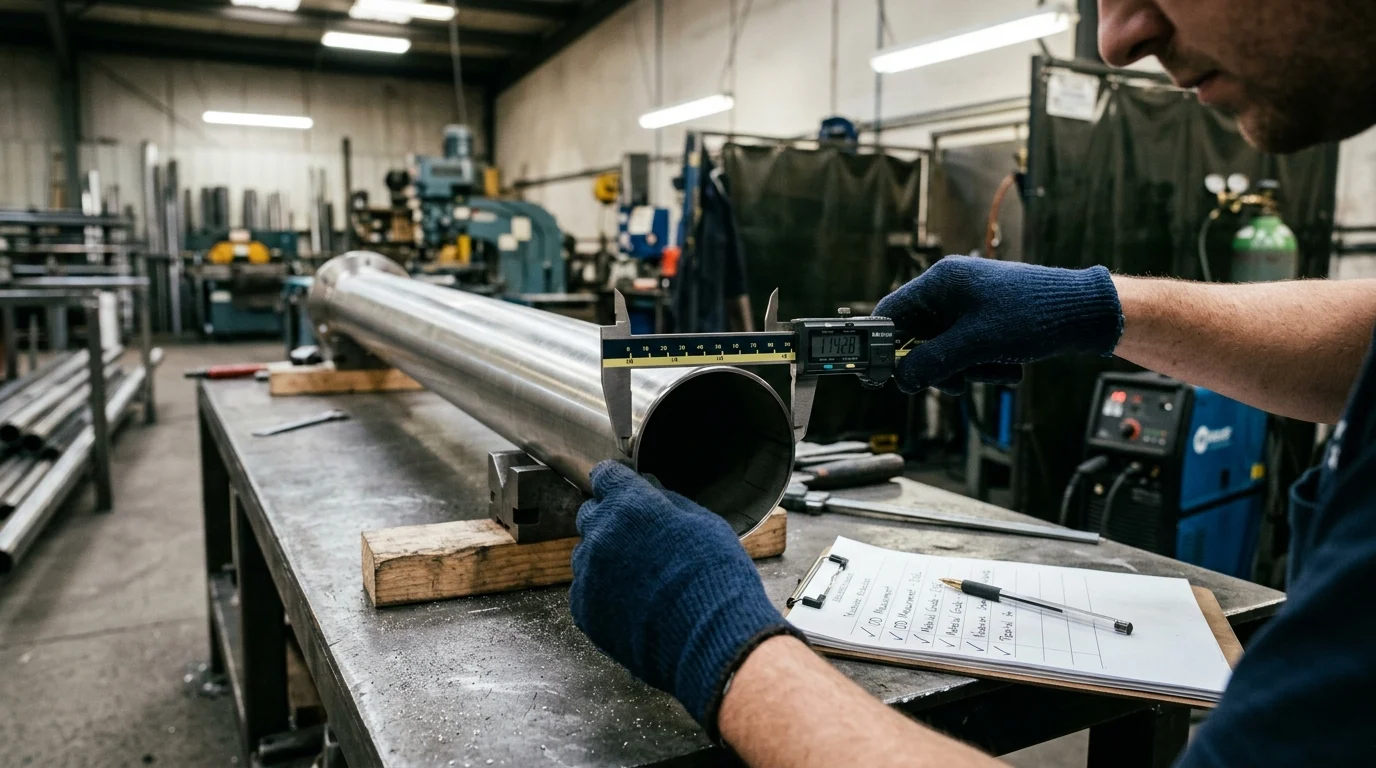
The fabrication cycle transforms flat, raw steel coils into structurally sound, geometrically precise lighting columns. This transformation requires specialized heavy machinery, strict adherence to metallurgical tolerances, and a highly controlled factory environment to prevent cross-contamination with carbon steel particles.
Material grades, thickness, and tube design
Manufacturers primarily utilize two austenitic stainless steel grades: Type 304 for standard inland applications and Type 316L for marine or heavy industrial environments. Type 316L includes a 2.0% to 3.0% molybdenum addition, providing superior resistance to chloride pitting from road salts and ocean spray. The selected material thickness typically ranges from 2.0mm for lightweight pedestrian poles up to 4.0mm or 5.0mm for high-mast applications.
The tube design also heavily influences the manufacturing steps. Poles can be fabricated as standard cylindrical tubes, square profiles, or continuously tapered conical shapes. Tapered designs are highly favored in the industry because they lower the center of gravity, reduce the overall material weight, and offer superior aerodynamic stability against wind-induced vortex shedding.
Cutting, rolling, welding, and straightening
Production begins by uncoiling the raw material and feeding it through CNC laser cutting machines, which achieve exacting dimensional tolerances of ±0.1mm. Once cut to the precise flat pattern, the steel sheets are transferred to heavy-duty press brakes or rolling machines that gradually form the metal into a closed tubular profile.
The longitudinal seams are then permanently closed. High-quality manufacturing relies on Submerged Arc Welding (SAW) or Tungsten Inert Gas (TIG) welding to ensure full joint penetration without compromising the alloy’s structural integrity or burning out the chromium content. Post-welding, the poles undergo a rigorous mechanical straightening process. Hydraulic presses apply targeted pressure to correct any heat-induced warping, strictly maintaining a straightness deviation of less than 3mm per linear meter.
How Finishing and Assembly Affect Performance
Beyond raw structural fabrication, the finishing and assembly stages dictate the pole’s final environmental resilience and integration into the site infrastructure. Proper finishing is not merely for aesthetics; it is a critical metallurgical step that restores the material’s surface integrity after the trauma of welding and bending.
Brushed, polished, passivated, and powder-coated finishes
Surface finishing enhances both visual uniformity and corrosion resistance. Standard mechanical finishes include a directional #4 brush or a high-gloss mirror polish, often achieving a refined surface roughness (Ra) of less than 0.4 µm, which prevents dirt and chlorides from clinging to the pole.
Following mechanical finishing, chemical passivation is mandatory. The poles are submerged in a nitric or citric acid bath to remove free iron deposits left by tooling and to rapidly accelerate the formation of the protective oxide layer. If a specific color is required, a polyester powder coating is electrostatically applied and baked at a thickness of 60 to 80 microns, providing an additional barrier against UV degradation.
| Finish Type | Process Method | Surface Roughness (Ra) | Ideal Application Environment |
|---|---|---|---|
| #4 Brushed | Abrasive belt polishing | < 0.4 µm | Urban streets, commercial plazas |
| Mirror Polish | Successive fine buffing | < 0.1 µm | High-end architectural, decorative |
| Powder Coated | Electrostatic spray & bake | N/A (60-80 µm thick) | Color-matched municipal zones |
| Bead Blasted | Glass bead bombardment | 1.0 – 1.5 µm | Anti-glare highway segments |
Base plates, anchor bolts, brackets, and access doors
The final assembly phase involves permanently attaching critical hardware to the main shaft. Base plates, typically laser-cut from heavy-duty 12mm to 20mm thick stainless steel, are secured to the bottom of the shaft using full-penetration fillet welds. These plates must be perfectly level to distribute the overturning moment to the concrete foundation.
Anchor bolts, commonly ranging from M16 to M24 sizes, are coordinated with the base plate templates to ensure seamless on-site installation. Manufacturers also cut and reinforce access doors (handholes) near the base of the pole. These handholes feature reinforced internal frames and EPDM rubber gaskets to maintain an IP65 ingress protection rating, safeguarding internal electrical wiring and terminal blocks from moisture and dust intrusion.
How Stainless Steel Light Poles Are Tested
Rigorous testing protocols must be integrated throughout the manufacturing workflow. Because light poles are installed in high-traffic public spaces, catastrophic structural failures pose severe safety risks and liability issues. Quality assurance ensures that the finished product matches the initial engineering specifications.
Structural, wind load, weld, and dimensional checks
Structural integrity is validated through a combination of physical load testing and software-based Finite Element Analysis (FEA). Engineering teams simulate dynamic wind loads, often testing virtual models against 150 mph wind gusts to verify that the deflection limits remain within safe operational parameters.
Physical weld quality is heavily scrutinized using Non-Destructive Testing (NDT) methods. Top-tier manufacturers mandate 100% dye penetrant testing or ultrasonic inspection on all critical base-to-shaft joints to detect microscopic cracks or incomplete fusion. Dimensional checks are also performed continuously to verify taper ratios, wall thickness, and base plate flatness, with strict quality control departments targeting an overall factory defect rate of less than 0.5% prior to packaging.
Standards, certificates, and inspection records
Reputable manufacturing facilities operate under stringent ISO 9001 quality management systems and produce poles that comply with recognized regional standards. In Europe, this includes adherence to EN 40-3-1 for the design and structural verification of steel lighting columns, while North American projects typically rely on AASHTO guidelines.
To prove material authenticity, buyers should always require EN 10204 3.1 Mill Test Certificates. These standardized inspection records provide traceable, batch-specific data on the exact chemical composition (verifying the chromium, nickel, and molybdenum percentages) and the mechanical yield strength of the raw steel used for the specific production run.
How Buyers Should Evaluate Manufacturers
Procuring stainless steel light poles requires navigating a complex global supply chain. Buyers must balance upfront capital expenditure with long-term performance guarantees, ensuring that the chosen manufacturing partner can deliver on both quality and logistical efficiency.
Cost drivers, lead times, customization, and logistics
Pricing is heavily influenced by the volatile global commodities market, specifically the spot pricing of nickel and molybdenum used in 304 and 316L alloys. Standard factory lead times typically range from 4 to 8 weeks, but requesting custom tapered profiles or specialized architectural powder coatings can extend production schedules to 10 to 12 weeks.
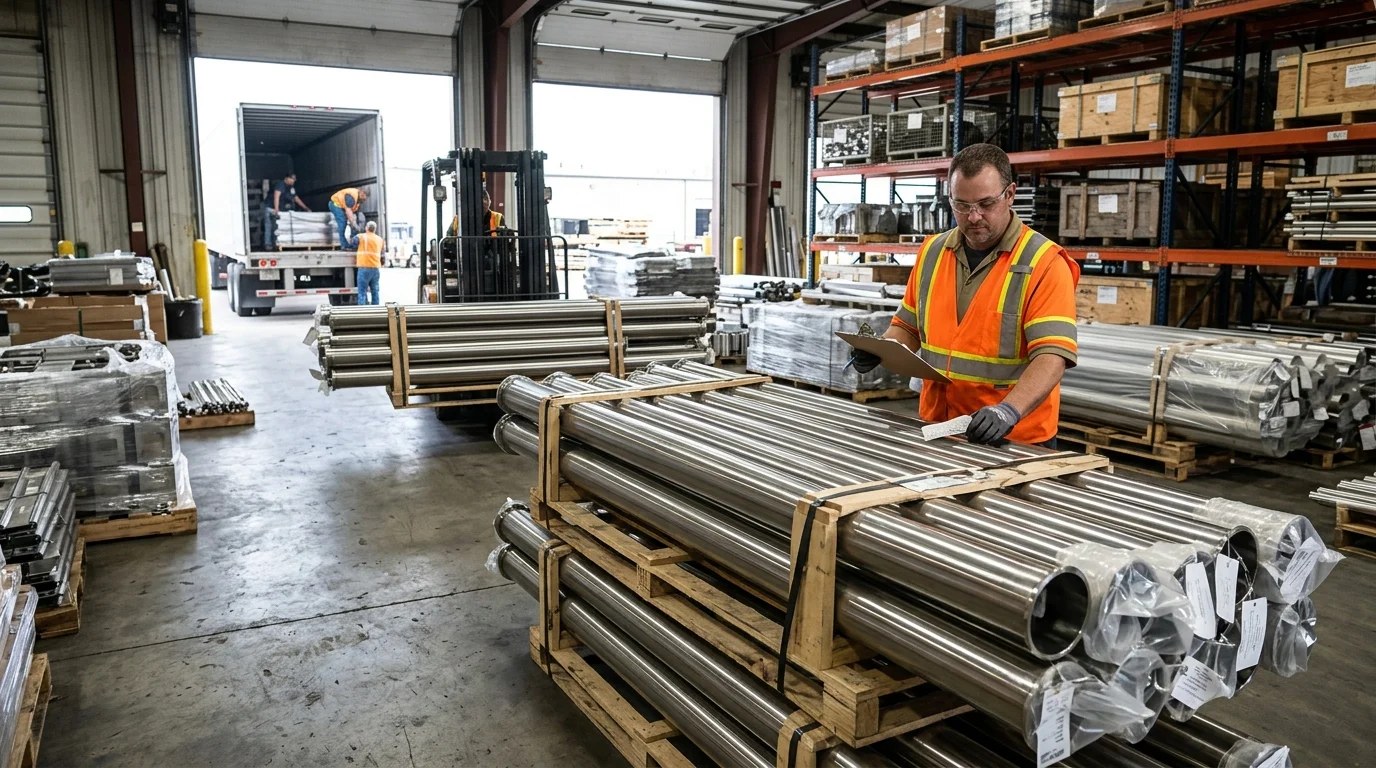
Minimum Order Quantities (MOQs) are another critical factor, usually starting between 10 and 20 units to justify the heavy machine setup costs. Logistically, ocean freight efficiency is maximized by utilizing nested tapered poles. Depending on the base diameter and overall length, a standard 40-foot High Cube (HQ) shipping container can accommodate approximately 150 to 200 poles, which drastically reduces the per-unit transportation cost.
How to compare supplier options
When comparing potential suppliers, procurement teams should evaluate the manufacturer’s scope of in-house capabilities versus outsourced steps. A supplier that controls laser cutting, automated welding, and chemical passivation under one roof generally offers vastly superior quality control and more reliable lead times.
Buyers should carefully assess the standard warranty terms, ensuring they cover structural integrity and corrosion resistance for a minimum of 10 to 20 years. Furthermore, requesting third-party laboratory reports that verify the salt spray resistance (e.g., ASTM B117 testing) and weld penetration depth from previous production runs serves as a definitive metric for comparing manufacturer reliability.
Key Takeaways
- The most important conclusions and rationale for Stainless Steel Light Poles
- Specs, compliance, and risk checks worth validating before you commit
- Practical next steps and caveats readers can apply immediately
Frequently Asked Questions
What should buyers compare first when sourcing Stainless Steel Light Poles?
Start with airflow/spec range, compliance requirements, installation constraints, and after-sales spare-part policy. These four factors usually determine total risk and margin quality.
How can readers control landed cost for Stainless Steel Light Poles?
Break down unit FOB, packaging volume, container utilization, duty/tax, and expected return rate. A simple landed-cost model by SKU tier helps avoid margin surprises.
Which certifications are commonly required for Stainless Steel Light Poles in key markets?
Requirements vary by destination market; verify applicable electrical/safety and material compliance standards before PO confirmation, and keep lab reports tied to exact SKU versions.
How should distributors set MOQ and inventory targets for Stainless Steel Light Poles?
Use channel demand split and lead time to set tiered MOQ. Keep fast-moving SKUs deeper in stock while limiting long-tail variants with slower turns and higher holding costs.
What is a practical quality-control checklist for Stainless Steel Light Poles orders?
Define AQL, critical defect list, function tests, and packaging drop checks. Run pre-shipment inspection and keep a traceable defect feedback loop with the factory.