
Introduction
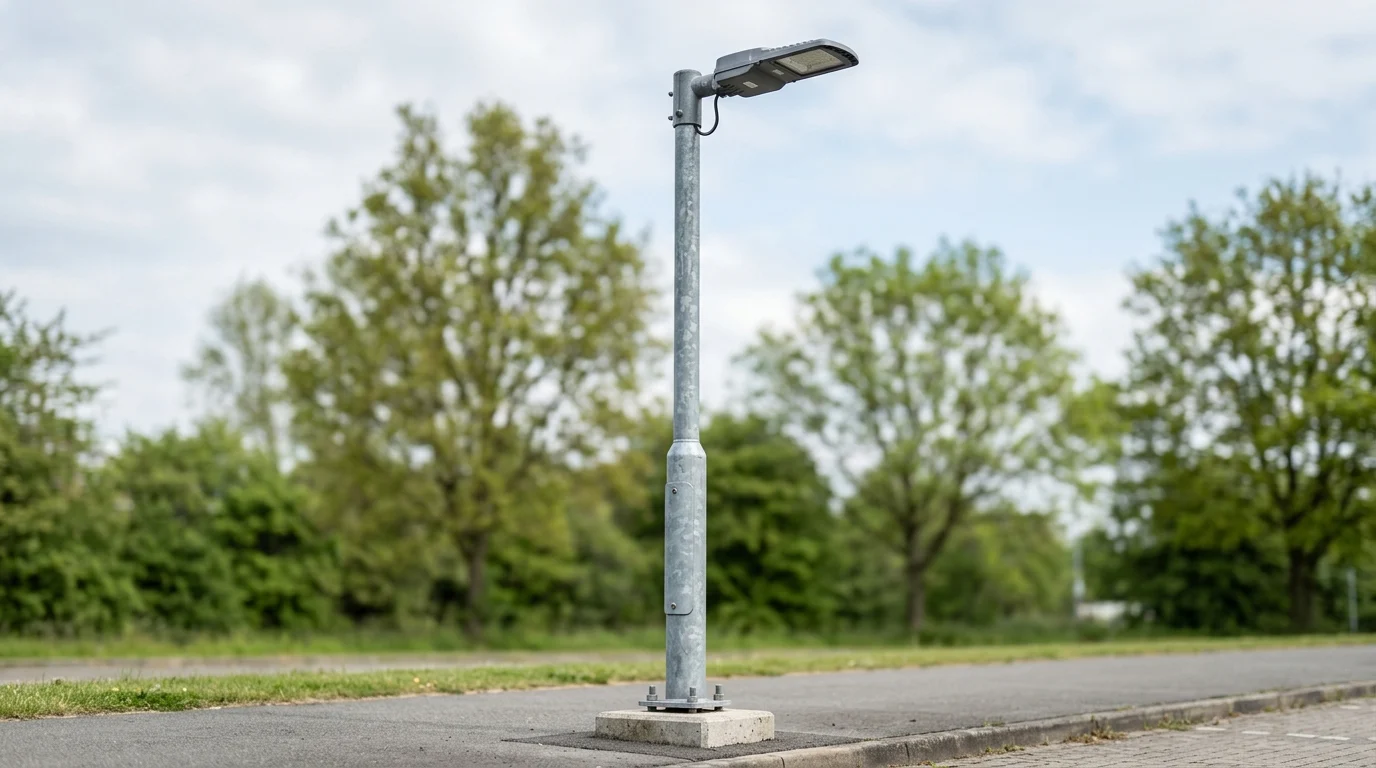
Choosing a street light pole involves more than height and appearance; its design must meet structural, material, and safety requirements that affect performance for decades. This article explains the key standards and specifications that govern pole strength, wind resistance, load capacity, deflection, and corrosion protection, with attention to how site conditions influence compliant design. By the end, you will have a clearer framework for evaluating street light poles for public roads, commercial developments, or municipal projects, and for understanding why these requirements directly shape safety, maintenance needs, and long-term cost.
Why Street Light Pole Design Standards Matter
Street light pole design standards form the critical foundation of public infrastructure safety, ensuring that vertical assets can withstand environmental stresses while supporting heavy luminaire loads. Non-compliance with established engineering codes exposes municipalities, departments of transportation, and private developers to catastrophic structural failures, liability claims, and premature replacement costs.
A well-engineered street light pole is expected to deliver a functional, maintenance-free lifecycle of 25 to 30 years. This benchmark is only achievable through rigorous adherence to structural design specifications that account for wind velocities, material fatigue, and specific site conditions. Understanding these foundational standards is the first step in responsible infrastructure procurement.
How requirements affect safety and lifecycle
Structural requirements directly dictate a pole’s resilience against material fatigue and dynamic loading over its operational life. Continuous exposure to wind-induced vibrations, vehicle-induced drafts, and severe thermal cycling degrades structurally inferior materials over time, leading to micro-fractures at critical stress points.
By enforcing strict deflection limits—often restricting lateral movement to less than 10% of the pole’s total height under peak wind loads—design standards prevent these micro-fractures from propagating in the base plate and shaft weldments. Proactive structural engineering extends the asset’s lifecycle and drastically mitigates the risk of sudden collapse, particularly in pedestrian-heavy urban zones where safety tolerances are absolute.
Which project types need different designs
Different infrastructure projects demand highly specialized pole configurations to meet targeted lighting metrics and spatial constraints. Interstate highways and major arterial roads typically require robust, high-clearance poles with mounting heights between 30 and 50 feet. These structures must be engineered to maximize illumination spread and safely accommodate heavy multi-arm brackets carrying high-wattage fixtures.
In contrast, residential subdivisions, parks, and decorative urban streetscapes usually specify poles ranging from 12 to 20 feet in height. These projects prioritize aesthetic integration, pedestrian-scale lighting, and lower glare. High-mast lighting for complex highway interchanges or industrial ports pushes structural requirements even further, often necessitating highly engineered structures exceeding 100 feet equipped with specialized motorized lowering rings for safe maintenance access.
Key Street Light Pole Specifications to Compare
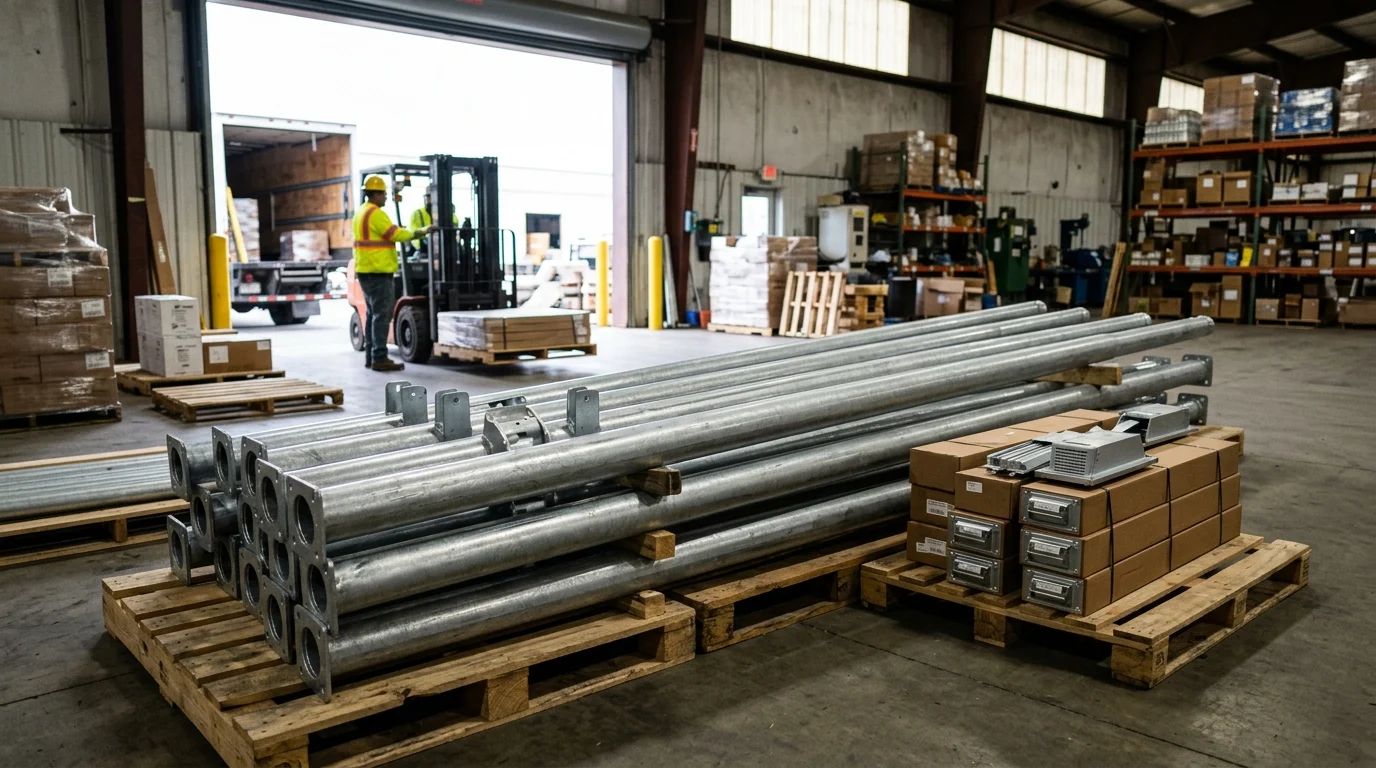
Evaluating street light pole specifications requires a systematic comparison of structural geometry, material properties, and anchoring mechanisms. Buyers must meticulously align these specifications with the physical demands of the installation site and the specific luminaire payloads to ensure long-term stability and code compliance.
Which structural specifications matter most
Wall thickness, shaft geometry, and Effective Projected Area (EPA) capacity are the primary structural specifications that govern a pole’s field performance. Wall thickness is commonly measured in gauges or exact decimal inches; an 11-gauge (0.1196 inches) steel pole may suffice for standard residential applications, while high-wind coastal areas or heavy-load intersections often demand a much thicker 7-gauge (0.1793 inches) or 3-gauge (0.2391 inches) profile.
Additionally, the cross-sectional shape of the pole heavily influences its aerodynamic drag coefficient and overall structural rigidity. The table below illustrates how different shaft geometries impact performance and cost:
| Pole Shape | Aerodynamic Drag | Maximum EPA Capacity | Relative Manufacturing Cost |
|---|---|---|---|
| Round Tapered | Low | High | Premium |
| Square Straight | High | Moderate | Economical |
| Octagonal / Polygonal | Moderate | Very High | Premium |
How material and corrosion protection change performance
Material selection and surface treatment dictate the corrosion resistance and maintenance frequency of the lighting structure. Carbon steel offers superior tensile strength and is highly cost-effective, but it requires robust anti-corrosion treatments to survive outdoor exposure. Hot-dip galvanizing per ASTM A123 standards is standard practice, mandating a minimum zinc coating thickness of 3.0 mils to prevent oxidation.
Aluminum poles provide natural corrosion resistance and are ideal for standard municipal projects or coastal areas, though they generally carry lower maximum load capacities and a higher initial price point. For highly aggressive environments, specifying a marine-grade powder coating applied over hot-dip galvanized steel can extend the asset’s structural life by an additional 10 to 15 years, significantly reducing lifecycle maintenance costs.
What foundation details buyers should review
The structural integrity of a street light pole relies entirely on its foundation and anchorage system. Buyers and project engineers must scrutinize the anchor bolt specifications, paying particular attention to the bolt circle diameter (BCD), projection length, and material yield strength to ensure compatibility with the selected pole base.
Standard infrastructure applications typically utilize heavy-duty anchor bolts with a minimum yield strength of 55,000 psi (Grade 55). Furthermore, the foundation depth, rebar cage design, and concrete psi ratings must be carefully matched to the local soil composition and the pole’s calculated overturning moment. This ensures the base plate remains securely fastened and plumb even under maximum theoretical wind loads.
Compliance, Testing, and Regional Code Requirements
Navigating the regulatory landscape of street light pole procurement involves understanding a complex matrix of national standards and localized building codes. Compliance is not merely a legal formality to secure permits; it is a fundamental engineering necessity that validates the pole’s capacity to endure extreme environmental events and unpredictable load stresses.
Which standards and wind load criteria apply
In North America, the primary standard governing these infrastructure assets is the AASHTO Standard Specifications for Structural Supports for Highway Signs, Luminaires, and Traffic Signals. This comprehensive framework, utilized alongside ASCE 7 wind load provisions, dictates exactly how poles must be engineered to resist regional wind forces and gust effects.
A pole installed in a standard inland zone may only need to be rated for a 90 mph basic wind speed. However, a pole destined for a coastal hurricane zone in Florida or the Gulf Coast must be rigorously engineered to withstand 3-second gust wind speeds of 150 mph to 170 mph. Structural engineers calculate the maximum allowable EPA based on these regional wind speed thresholds, ensuring the pole will not buckle or yield under severe aerodynamic pressure.
How seismic and coastal conditions change requirements
Geographic anomalies such as active fault lines and coastal proximity trigger additional, highly stringent layers of regulatory compliance. In designated high seismic zones, poles and their foundations must undergo dynamic structural analysis to ensure the entire assembly can absorb rapid ground acceleration without catastrophic fracturing at the weld joints.
Coastal and heavy industrial environments introduce severe corrosive threats, requiring specialized environmental testing such as the ASTM B117 salt spray test. Specifications for these harsh regions often mandate protective coatings and alloys capable of enduring 3,000 to 5,000 hours of continuous salt fog exposure without blistering or red rust formation. This far exceeds the standard 1,000-hour testing requirement used for typical inland commercial installations.
How to Compare Manufacturers, Cost, and Risk
Procuring street light poles at scale requires balancing heavy capital expenditures against long-term reliability and supply chain stability. Assessing manufacturers through a rigorous due diligence process helps buyers isolate vendors capable of delivering consistent quality within strict budget and schedule constraints.
Which quality control checkpoints signal reliability
Reliable manufacturers distinguish themselves through stringent, deeply documented quality control protocols. High-tier suppliers typically hold active ISO 9001 certifications and employ Certified Welding Inspectors (CWI) to continuously monitor the fabrication floor.
A critical checkpoint during vendor evaluation is the inspection methodology for longitudinal and circumferential welds. Industry leaders mandate non-destructive testing (NDT), such as ultrasonic or magnetic particle inspections, on 100% of critical base plate welds and a high percentage of longitudinal shaft seams. This rigorous testing approach minimizes the factory defect rate to below 1%, drastically reducing the likelihood of catastrophic field failures and costly replacements.
Which cost drivers affect pricing most
Pricing for street light poles is highly volatile and heavily influenced by raw material commodity indices, particularly global steel and aluminum markets. However, raw material is only one variable in the total landed cost equation.
| Cost Component | Typical Share of Total Cost | Primary Volatility Driver |
|---|---|---|
| Raw Materials | 40% – 50% | Global metal commodity pricing |
| Fabrication & Labor | 20% – 30% | Regional wage rates & automation |
| Surface Treatment | 10% – 15% | Zinc prices & environmental regulations |
| Freight & Logistics | 15% – 25% | Fuel surcharges & dimensional weight |
Because assembled poles are exceptionally bulky, shipping empty space is inevitable. Consequently, domestic freight and logistics can easily consume up to 25% of the total procurement budget. Sourcing from manufacturers with geographically advantageous distribution hubs or optimized nesting packaging can provide a significant cost advantage.
How buyers can reduce procurement risk
Commercial buyers can actively mitigate procurement risks by structuring supplier contracts around clear performance metrics and rigid delivery schedules. Establishing Minimum Order Quantities (MOQs) and staged delivery timelines prevents construction site congestion while locking in favorable commodity pricing.
Standard production lead times for custom-engineered or heavy-duty poles range from 12 to 16 weeks; failing to account for this window can severely derail project schedules. Furthermore, procurement teams should insist on comprehensive warranties that cover both structural integrity (typically 5 to 10 years) and finish durability (often 3 to 5 years), ensuring the manufacturer retains financial liability for premature defects.
Decision Framework for Selecting the Right Street Light Pole

Finalizing the selection of a street light pole demands a structured decision framework that transitions smoothly from rigid engineering specifications to practical project execution. By systematically weighing technical requirements against commercial realities, project managers can optimize their infrastructure investments and ensure long-term performance.
Which evaluation process supports selection
A robust evaluation process begins with a comprehensive, site-specific needs assessment. This step involves calculating the exact EPA, weight, and mounting configuration of the chosen luminaires, specialized brackets, and auxiliary attachments like solar panels or banner arms.
Once the engineering baseline is firmly established, buyers should utilize a weighted vendor scoring matrix to evaluate proposals. A standard industrial procurement matrix might allocate 40% of the total score to technical compliance and quality assurance, 30% to unit pricing and total freight costs, and 30% to production lead times and warranty terms. This highly quantifiable approach removes subjective bias, ensuring the selected pole meets the project’s exact structural demands without unnecessary, budget-draining over-engineering.
How to balance compliance, appearance, and maintenance
The ultimate procurement decision often requires a calculated compromise between initial capital expenditure, aesthetic integration, and the Total Cost of Ownership (TCO). While a standard galvanized steel pole almost always presents the lowest initial purchase cost, it may require scheduled repainting or rust remediation over its operational lifespan.
Conversely, investing a 20% to 30% premium upfront for a marine-grade aluminum pole or a specialized composite fiberglass structure can eliminate surface maintenance entirely. This strategy frequently achieves TCO parity within 7 to 10 years of installation. By aligning the pole’s material properties and aesthetic profile with the municipality’s long-term maintenance budget and capabilities, buyers guarantee a compliant, visually appealing, and financially sustainable public lighting network.
Key Takeaways
- The most important conclusions and rationale for Street Light Pole
- Specs, compliance, and risk checks worth validating before you commit
- Practical next steps and caveats readers can apply immediately
Frequently Asked Questions
What standards should a street light pole meet?
Look for compliance with local wind codes plus material and coating standards such as ASTM requirements. Confirm pole height, EPA, arm load, and anchor design match the project site.
How do I choose between aluminum and steel street light poles?
Use aluminum for strong corrosion resistance, especially in coastal or decorative projects. Choose steel for higher strength, heavier fixture loads, and cost-efficient roadway applications.
What pole specifications matter most before buying?
Check height, wall thickness, shaft shape, EPA rating, bracket load, base plate details, and finish. These directly affect safety, wind resistance, and service life.
Why is corrosion protection important for street light poles?
Proper protection prevents rust, coating failure, and early structural weakness. For harsh outdoor use, specify hot-dip galvanizing and consider powder coating for longer life.
Can Morelux customize street light poles for municipal projects?
Yes. Morelux manufactures aluminum and steel poles with in-house cutting, welding, coating, anodizing, and testing, allowing tailored designs for roadway, decorative, traffic, and smart pole projects.