

Introduction
Choosing a stainless steel light pole manufacturer is not just a sourcing decision; it directly affects lifecycle cost, corrosion resistance, structural safety, and long-term project performance in the light pole market. Because these poles carry a higher upfront investment, buyers need clear criteria to separate capable manufacturers from suppliers that may create maintenance, compliance, and reputation risks later. This article explains what to evaluate, from material grades and fabrication standards to testing, certifications, and production consistency, so you can assess vendors with greater confidence and make procurement decisions that support durability, value, and reliable infrastructure outcomes.
Why Manufacturer Selection Matters in the Light Pole Market
Procuring infrastructure assets requires a rigorous approach to vendor qualification, particularly in the structural lighting sector. The global light pole market has increasingly shifted toward advanced alloys, driven by the demand for resilient, low-maintenance urban infrastructure. Stainless steel light poles represent a premium capital investment, offering superior structural integrity and aesthetic longevity compared to standard galvanized steel or aluminum alternatives.
However, the performance of these assets is intrinsically linked to the manufacturer's engineering capabilities and quality control protocols. Selecting an unqualified vendor exposes municipalities, real estate developers, and infrastructure funds to severe operational and financial liabilities. A comprehensive evaluation framework is essential to ensure that the chosen manufacturing partner can consistently deliver products meeting exact metallurgical and structural specifications.
Lifecycle cost, corrosion risk, and brand reputation
The initial capital expenditure for stainless steel light poles is inherently higher than that of carbon steel equivalents, but the total cost of ownership (TCO) over a projected 30 to 50-year lifespan is highly favorable when manufactured correctly. Poor vendor selection often results in premature material failure, driving up maintenance costs, which can account for up to 60% of total lifecycle expenses in poorly executed projects.
Corrosion risk remains the primary threat to structural longevity. If a manufacturer utilizes inferior alloy grades, implements improper passivation processes, or fails to prevent cross-contamination with carbon steel during fabrication, localized pitting and galvanic corrosion will occur. Beyond the financial burden of premature replacement, catastrophic pole failure due to structural degradation poses severe safety risks and inflicts irreparable damage on the procuring entity's brand reputation and public trust.
Projects that require stricter manufacturer evaluation
Certain deployment environments dictate a zero-tolerance policy for manufacturing defects. Coastal regions, where airborne chloride concentrations are extreme, require precise metallurgical controls to prevent stress corrosion cracking. Similarly, heavy industrial zones and high-traffic municipal corridors demand poles capable of withstanding aggressive environmental pollutants and constant vibrational stress.
Projects situated in high-wind velocity zones necessitate manufacturers with advanced aerodynamic and structural engineering proficiencies. In hurricane-prone regions, light poles must often be certified to resist wind gusts up to 150 mph (241 km/h) under specific Effective Projected Area (EPA) load constraints. Only manufacturers with robust in-house engineering and testing capabilities can reliably produce infrastructure suited for these high-stakes environments.
What Buyers Should Verify in Stainless Steel Light Pole Specifications
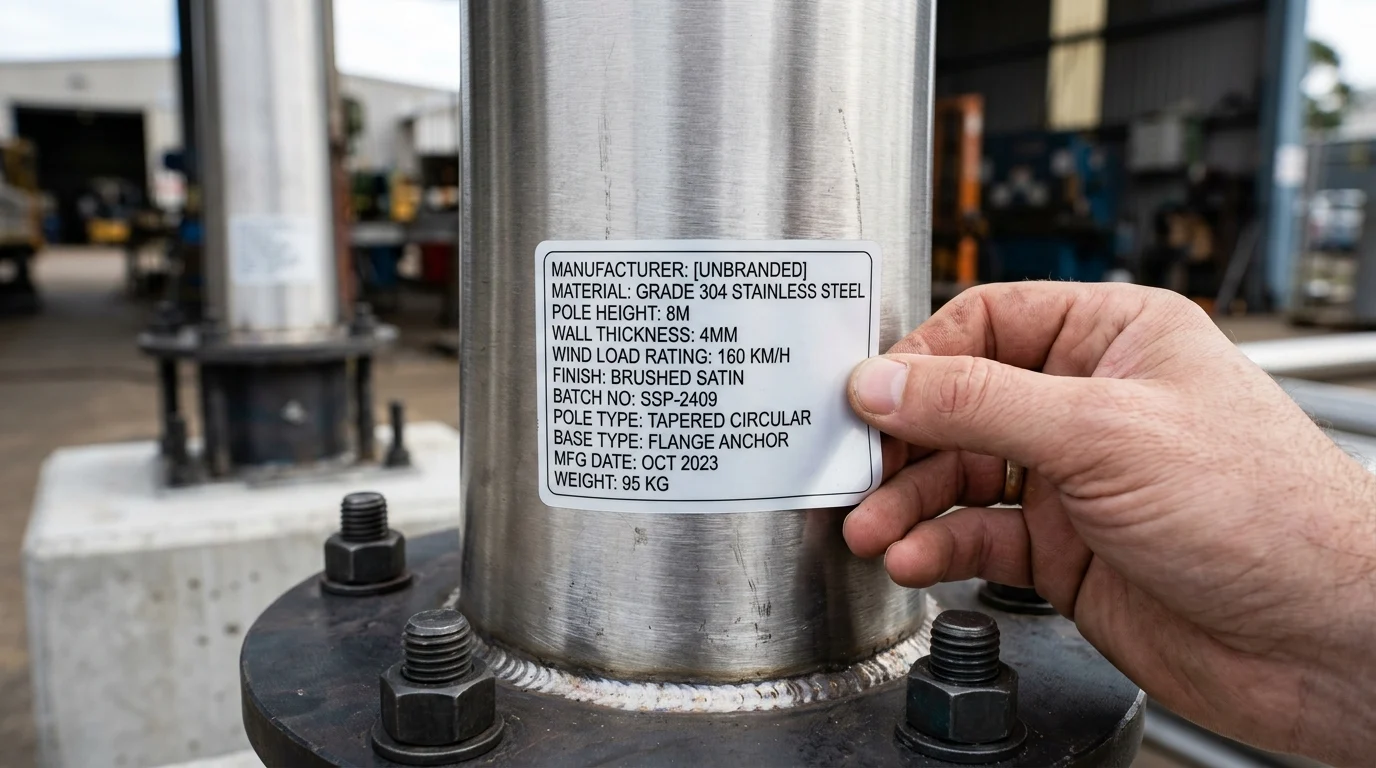
Technical specifications form the contractual baseline between the procurement team and the manufacturer. Vague or incomplete specifications are a primary cause of project failure in the stainless steel light pole market. Buyers must scrutinize the technical submittals to verify that the manufacturer fully comprehends and can execute the required metallurgical and geometric tolerances.
A reliable manufacturer will not only adhere to the provided specifications but will also offer value-engineering insights, suggesting optimal material grades and wall thicknesses based on the specific environmental and load-bearing requirements of the installation site.
Stainless steel grades and wall thickness
The selection of the appropriate stainless steel grade is paramount. While Grade 304 is sufficient for inland, low-corrosion environments, marine and heavy industrial applications strictly require Grade 316 or 316L due to the addition of molybdenum, which drastically improves resistance to chloride pitting. Buyers must demand Mill Test Certificates (MTCs) to verify the chemical composition of the raw materials.
Wall thickness is equally critical for structural stability and fatigue resistance. Depending on the pole height and luminaire weight, acceptable wall thicknesses typically range from 11-gauge (approximately 3.0 mm) for standard pedestrian lighting to 7-gauge (approximately 4.5 mm) or thicker for high-mast highway applications. Manufacturers must demonstrate the capability to maintain uniform wall thickness throughout the forming and tapering processes.
Fabrication controls, welding standards, and inspection
The integrity of a stainless steel light pole relies heavily on the quality of its longitudinal and base plate welds. Procurement specifications must mandate adherence to internationally recognized welding codes, such as AWS D1.1 (Structural Welding Code – Steel) or EN 1090. Manufacturers should employ certified welders and utilize automated submerged arc welding (SAW) or tungsten inert gas (TIG) processes for consistent penetration.
Post-weld inspection protocols are non-negotiable. Leading manufacturers implement rigorous non-destructive testing (NDT), utilizing ultrasonic testing (UT) or radiographic testing (RT) to detect subsurface anomalies. A reliable vendor will guarantee a defect tolerance rate of less than 1% and provide comprehensive documentation of all inspection results.
Material grade comparison table
To facilitate accurate specification, procurement teams should reference the following metallurgical parameters when evaluating manufacturer proposals:
| Alloy Grade | Yield Strength (Min) | PREN (Pitting Resistance) | Carbon Content | Optimal Application Environment |
|---|---|---|---|---|
| 304 | 205 MPa | ~18.0 – 20.0 | ≤ 0.08% | Inland urban areas, low pollution |
| 316 | 205 MPa | ≥ 23.2 | ≤ 0.08% | Coastal zones, moderate industrial |
| 316L | 170 MPa | ≥ 23.2 | ≤ 0.03% | Heavy marine, high-weld stress areas |
How Procurement Teams Can Compare Light Pole Suppliers
Transitioning from technical evaluation to commercial and operational assessment is critical for identifying a sustainable supply chain partner. The global market is saturated with entities claiming manufacturing capabilities, making it imperative for procurement teams to differentiate between genuine, high-capacity factories and intermediary trading companies.
A rigorous supplier comparison framework must encompass commercial viability, proven production capacity, and a transparent operational history. This multifaceted approach ensures that the selected vendor can scale production to meet project timelines while maintaining stringent quality control.
Commercial factors such as MOQ and lead time
Commercial terms often reveal the true nature and capacity of a supplier. Genuine manufacturers typically enforce a Minimum Order Quantity (MOQ) optimized for raw material procurement and production line efficiency, often ranging from 20 to 50 units for custom-engineered stainless steel poles. Intermediaries might offer lower MOQs but at a significant price premium.
Lead time is another critical differentiator. A well-equipped manufacturer managing its own supply chain should quote standard production lead times of 6 to 12 weeks, depending on the complexity of the tapering and finishing processes. Procurement teams must secure contractual guarantees for these timelines, including delay penalty clauses, to protect the broader construction schedule.
Factory audits, reference projects, and export experience
Conducting a comprehensive factory audit, either in-person or via a certified third-party agency (such as SGS or TÜV), is a mandatory step in the qualification process. Auditors should verify the implementation of an ISO 9001 Quality Management System and assess the facility's actual production throughput, looking for capacities exceeding 2,000 poles monthly for large-scale vendors.
Evaluating a supplier's reference projects and export experience provides empirical evidence of their reliability. Procurement teams should request case studies of installations in regions with equivalent regulatory frameworks and environmental stressors. A manufacturer with a proven track record of exporting to stringent markets (e.g., holding CE marking for Europe or UL/ETL listings for North America) demonstrates a sophisticated understanding of international compliance.
Decision matrix for manufacturers vs traders
Procurement teams can utilize the following matrix to evaluate the operational and commercial trade-offs between direct manufacturers and trading entities:
| Evaluation Metric | Direct Manufacturer | Trading Company (Intermediary) |
|---|---|---|
| Cost Structure | Factory-direct pricing; zero intermediary markup | 15% to 30% markup over factory cost |
| Customization Lead Time | Rapid prototyping; direct engineering access | Prolonged due to indirect communication loops |
| Quality Accountability | Direct liability; transparent warranty support | Diffused liability; complex warranty claims |
| Typical MOQ | 20 – 50 units (optimized for production runs) | Often flexible (1 – 10 units), but at a premium |
Which Compliance, Testing, and Logistics Checks Reduce Risk
Even the most precisely engineered light pole is a liability if it lacks the necessary regulatory compliance or arrives at the installation site damaged. Mitigating these risks requires a proactive approach to testing validation and logistical planning.
Procurement contracts must explicitly define the testing standards, packaging methodologies, and shipping protocols required to ensure the product's integrity from the factory floor to final deployment.
Certifications, structural calculations, and corrosion testing
Structural design validation is critical. Buyers should mandate that structural calculations adhere to recognized standards, such as the AASHTO LTS-6 specifications for structural supports. These calculations must account for dead loads, ice loads, and fatigue-inducing wind phenomena like galloping and vortex shedding.
Environmental testing validates the material's longevity. For stainless steel poles intended for aggressive environments, procurement teams should require accelerated corrosion testing data. A standard benchmark is the ASTM B117 salt spray test, where premium 316L stainless steel poles should demonstrate zero signs of red rust or critical pitting after 1,000 to 2,000 hours of continuous exposure.
Packaging, shipping terms, and installation support
The surface finish of stainless steel is highly susceptible to aesthetic damage during international transit. Specifications must detail the packaging requirements, such as multi-layer protective wrapping utilizing heavy-duty bubble wrap, industrial felt, and rigid wooden crating for the base plates and delicate luminaire mounting brackets.
Logistical efficiency directly impacts the landed cost. Manufacturers must demonstrate expertise in shipping container optimization, ensuring that spatial utilization is maximized without compromising product safety. For example, a proficient logistics team can safely nest and secure up to 60 standard 8-meter tapered poles within a single 40-foot High Cube (40HQ) container. Furthermore, vendors should provide comprehensive installation manuals and responsive remote engineering support to assist local contractors during deployment.
How Buyers Should Make the Final Decision
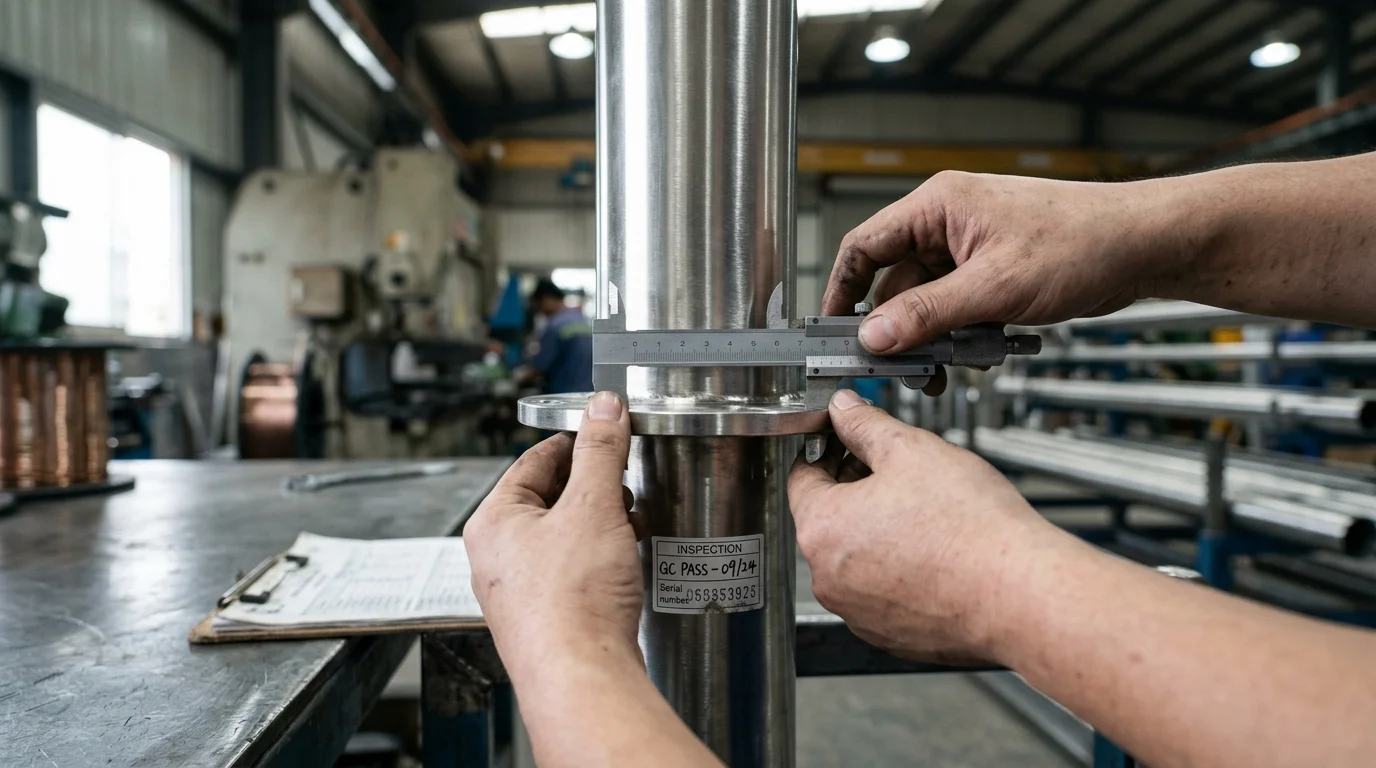
The culmination of the vendor evaluation process requires synthesizing technical data, audit reports, and commercial proposals into a definitive procurement decision. This final phase demands objective analysis to balance upfront capital expenditure against long-term asset reliability.
By systematically executing a structured selection process and remaining vigilant for industry-specific red flags, buyers can confidently secure a manufacturing partner capable of delivering high-performance infrastructure.
Step-by-step supplier selection process
The selection process should follow a strict, phased methodology. It begins with a broad Request for Information (RFI) to filter candidates based on ISO certifications and base capacities, followed by a detailed Request for Quotation (RFQ) demanding precise technical submittals and MTCs.
Once the shortlist is narrowed, buyers must procure and rigorously evaluate a physical sample or prototype. If the prototype meets all tolerances, a comprehensive factory audit is executed. Finally, risk is further mitigated by issuing a pilot order—typically representing 10% to 15% of the total project volume—to validate the manufacturer's production consistency, packaging quality, and adherence to delivery schedules before releasing the bulk contract.
Warning signs for quality, compliance, and delivery risk
Procurement teams must remain alert to critical warning signs that indicate high risk. A primary red flag is a vendor's reluctance or refusal to provide verifiable Mill Test Certificates from reputable steel mills, which often masks the use of substandard, high-carbon scrap alloys that will prematurely corrode.
Pricing anomalies are equally telling. Quotations that fall more than 20% below the established market average are rarely the result of manufacturing efficiency; they almost universally indicate unauthorized material substitution, reduced wall thickness, or compromised welding standards. Additionally, buyers should reject vendors offering vague or severely limited warranty terms; a confident manufacturer of premium stainless steel light poles should standardly provide a structural warranty ranging from 10 to 20 years.
Key Takeaways
- The most important conclusions and rationale for light pole market
- Specs, compliance, and risk checks worth validating before you commit
- Practical next steps and caveats readers can apply immediately
Frequently Asked Questions
What stainless steel grade should I choose for a light pole?
Use 304 for inland, low-corrosion sites. Choose 316 or 316L for coastal, marine, or industrial environments where chloride and pollutants increase pitting risk.
How can I verify a stainless steel light pole manufacturer is reliable?
Ask for Mill Test Certificates, welding certifications, inspection records, and project references. A reliable supplier should also confirm material grade, wall thickness, and corrosion-control processes clearly.
Why is wall thickness important when buying stainless steel light poles?
Wall thickness affects strength, vibration resistance, and service life. Typical poles may use about 3.0 mm, while heavier-duty or taller applications often require 4.5 mm or more.
What quality checks should Moreluxpost buyers request before ordering?
Request material certificates, weld inspection reports, dimensional checks, and surface treatment details. For critical projects, also ask for wind-load calculations and factory testing documentation.
Do stainless steel light poles cost more upfront but save money long term?
Yes. Stainless steel poles usually cost more initially, but better corrosion resistance and lower maintenance can reduce total ownership costs over a 30 to 50-year lifespan.