
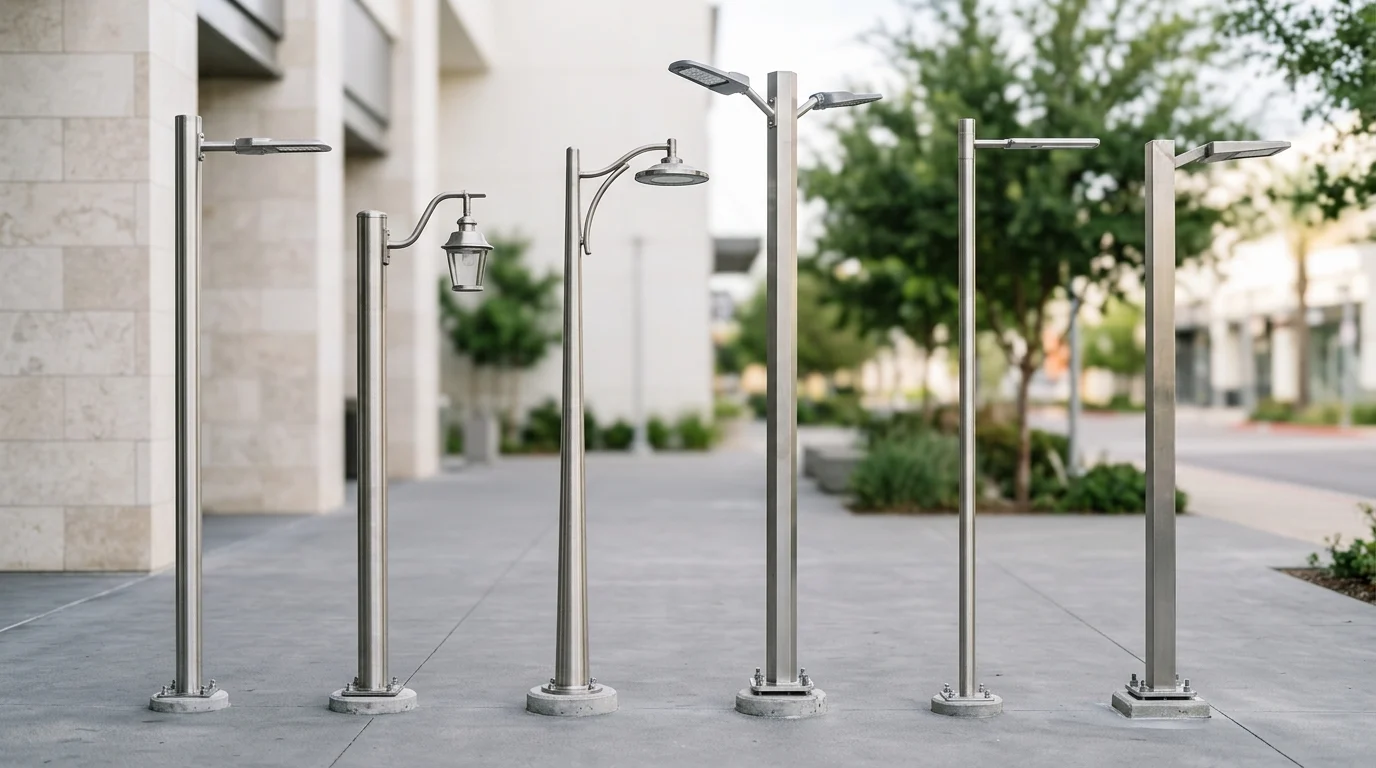
Why Stainless Steel Light Pole Selection Is a Strategic Procurement
Procuring urban infrastructure requires balancing initial capital expenditure against long-term performance. Stainless steel light pole selection represents a strategic procurement decision for municipalities, commercial developers, and infrastructure planners. Unlike carbon steel or standard aluminum, stainless steel offers distinct metallurgical advantages that directly impact maintenance cycles and overall project viability.
Project lifespan, maintenance budget, and total cost of ownership
The total cost of ownership (TCO) for lighting infrastructure is heavily dictated by the material's resistance to environmental degradation. While stainless steel light poles typically command a 30% to 50% higher initial purchase price compared to galvanized steel alternatives, their projected operational lifespan frequently exceeds 30 years with minimal intervention. This longevity fundamentally alters the procurement math for long-term municipal and commercial projects.
When factoring in lifecycle maintenance budgets, the absence of repainting requirements and the elimination of rust-related structural failures can reduce ongoing OPEX by up to 60% over a two-decade period. Procurement teams must evaluate the total lifecycle cost rather than strictly the unit price, recognizing that the upfront premium is rapidly amortized through significantly reduced labor, inspection, and replacement material costs.
Pole requirements by project type
Defining pole requirements depends heavily on the specific deployment environment. Coastal projects, exposed to high airborne chloride concentrations, necessitate marine-grade alloys to prevent pitting and crevice corrosion. Conversely, inland urban streetscapes or smart city developments may prioritize aesthetic integration and the structural capacity to house telecommunications equipment alongside standard LED luminaires.
High-traffic commercial plazas often require decorative elements with brushed or mirrored finishes that resist vandalism and scratching. By categorizing projects into distinct environmental zones—such as high-corrosion coastal, heavy-industrial, or standard urban—buyers can accurately specify the necessary alloy and structural parameters, avoiding both under-engineering risks and costly over-specification.
Key Technical Specifications for Stainless Steel Light Poles

Transitioning from high-level project requirements to precise engineering specifications is critical to ensuring structural integrity and public safety. Procurement documents must clearly articulate the technical parameters required for the stainless steel light poles to function reliably under peak environmental stresses.
Grade, wall thickness, height, and load capacity
The foundational specifications begin with the material grade. Type 304 stainless steel serves as the industry standard for general urban environments, while Type 316L, containing 2% to 3% molybdenum, is mandatory for coastal regions. Wall thickness typically ranges from 2.5mm for standard 3-meter pedestrian poles to 6.0mm or higher for 12-meter highway infrastructure.
Height and load capacity must account for the Effective Projected Area (EPA) of the mounted fixtures. Modern smart poles must support not only luminaires but also CCTV cameras, 5G micro-cells, and environmental sensors. A robust specification will demand a minimum load capacity of 40kg to 60kg at the pole apex, engineered to prevent excessive deflection under dynamic loads.
Mounting options, base plate design, and wind resistance
The interface between the pole and the foundation is a common point of failure if inadequately designed. Base plate thickness should generally fall between 12mm and 25mm, depending on the pole height, and must be engineered to accommodate specific anchor bolt patterns (commonly M16 to M24 sizes). The base design often includes reinforcing gussets to distribute structural stress efficiently.
Wind resistance is a non-negotiable safety parameter. Specifications must dictate the required survival wind speed, often ranging from 120 km/h in sheltered inland areas to over 180 km/h in hurricane-prone coastal zones. The manufacturer must provide structural calculations proving that the selected geometry, wall thickness, and mounting configuration can withstand these specific aerodynamic forces without yielding.
Buyer comparison checklist for technical evaluation
To facilitate objective vendor evaluations, procurement teams should utilize a standardized technical comparison framework. This ensures that competing bids are evaluated on an identical baseline, preventing suppliers from quietly substituting inferior grades or thinner materials to lower their quoted prices.
| Specification Parameter | Urban / Inland Standard (Typical) | Coastal / High-Corrosion (Typical) |
|---|---|---|
| Material Grade | 304 Stainless Steel | 316L Stainless Steel |
| PREN (Pitting Resistance) | ~18 – 20 | ~23 – 28 |
| Minimum Wall Thickness | 3.0mm (for 6m pole) | 4.0mm (for 6m pole) |
| Base Plate Thickness | 16mm | 20mm |
| Design Wind Speed | 130 km/h | 180 km/h |
How to Assess Supplier Capability and Manufacturing Reliability
Evaluating the technical specifications is only half the procurement equation; validating the manufacturer's ability to consistently execute those specifications is equally vital. A supplier's internal quality control and production capabilities dictate whether the delivered product will match the approved engineering prototype.
In-house production, welding quality, and surface finishing controls
Advanced manufacturing requires comprehensive in-house capabilities, encompassing cutting, bending, spinning, and welding. High-quality stainless steel light poles rely heavily on precise Tungsten Inert Gas (TIG) welding to ensure full penetration and structural continuity without compromising the alloy's inherent corrosion resistance. Suppliers should demonstrate automated or robotic welding processes for longitudinal seams to guarantee consistency across high-volume runs.
Surface finishing controls are equally critical for stainless steel. The aesthetic and protective qualities depend on the final treatment, whether it is a #4 satin brushed finish, a #8 mirror polish, or a specialized architectural coating. If powder coating is applied over the substrate, the manufacturer must ensure an even application thickness of 80 to 120 microns, preceded by proper surface preparation to guarantee long-term adhesion.
Customization process, drawing review, samples, and MOQ
B2B procurement frequently involves bespoke designs tailored to specific municipal or architectural requirements. The supplier's customization process should begin with rigorous CAD or SolidWorks drawing reviews, ensuring that the buyer's aesthetic vision aligns with structural realities. A capable manufacturer typically requires 14 to 21 days to produce an engineering prototype for physical sign-off before mass production begins.
Minimum Order Quantities (MOQs) play a significant role in supplier selection and inventory planning. While standard tubular poles might have an accessible MOQ of 10 to 20 units, highly customized architectural structures may require larger commitments to offset specialized tooling costs. Buyers must negotiate these thresholds early, ensuring the supplier can scale production from a small prototype batch to a full deployment of several hundred units without extending lead times.
Compliance, Packaging, and Logistics Checks to Reduce Risk
Mitigating risk extends beyond the factory floor. Proper compliance documentation, rigorous inspection protocols, and secure export logistics are essential to ensure that the stainless steel light poles arrive intact and legally ready for municipal installation.
Standards, certifications, inspection points, and traceability
International infrastructure projects demand strict adherence to recognized engineering and safety standards. Suppliers must provide documentation proving compliance with frameworks such as EN 40 for lighting columns or equivalent AASHTO standards in North America. Furthermore, the raw stainless steel must meet material standards like ASTM A666 to verify its precise chemical composition.
Inspection points should be clearly defined in the purchase agreement. Best practices dictate Non-Destructive Testing (NDT), such as ultrasonic or dye penetrant inspection, on at least 10% to 20% of critical welds. Traceability is also paramount; reputable manufacturers provide mill test certificates (MTCs) for every batch of steel, allowing buyers to trace the exact heat number of the alloy used in their specific pole order.
Export packaging and container loading review
The high aesthetic value of stainless steel makes it particularly vulnerable to cosmetic damage during international transit. Export packaging must go beyond standard industrial wrapping. Poles should be individually sleeved in heavy-duty bubble wrap or non-woven felt, with rigid protective caps applied to the base plates to prevent them from gouging adjacent units during ocean freight.
Container loading requires meticulous planning to maximize freight efficiency while preventing load shifting. For context, a standard 40-foot High Cube (40HQ) container can typically accommodate 120 to 150 units of standard 6-meter poles, depending on the base plate dimensions and tapering profile. Buyers should mandate photographic evidence of the container loading process to verify that appropriate dunnage and lashing techniques were employed before the vessel departs.
A Practical Procurement Checklist for Final Supplier Selection
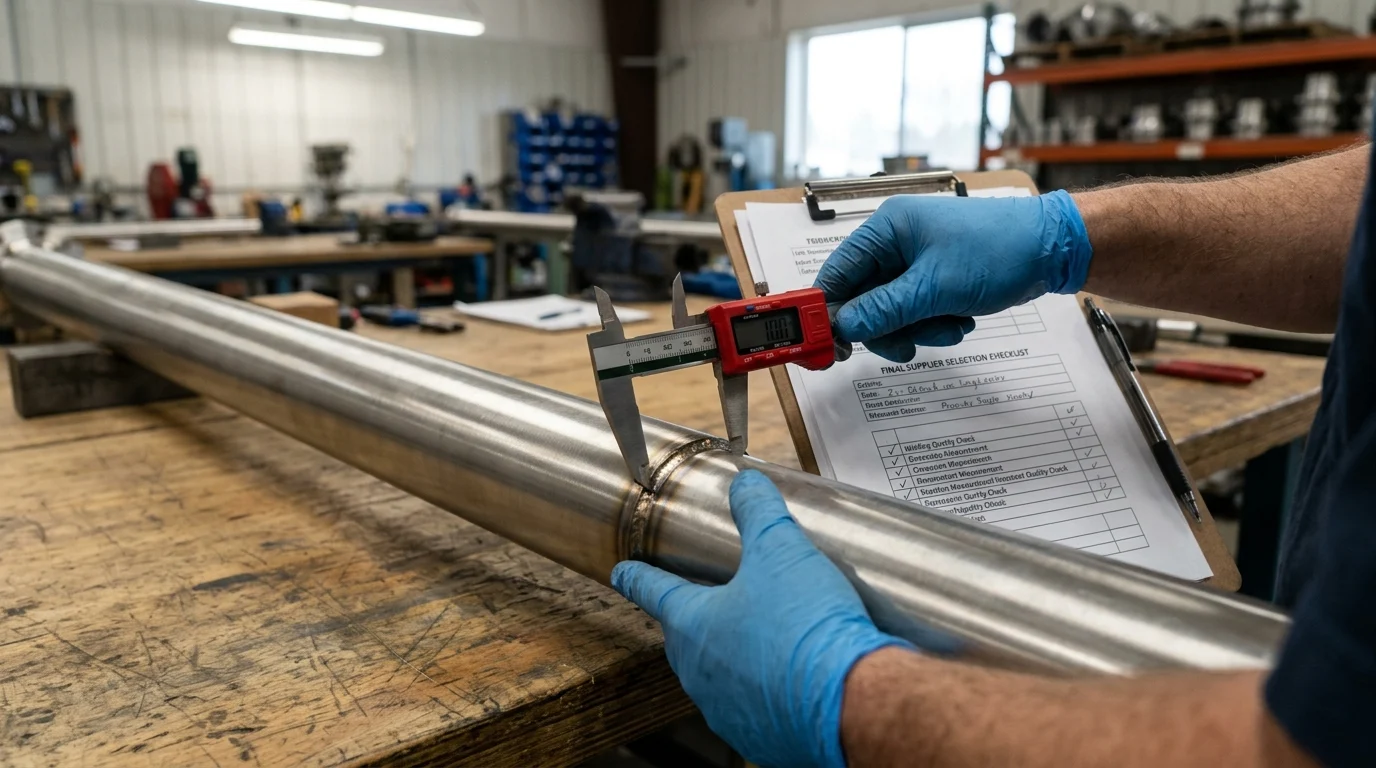
The culmination of the sourcing process is the final supplier selection, which requires synthesizing technical data, manufacturing capability, and commercial terms into a unified decision matrix. A structured approach prevents costly missteps at the final hurdle of procurement.
Quote evaluation workflow
An effective quote evaluation workflow must dissect the landed cost of the goods. Procurement teams should separate the bill of materials (BOM) cost from manufacturing labor, surface treatments, and international freight. A critical red flag during quote evaluation is a price significantly below the market average; this often indicates the use of under-thickness materials where the negative tolerance exceeds the acceptable 5% to 10% margin, ultimately compromising structural integrity.
Buyers should also critically assess payment terms and lead times. Standard production cycles for commercial orders range from 30 to 45 days. Suppliers offering exceptionally fast turnarounds may be bypassing essential quality control checks or utilizing pre-manufactured stock that does not precisely match the requested structural specifications.
Final decision criteria for distributors, wholesalers, and contractors
Final decision criteria vary significantly depending on the buyer's position within the supply chain. A strategic matrix helps align the chosen supplier with the specific business model of the purchasing entity.
| Buyer Profile | Primary Procurement Focus | Key Supplier Requirement |
|---|---|---|
| Distributors / Importers | Margin protection, inventory consistency | Optimized packaging for freight density, stable pricing agreements. |
| Wholesalers | High volume turnover, rapid restocking | Low MOQs for varied SKUs, fast 30-day production lead times. |
| EPC Contractors | On-site efficiency, project compliance | Comprehensive EN/ASTM certification, precise base plate tolerances for easy installation. |
Ultimately, selecting the right manufacturing partner for stainless steel light poles is not merely a transactional purchase. It is an investment in urban infrastructure that demands rigorous technical vetting, transparent communication, and a shared commitment to long-term quality and public safety.
Key Takeaways
- Wholesale sourcing and supply-chain implications for stainless steel light pole selection
- Specifications, compliance, and commercial terms buyers should validate
- Actionable recommendations for distributors and procurement teams
Frequently Asked Questions
Which stainless steel grade is best for light poles?
Use 304 stainless steel for standard inland urban projects. Choose 316L for coastal, marine, or high-chloride environments to reduce pitting and extend service life.
How do I choose the right pole height and wall thickness?
Match height and thickness to fixture weight, EPA, and wind zone. Typical ranges are 2.5mm for small pedestrian poles and 6.0mm+ for taller roadway applications.
Why can stainless steel poles cost more upfront?
They usually cost more initially than galvanized steel, but lower repainting, corrosion repair, and replacement needs can significantly reduce lifecycle cost over 20 to 30 years.
What specifications should I confirm before ordering?
Check grade, height, wall thickness, load capacity, base plate size, anchor bolt pattern, finish, and certified wind resistance. These details prevent under-specification and quote mismatches.
Can Morelux customize stainless steel light poles for municipal or commercial projects?
Yes. Morelux supports tailored pole designs and handles cutting, bending, welding, polishing, coating, and testing in-house for urban, roadway, decorative, and smart pole applications.