
Introduction
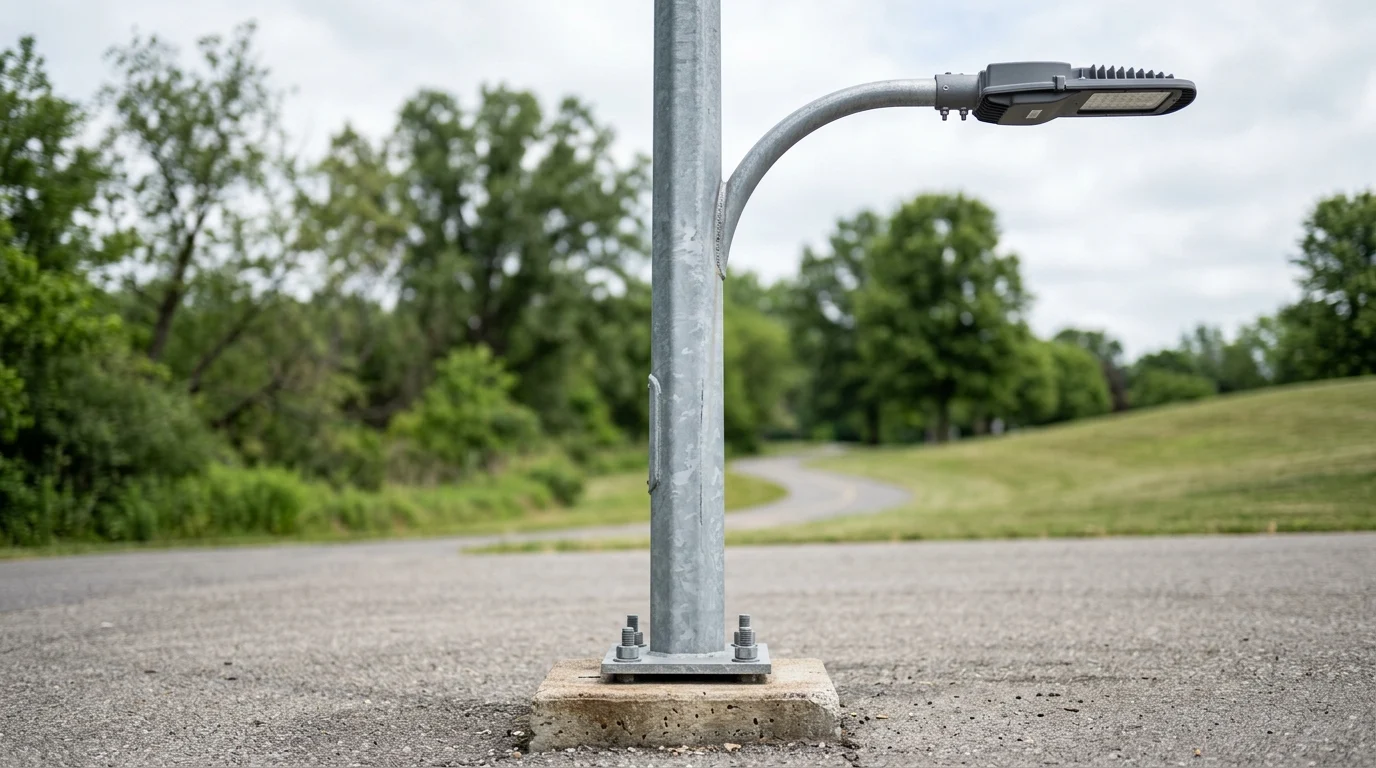
Service life for a steel street light pole is usually measured in decades, but the exact range depends on more than the steel itself. Corrosion exposure, coating quality, manufacturing standards, and local conditions such as humidity, salt, and pollution all influence how long a pole can remain structurally reliable. This article explains the typical lifespan you can expect, why hot-dip galvanizing and duplex coatings matter, and which environmental and maintenance factors most strongly affect durability, giving you a practical framework for evaluating pole performance over time.
What Is the Typical Lifespan of a Steel Street Light
The baseline expected service life of a utility-grade steel street light pole typically ranges from 25 to 50 years. This broad operational window is not arbitrary; it is fundamentally dictated by the interplay between the pole's metallurgical properties, the applied surface treatments, and the aggressiveness of the installation environment.
While steel offers exceptional tensile strength and structural rigidity, its inherent vulnerability to oxidation requires engineered mitigation strategies. Consequently, the lifespan of these infrastructural assets is best understood not as a fixed number, but as a variable timeline dependent on precise manufacturing standards and site-specific environmental burdens.
How do coatings affect service life
Surface coatings are the primary defense mechanism against atmospheric corrosion, directly determining the functional lifespan of the steel substrate. Hot-dip galvanizing (HDG) is the industry standard, providing both barrier and cathodic protection. According to ASTM A123 standards, a standard zinc coating thickness of 85 micrometers (µm) can protect steel for over 40 years in benign rural environments, though this drops significantly in harsher zones.
To further extend service life, engineers often specify a duplex system—combining hot-dip galvanizing with a topcoat of architectural powder coating or liquid paint. This synergistic effect extends the corrosion protection by a factor of 1.5 to 2.5 times compared to the sum of the individual coating lifespans. The powder coat shields the zinc from chemical attack, while the zinc prevents under-film corrosion if the powder coat is mechanically breached.
| Coating System | Rural Lifespan (C2) | Industrial Lifespan (C4) | Marine Lifespan (C5-M) |
|---|---|---|---|
| Bare Steel | < 5 years | < 2 years | < 1 year |
| Powder Coat Only | 10 – 15 years | 5 – 8 years | 3 – 5 years |
| Hot-Dip Galvanized (85 µm) | 40+ years | 20 – 25 years | 10 – 15 years |
| Duplex (HDG + Powder Coat) | 60+ years | 35 – 45 years | 20 – 25 years |
Which environmental factors shorten lifespan
Environmental corrosivity is the primary accelerator of steel degradation. In coastal and marine environments (classified as ISO 9223 C5-M), high concentrations of airborne chlorides aggressively attack zinc coatings, consuming the sacrificial layer at rates exceeding 4.2 µm per year. Once the zinc is depleted, rapid localized pitting of the base steel follows.
Industrial zones (C4 environments) present a different threat via high atmospheric concentrations of sulfur dioxide and nitrogen oxides, which form acidic compounds when combined with moisture. Furthermore, below-ground degradation is heavily influenced by soil chemistry. Soil pH levels below 5.5 (highly acidic) or above 8.5 (highly alkaline), combined with high soil resistivity and moisture content, can rapidly deteriorate the embedded portions of direct-burial poles.
Stray electrical currents from nearby subterranean transit systems or grounded utilities also shorten lifespan by inducing electrolytic corrosion at the pole base, potentially stripping away material at a rate of several millimeters per year if unmitigated.
What Determines Steel Street Light Pole Durability
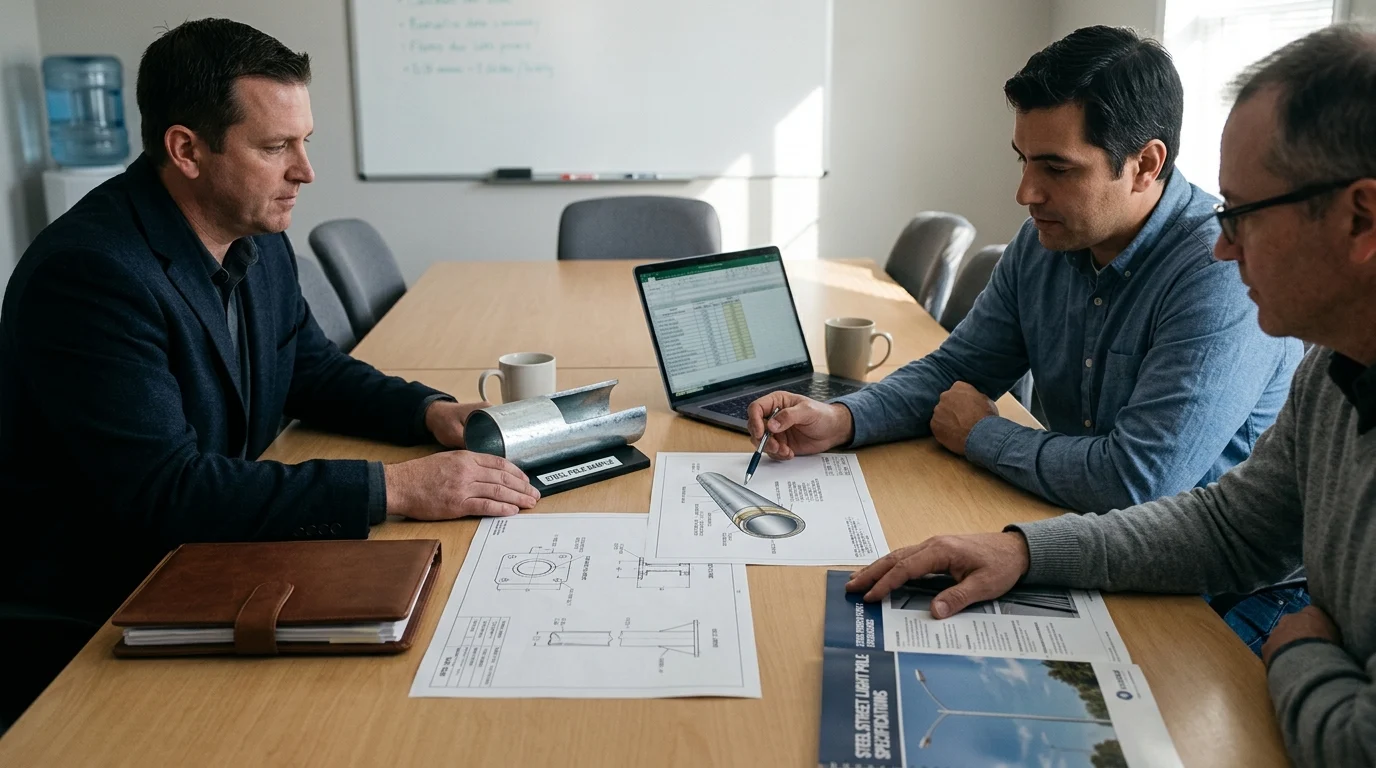
The physical durability of a steel street light pole relies on its structural engineering and metallurgical integrity. Beyond resisting static gravitational loads, a pole must withstand complex dynamic forces, including wind shear, vehicular vibrations, and thermal expansion. The ultimate longevity of the pole is determined during the fabrication phase, where material selection and joining techniques establish its maximum load-bearing capacity.
Engineers calculate a pole's durability based on its ability to support the Effective Projected Area (EPA) of the luminaire and mast arm under extreme regional wind speeds, often engineering structures to survive 50-year storm events.
How do material and wall thickness matter
The mechanical resilience of a pole begins with the grade of steel. Standard poles typically utilize Q235 steel, which offers a yield strength of 235 MPa. However, for higher load requirements, high-mast applications, or high-wind zones, manufacturers upgrade to Q345 steel (yield strength of 345 MPa) or ASTM A595 Grade A steel, which provides superior tensile strength and fatigue resistance.
Wall thickness, or gauge, is equally critical to both structural stability and corrosion allowance. Standard municipal poles range from 3.0 mm (11-gauge) to 6.0 mm (3-gauge) in thickness. A thicker wall resists buckling under extreme wind loads and provides a larger buffer against section loss due to oxidation. For example, a 1.0 mm loss of material on a 3.0 mm pole represents a catastrophic 33% reduction in structural capacity, whereas the same loss on a 6.0 mm pole is a more manageable 16% reduction.
Why do galvanizing and weld quality matter
Weld seams are inherent stress concentrators and are historically the most common initiation sites for both structural fatigue and premature corrosion. Automated Submerged Arc Welding (SAW) is preferred for longitudinal seams because it ensures deep, uniform penetration and minimizes porosity. Incomplete weld penetration leaves microscopic voids that trap moisture and initiate internal rusting.
The galvanizing process must also be flawlessly executed. If the steel is improperly cleaned or fluxed prior to immersion in the molten zinc bath, the intermetallic bonding fails, leading to flaking and localized exposure. Furthermore, the heat of the 450°C (842°F) zinc bath can cause thermal distortion in thinner poles or induce liquid metal embrittlement at the weld toes if residual stresses are not properly managed.
What are the main failure modes
The primary failure mode for steel street light poles is high-cycle fatigue at the base plate connection. Wind-induced vortex shedding can cause the pole to oscillate, subjecting the weld toe at the base to millions of micro-stress cycles (often exceeding 10^7 cycles over a decade). This eventually initiates microscopic fatigue cracks that propagate through the structural cross-section.
Internal corrosion is another major failure mode. Condensation builds up inside the hollow shaft due to temperature fluctuations. If the drainage holes at the base plate are blocked by debris or improperly designed, water pools at the bottom of the shaft, corroding the pole from the inside out where it cannot be detected by visual inspection.
Finally, mechanical impact from vehicular collisions or heavy maintenance equipment can permanently deform the pole profile, instantly compromising its engineered load-bearing capacity and fracturing the protective zinc coating.
How Should Buyers Inspect and Maintain Steel Street Light Poles
Maximizing the return on investment for municipal lighting infrastructure requires a shift from reactive replacement to proactive asset management. Because steel degrades progressively, routine inspection and targeted maintenance can identify microscopic fatigue and localized corrosion before they escalate into catastrophic structural failures.
Industry best practices dictate that steel street light poles undergo comprehensive structural assessments on 5-year cycles, with more frequent 3-year intervals recommended for assets located in highly corrosive C4 or C5-M environments.
Which standards and tests verify quality
Visual inspections alone are insufficient for verifying structural integrity. Asset managers rely on Non-Destructive Testing (NDT) methodologies to evaluate critical stress points. Magnetic Particle Inspection (MPI), governed by ASTM E709, is routinely used to detect surface and slightly subsurface discontinuities, specifically fatigue cracking around the base plate welds.
To assess internal corrosion and measure remaining wall thickness, Ultrasonic Testing (UT) is employed. UT devices send high-frequency sound waves through the steel, accurately mapping section loss without requiring physical access to the pole's interior. Additionally, dry film thickness gauges (such as Elcometer devices) are used to verify that the protective coating still meets the minimum specification of 75 µm required to prevent base metal oxidation.
What maintenance steps extend service life
Preventative maintenance is highly effective at extending the service life of steel poles. The most critical step is ensuring that the internal drainage holes near the base plate remain unobstructed. Clearing accumulated dirt, vegetation, and insect nests prevents the internal pooling of condensation that drives hidden base corrosion.
Surface maintenance involves addressing minor mechanical damage to the coating system. When the galvanizing layer is scratched or chipped by impact, the area must be cleaned and treated with a zinc-rich primer. To effectively restore cathodic protection, the repair paint must contain a minimum of 85% zinc dust by weight in the dried film, adhering to ASTM A780 standards.
For poles utilizing anchor bolts, checking and re-torquing the leveling nuts is vital. Loose anchor nuts alter the load distribution, exponentially increasing the bending moment at the base plate and accelerating fatigue failure under wind loads.
When should repair or replacement be considered
Repair is generally viable for superficial coating damage or minor base plate deformation, but structural degradation requires strict replacement protocols. Asset managers must condemn and replace a steel pole if ultrasonic testing reveals a localized section loss exceeding 15% to 20% of the original specified wall thickness.
Furthermore, if magnetic particle inspection identifies crack propagation in the base plate weld that extends beyond 10% of the pole's circumference, field welding repairs are typically prohibited due to the difficulty of restoring the original metallurgical temper and fatigue resistance. In such cases, immediate replacement is structurally mandated to mitigate the risk of a pole collapse.
How Can Buyers Choose the Right Steel Street Light Pole
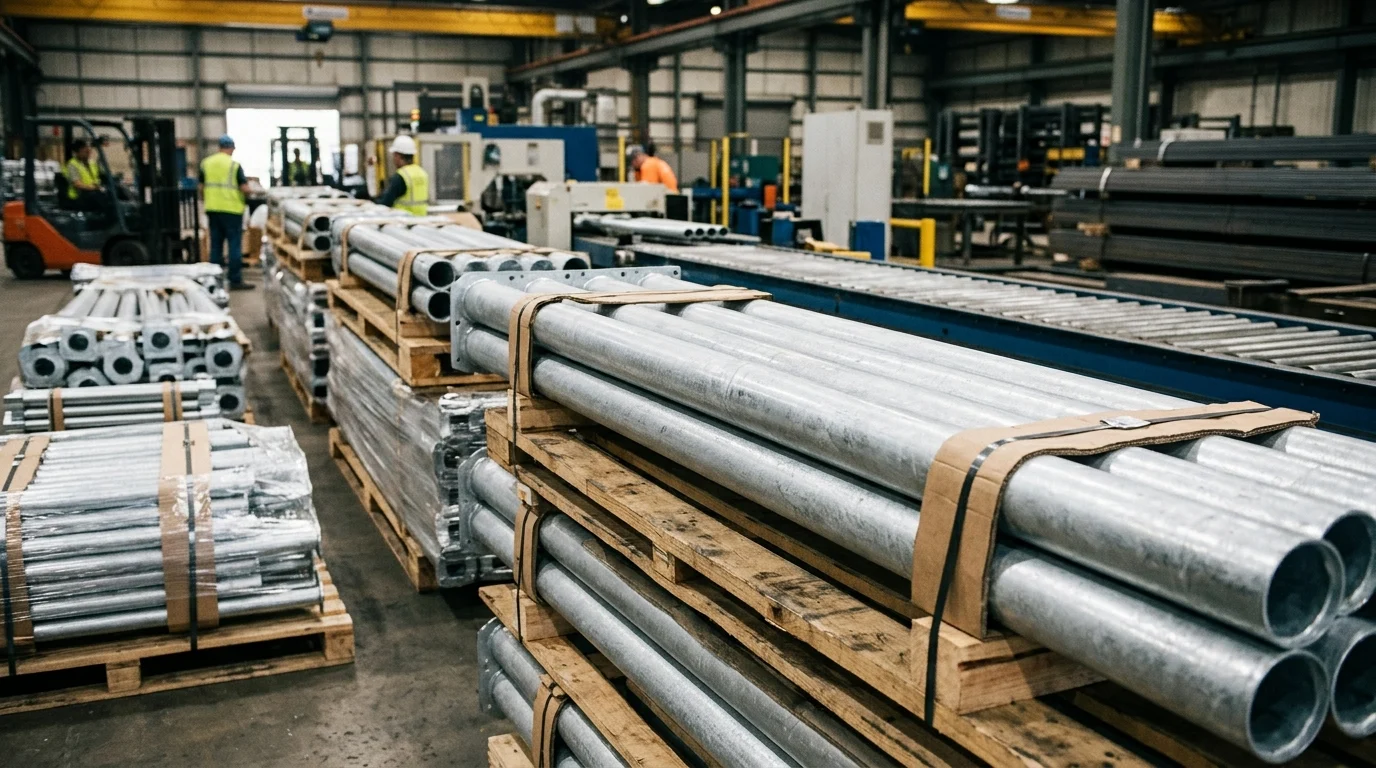
Procuring the correct steel street light pole is a complex engineering exercise that requires balancing upfront capital expenditure against long-term lifecycle costs. Buyers must look beyond aesthetic preferences and focus heavily on localized environmental data, aerodynamic load calculations, and strict metallurgical specifications.
A pole designed for a benign inland suburb will fail prematurely if deployed in a coastal hurricane zone. Consequently, selecting the right asset involves cross-referencing luminaire specifications with site-specific topological and meteorological constraints.
How should pole selection match site conditions
Pole selection must be directly correlated to the regional wind zone and the Effective Projected Area (EPA) of the attached fixtures. In regions subject to extreme weather, such as coastal areas experiencing up to 150 mph (241 km/h) wind speeds, buyers must specify tapered octagonal or dodecagonal pole profiles rather than simple round tubular designs. These multi-sided profiles significantly reduce the aerodynamic drag coefficient and mitigate vortex shedding.
Corrosion protection must also match the site's ISO 9223 corrosivity category. Standard hot-dip galvanizing is sufficient for inland residential areas, but coastal or heavy industrial deployments require the specification of a duplex coating system or the use of specialized weathering steel.
| Site Condition | Wind Load Requirement | Recommended Profile | Minimum Wall Thickness | Recommended Coating |
|---|---|---|---|---|
| Inland Residential | < 90 mph (145 km/h) | Round Tubular | 3.0 mm (11-gauge) | Hot-Dip Galvanized |
| Highway / Arterial | < 120 mph (193 km/h) | Tapered Octagonal | 4.0 mm (8-gauge) | HDG + Powder Coat |
| Coastal / Hurricane | Up to 150 mph (241 km/h) | Tapered Dodecagonal | 6.0 mm (3-gauge) | Duplex System (Marine Grade) |
What specification mistakes shorten pole life
One of the most common specification mistakes is under-sizing the wall thickness to reduce initial procurement costs. Downgrading from a 4.0 mm to a 2.5 mm wall thickness may yield a 20% upfront material saving, but it drastically reduces the pole's fatigue life and corrosion allowance, often cutting the operational lifespan in half.
Another frequent error is neglecting to specify vibration dampers for poles carrying modern, lightweight LED fixtures. Legacy High-Pressure Sodium (HPS) fixtures were heavy and naturally damped harmonic vibrations. Lighter LED fixtures alter the natural frequency of the pole, making it highly susceptible to destructive second-mode vibrations under steady, low-velocity winds.
Finally, buyers frequently fail to specify internal coating requirements. While external aesthetics are heavily scrutinized, a pole without internal galvanizing or an asphaltic interior base coating is highly vulnerable to internal condensation pooling, leading to premature structural failure from the inside out.
Key Takeaways
- The most important conclusions and rationale for Steel Street Light Pole
- Specs, compliance, and risk checks worth validating before you commit
- Practical next steps and caveats readers can apply immediately
Frequently Asked Questions
What is the typical lifespan of a steel street light pole?
Most utility-grade steel street light poles last 25 to 50 years, depending on coating quality, steel grade, wall thickness, and local environment.
Which coating gives the longest service life for a steel street light pole?
A duplex system—hot-dip galvanizing plus powder coating—usually lasts longest. It performs especially well in industrial and coastal areas compared with galvanizing or powder coating alone.
How does a coastal environment affect pole lifespan?
Salt-laden air speeds up corrosion and can cut service life significantly. In marine zones, specifying a duplex-coated pole is a practical way to improve longevity.
Does steel grade or wall thickness really matter?
Yes. Higher-strength steel and thicker walls improve load capacity, fatigue resistance, and corrosion allowance, which helps poles handle wind, vibration, and long-term wear.
How can buyers choose a longer-lasting steel street light pole from MoreLuxPost?
Match the pole to your site: ask for hot-dip galvanized or duplex coating, confirm steel grade and wall thickness, and share whether the project is coastal, industrial, or high-wind.