
Selecting the ideal steel light pole for highway infrastructure requires a technical evaluation of structural integrity, environmental resistance, and safety standards to ensure long-term road visibility. This guide outlines the critical engineering factors, material specifications, and regulatory compliance necessary for choosing a steel street light pole that meets modern municipal requirements.
Understanding Highway Lighting Requirements
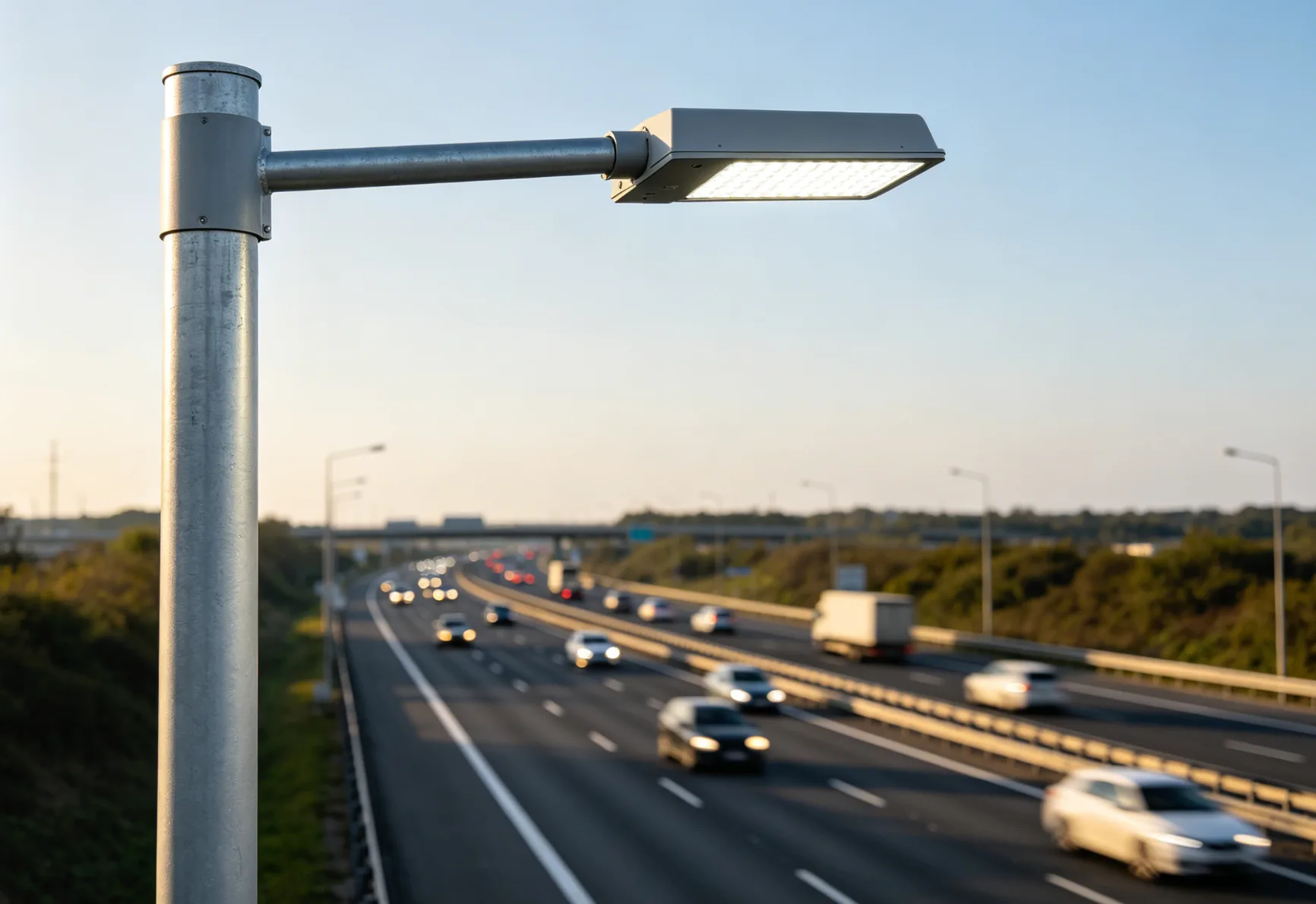
Highway lighting serves a primary function of reducing night-time crashes by improving the visibility of the roadway and its immediate surroundings. A high-performance steel light pole must support heavy luminaires while resisting high-velocity wind loads common in open corridor environments. Engineering departments prioritize tapered steel poles for these projects because their geometric design offers superior stress distribution compared to non-tapered alternatives.
According to the American Association of State Highway and Transportation Officials (AASHTO), supports for highway signs, luminaires, and traffic signals must adhere to strict structural vibration and fatigue guidelines. When specifying a steel street light pole, engineers must calculate the Effective Projected Area (EPA) to ensure the pole can withstand local wind speeds without structural failure.
Material Selection: Steel vs. Aluminum
The choice between steel and aluminum for highway lighting depends on the specific project budget, environmental conditions, and height requirements. While both materials are common, the steel light pole remains the industry standard for high-mast and heavy-load applications due to its higher tensile strength and lower cost per unit of strength.
| Feature | Galvanized Steel Pole | Aluminum Light Pole |
|---|---|---|
| Tensile Strength | High (50,000+ PSI) | Moderate (30,000+ PSI) |
| Corrosion Resistance | Excellent (via Hot-Dip Galvanizing) | Superior (Natural Oxide Layer) |
| Weight | Heavy (Requires specialized lifting) | Lightweight (Easier installation) |
| Typical Height | Up to 50+ meters | Typically under 12 meters |
| Cost-Effectiveness | High for large-scale projects | Lower maintenance in coastal areas |
For highway segments prone to high winds, the octagonal steel pole provides a rigid structure that minimizes deflection.
Structural Design and Tapering Methods
Tapered designs are essential for highway lighting to manage the weight of the luminaire at the peak while maintaining a stable base. A steel street light pole is typically manufactured using a cold-forming process to create a round or multi-sided taper. This design reduces the wind resistance of the pole, which is critical for maintaining the focus of the light beam on the highway surface during inclement weather.
The Illuminating Engineering Society (IES) recommends specific mounting heights based on the width of the highway to achieve optimal uniformity. Using a high-mast steel pole allows for fewer poles per mile, reducing the overall infrastructure footprint and lowering maintenance costs for municipal authorities.
Corrosion Protection: Hot-Dip Galvanizing
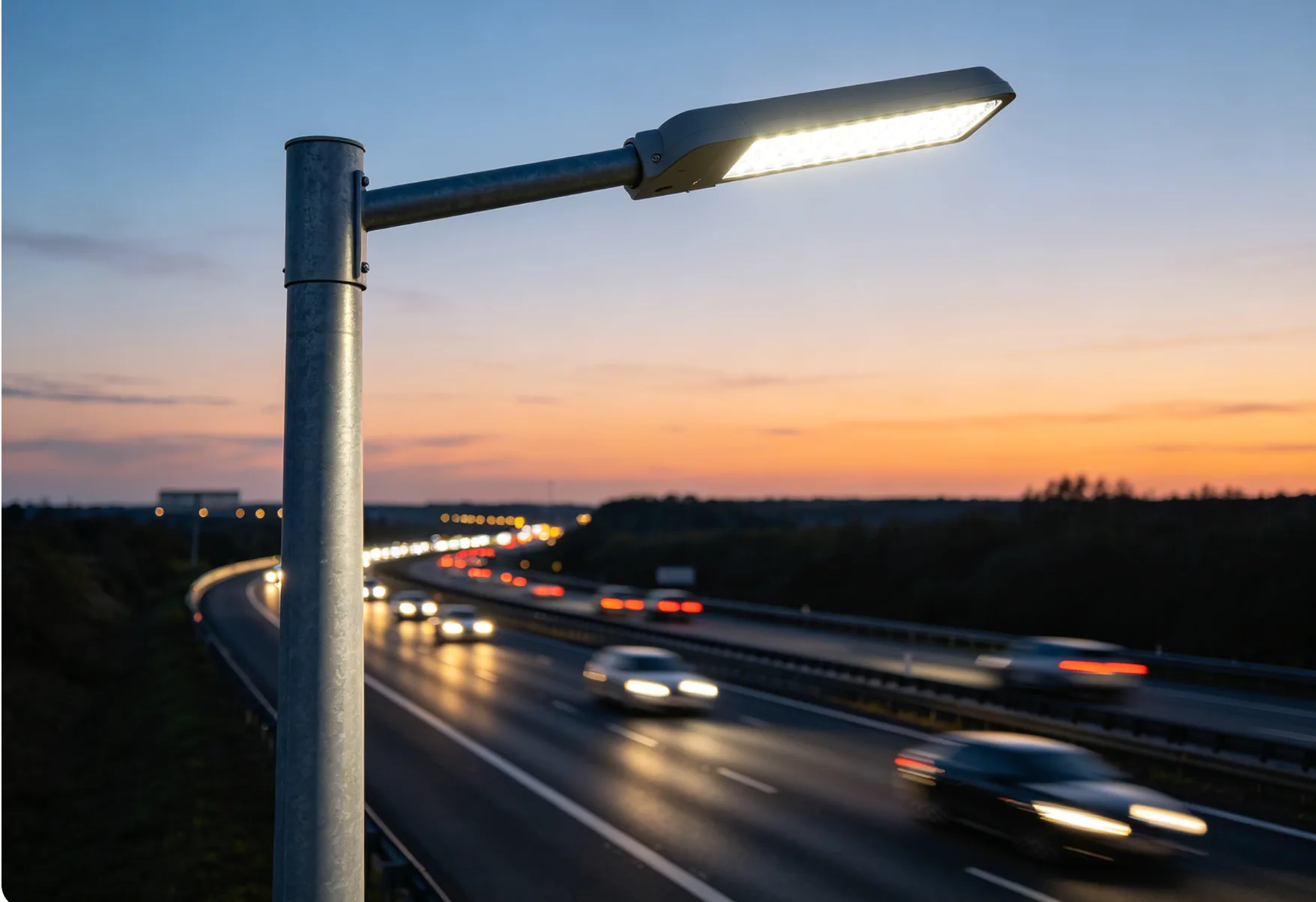
Corrosion is the leading cause of structural failure in highway infrastructure, making protective coatings a non-negotiable specification for any steel light pole. Hot-dip galvanizing (HDG) involves submerging the steel into molten zinc, creating a metallurgical bond that protects the metal from oxidation. This process ensures that a steel street light pole can remain in service for over 25 years without significant structural degradation.
The American Galvanizers Association (AGA) provides data showing that HDG steel offers a lower life-cycle cost compared to painted steel. For projects in harsh climates, a “duplex system”—combining galvanizing with a powder coating—provides an extra layer of protection while allowing the customized steel pole to match the aesthetic requirements of the surrounding environment.
Safety Standards and Passive Safety
Highway lighting supports must be designed with “passive safety” in mind to protect motorists in the event of a collision. For high-speed roads, a steel street light pole is often installed with breakaway bases, such as slip-bases or transformer bases. These components allow the pole to yield upon impact, reducing the deceleration forces experienced by vehicle occupants.
Federal safety regulations, such as those found in the Manual on Uniform Traffic Control Devices (MUTCD), dictate the placement and safety features of poles within the “clear zone” of a highway. Modern conical light poles are engineered to meet these crash-test requirements while maintaining the structural load of the lighting system.
Installation and Maintenance Considerations
The long-term performance of a steel street light pole depends heavily on correct installation and periodic inspections. Foundation design must account for soil type, frost depth, and the total weight of the steel light pole assembly. Improperly anchored poles are susceptible to vibration-induced fatigue, which can lead to hairline fractures at the base or handhole.
Pre-Installation Checklist for Highway Poles
- Soil Analysis: Confirm load-bearing capacity for the concrete pier.
- EPA Verification: Ensure the luminaire weight does not exceed the pole’s rating.
- Hardware Check: Verify that anchor bolts meet ASTM F1554 standards.
- Alignment: Use leveling nuts to ensure the pole is perfectly vertical.
Economic Impact of Pole Selection
Investing in high-quality square or round steel poles can significantly reduce the Total Cost of Ownership (TCO) for highway projects. While the initial procurement of a steel light pole is a major expense, the reduction in replacement frequency and maintenance labor provides substantial savings over a 30-year period.
Comparison of Coating Technologies
Different environments require different finishes to ensure the steel street light pole remains aesthetically pleasing and structurally sound.
| Coating Type | Application Environment | Expected Lifespan | Maintenance Level |
|---|---|---|---|
| Hot-Dip Galvanized | Standard Highways | 30 – 50 Years | Minimal |
| Powder Coat | Urban Highways/Residential | 15 – 20 Years | Moderate |
| Duplex System | Coastal/Industrial | 50+ Years | Low |
| Prime Paint Only | Temporary Structures | 5 – 10 Years | High |
Engineering Specification Summary
When drafting a Request for Proposal (RFP) for a highway lighting project, technical clarity is vital. A standard steel light pole specification should include the steel grade (e.g., Q345B or ASTM A572), the taper ratio, and the welding standards applied during fabrication. Industry leaders suggest that a precision-engineered steel pole should be tested for ultrasonic thickness to ensure uniformity across the shaft.
FAQ: Frequently Asked Questions
What is the standard height for a highway steel light pole?
Most highway lighting applications utilize poles between 10 and 15 meters for standard roadway illumination. However, for interchanges and large junctions, high-mast steel poles can reach heights of 25 to 50 meters to provide broad, uniform coverage with fewer structural obstructions.
How does wind speed affect the choice of a steel street light pole?
Poles are rated based on local wind maps; a pole in a hurricane-prone coastal region requires a thicker wall and larger base diameter than one in a low-wind inland area. Engineers use the Effective Projected Area (EPA) of the light fixture to determine the maximum allowable wind load.
Can steel light poles be used in coastal areas with high salt spray?
Yes, provided they utilize a duplex coating system consisting of hot-dip galvanizing followed by a specialized powder coating. This combination provides a barrier that prevents chloride ions from reaching the steel surface, significantly extending the life of the pole in saline environments.
What are the advantages of a tapered steel pole over a straight pole?
Tapered poles offer a better strength-to-weight ratio and are more effective at shedding wind loads, which reduces the stress on the foundation. Additionally, the conical shape is more aesthetically versatile and allows for easier nesting during shipping, which reduces logistics costs for large projects.
How often should highway light poles be inspected for structural integrity?
Industry standards suggest a visual inspection every two years and a comprehensive structural audit every five to ten years. These audits focus on checking anchor bolts for tension, inspecting the base weld for cracks, and ensuring the galvanizing remains intact to prevent deep-seated corrosion.