
Choosing the right material for municipal infrastructure requires a balance of longevity, cost-effectiveness, and structural integrity. This guide evaluates the pros and cons of using aluminum for street light poles compared to the industry-standard steel light pole, helping engineers and city planners determine the most efficient solution for large-scale roadway projects.

Material Characteristics: Aluminum vs. Steel Light Pole Performance
Aluminum is a lightweight, non-ferrous metal known for its natural resistance to environmental degradation, while a steel street light pole offers unparalleled yield strength for high-wind areas. In modern urban planning, the decision often hinges on the specific environmental stressors of the installation site, such as coastal salinity or seismic activity.
Aluminum poles are typically manufactured using seamless extrusion or tapered spinning processes. According to the American Association of State Highway and Transportation Officials (AASHTO), material selection must adhere to LRFD (Load and Resistance Factor Design) specifications to ensure public safety. While aluminum is often praised for its “self-healing” oxide layer, a high-quality steel light pole treated with hot-dip galvanization can offer comparable longevity in many terrestrial climates.
| Feature | Aluminum Light Poles | Steel Light Poles |
|---|---|---|
| Weight | Approximately 1/3 the weight of steel | Heavy, requires robust foundation |
| Corrosion Resistance | Excellent (Natural Oxide Layer) | Requires Galvanization or Coating |
| Structural Strength | Moderate (Better for shorter heights) | High (Ideal for high-mast/heavy loads) |
| Initial Cost | Higher | Lower |
| Maintenance | Minimal | Periodic inspection for coating integrity |
The Advantages of Aluminum in Municipal Projects
The primary advantage of aluminum over a steel street light pole is its superior corrosion resistance. This characteristic makes it the preferred choice for coastal regions where salt spray rapidly accelerates the oxidation of ferrous metals. Aluminum does not rust; instead, it develops a thin, protective layer of aluminum oxide that prevents further degradation.
Another critical factor is the “breakaway” safety requirement. Aluminum is naturally more ductile and has a lower shear strength than a standard steel light pole. This makes it easier to design aluminum structures that meet the Federal Highway Administration (FHWA) safety standards for roadside hardware, reducing the severity of impact during vehicular accidents.
Evaluating the Limitations of Aluminum Lighting Structures
Despite its durability, aluminum has a lower modulus of elasticity than steel. This means that under the same wind load, an aluminum pole will exhibit more deflection (sway) than a steel street light pole. For high-mast applications or areas prone to hurricanes, engineers often prioritize the rigidity of steel tapered poles to maintain stable illumination patterns and prevent structural fatigue over time.
Cost is the second major hurdle. The raw material cost of aluminum is historically higher than that of carbon steel. While the lack of maintenance reduces the “Total Cost of Ownership” (TCO), the initial capital expenditure for a municipal project using aluminum can be 20% to 50% higher than one utilizing a standard steel pole infrastructure.
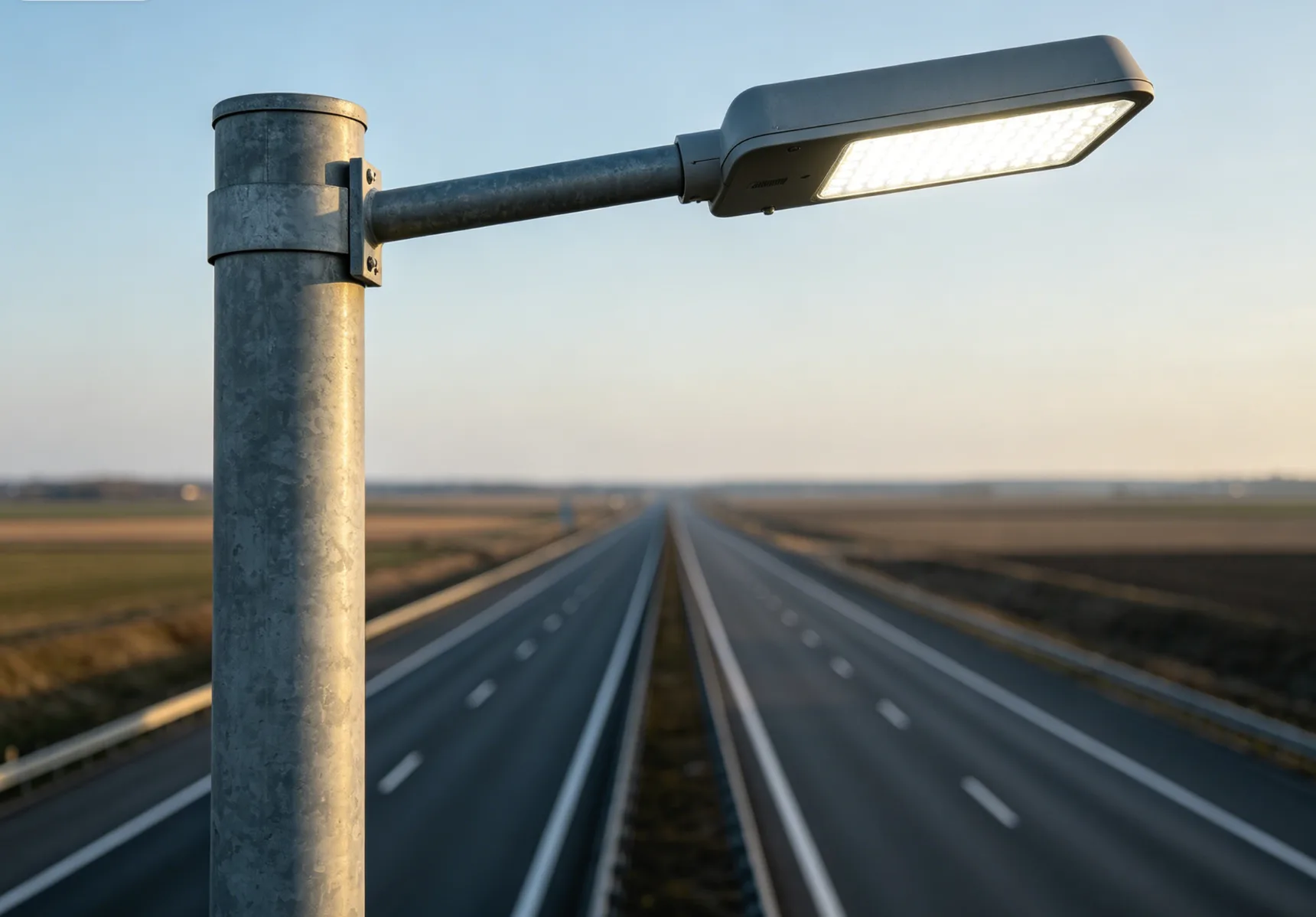
Technical Comparison: Load Capacity and Environmental Suitability
The structural performance of lighting supports is governed by wind speed maps and EPA (Effective Projected Area) ratings. A steel light pole can support larger luminaires and heavy attachments, such as 5G small cell nodes or decorative banners, without compromising the safety factor. Aluminum supports are better suited for standard LED fixtures in residential or park settings.
| Parameter | Aluminum Specification | Steel Specification |
|---|---|---|
| Standard Heights | 10ft – 35ft | 10ft – 100ft+ |
| Typical EPA Rating | Low to Medium | High to Very High |
| Finish Options | Anodized, Satin, Powder Coat | Hot-Dip Galvanized, Painted |
| Recyclability | High (High Scrap Value) | High (Commonly Recycled) |
Industry data from the Galvanizers Association suggests that while aluminum is maintenance-free, a galvanized steel street light pole can last over 50 years even in harsh industrial environments. Therefore, the “better” material is strictly dependent on the project’s geographical and budgetary constraints.
Installation and Logistical Considerations
The lightweight nature of aluminum significantly reduces transportation and installation costs. A small crew can often maneuver an aluminum pole without the need for heavy cranes, which is a distinct advantage over a steel light pole. This ease of handling leads to faster project completion times for large-scale municipal lighting projects.
However, aluminum is more susceptible to surface marring and dents during transport. Unlike a steel street light pole, which can withstand significant physical impact during the construction phase, aluminum requires careful handling to maintain its aesthetic finish. For urban areas with high pedestrian traffic, decorative aluminum poles offer a premium look that persists without the need for repainting.
Comparative Summary of Pros and Cons
To assist in the procurement process, the following table summarizes the trade-offs between these two dominant materials.
| Factor | Aluminum Pros | Aluminum Cons |
|---|---|---|
| Durability | No red rust; salt-tolerant | Susceptible to vibration fatigue |
| Safety | Better breakaway performance | Lower impact resistance |
| Aesthetics | Modern, clean finishes available | Easier to scratch or dent |
| Economics | Low lifetime maintenance cost | High upfront material price |
Sustainability and Environmental Impact
Both materials rank high in sustainability. Aluminum is infinitely recyclable, and recycling it requires only 5% of the energy used to produce primary aluminum. Similarly, a steel light pole is often made from recycled content and remains a staple of the circular economy. Choosing high-quality light poles from reputable manufacturers ensures that the materials meet ASTM International standards for purity and strength.
Recent trends in “Green Procurement” favor aluminum for its lower carbon footprint during the transport phase due to reduced weight. However, the energy-intensive smelting process of aluminum must be weighed against the longevity and high strength-to-weight ratio of a galvanized steel street light pole.
Final Selection Checklist for Infrastructure Engineers
- Environment: Is the site within 5 miles of a coastline? (Favor Aluminum).
- Wind Load: Does the EPA of the fixture exceed 15.0? (Favor steel light pole).
- Budget: Is the primary constraint CAPEX or OPEX? (CAPEX favors Steel; OPEX favors Aluminum).
- Safety: Is the pole located in a high-speed “clear zone”? (Favor Aluminum for breakaway safety).
- Aesthetics: Is a specific architectural finish required? (Both materials offer diverse options).
Frequently Asked Questions (FAQ)
Which material is better for coastal areas, aluminum or steel?
Aluminum is generally superior for coastal environments due to its inherent resistance to salt-induced corrosion. While a steel street light pole can be protected via hot-dip galvanization, aluminum’s natural oxide layer provides a maintenance-free barrier that prevents the “red rust” often seen in salty, humid air.
Can aluminum poles support 5G equipment and heavy banners?
While aluminum is strong, it has lower rigidity than a steel light pole. For heavy attachments like 5G small cells or large festive banners, steel is preferred because it can handle higher EPA loads and vibration without the risk of structural fatigue or excessive swaying in high winds.
Is there a significant difference in the lifespan of these poles?
Both materials can exceed a 50-year lifespan if specified correctly. An aluminum pole lasts due to its chemical properties, while a steel street light pole relies on its protective zinc coating. In inland environments, the lifespans are comparable, but aluminum often requires less visual maintenance over time.
How do installation costs compare between aluminum and steel?
Aluminum poles are significantly lighter, often allowing for manual positioning or the use of smaller, less expensive lifting equipment. This can reduce labor costs compared to a steel light pole, which requires heavy machinery and more robust foundations to support its substantial self-weight and load.
Are aluminum street light poles safe for high-traffic roadways?
Yes, aluminum is highly effective for roadside safety because it is more likely to shear or “break away” upon impact compared to a rigid steel street light pole. This design characteristic helps absorb kinetic energy and reduces the risk of fatal injuries to vehicle occupants during a collision.