
selecting the most reliable materials for public infrastructure is a critical decision, and evaluating Steel Light Poles against fiberglass alternatives heavily influences long-term municipal budgets. This comprehensive guide compares Steel Light Poles and composite models based on structural integrity, lifecycle costs, and environmental impact. Urban planners can utilize this objective analysis to make data-driven, sustainable decisions for 2026 municipal projects.
Core Definitions: Steel Light Poles vs. Fiberglass
Steel Light Poles are engineered metallic structures designed to deliver maximum structural stability and high-performance illumination for urban environments. Manufactured through rigorous precision forming processes, these robust municipal street lighting columns serve as the backbone for critical safety infrastructure. Modern fabrication techniques ensure that a high-quality Steel Light Pole can comfortably support heavy overhead fixtures without compromising structural safety. Planners prioritize these metallic supports for their predictable performance under extreme mechanical stress.
Fiberglass lighting columns represent a lightweight composite alternative utilized primarily in environments where extreme wind loads are not a primary concern. Formed from reinforced polymer resins, these non-conductive installations offer easier manual handling during the initial construction phase. However, their physical composition inherently limits their heavy-duty lighting applications compared to traditional metallic alternatives. The composite nature makes them suitable only for specialized, low-stress urban zoning areas.
Structural Integrity and Wind Load Capacity
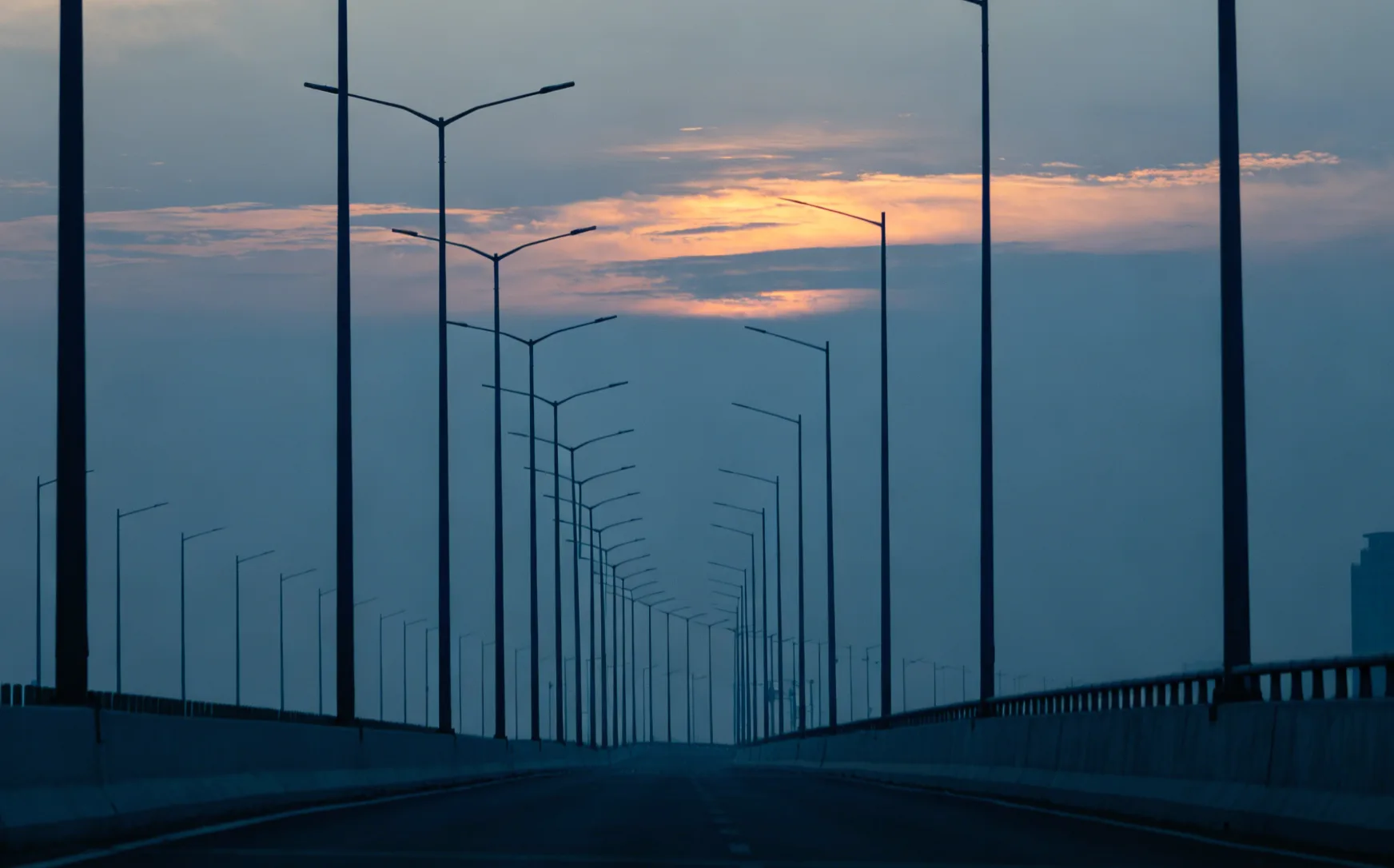
Superior wind resistance makes Steel Light Poles the definitive choice for exposed highways and coastal municipalities facing severe weather. According to the AASHTO standard specifications for structural supports, highway structures are explicitly designed to withstand 90 MPH wind gusts over a 50-year recurrence interval. This rigidity actively prevents the dangerous deflection often observed in weaker composite materials during storms. Metallic columns ensure that roadway illumination structures remain upright and functional when public safety is most critical.
Fiberglass infrastructure exhibits severe structural limitations regarding wind-loading capacity and accessory attachment flexibility. Official municipal meeting records regarding fiberglass wind limits highlight that these composite structures often cannot safely support lighted decorations, civic banners, or heavy technological attachments. City planners must avoid deploying fiberglass in high-wind corridors due to this fundamental structural vulnerability. Relying on composites in these zones dramatically increases the risk of catastrophic physical failure.
Table 1: Performance and Load Capacity Comparison
| Structural Metric | Steel Light Poles | Fiberglass Light Poles |
|---|---|---|
| Wind Load Capacity | Exceptional (Meets 90+ MPH AASHTO standards) | Limited (Prone to severe deflection) |
| Attachment Strength | High (Supports banners, heavy arrays) | Low (Banners/decorations often prohibited) |
| Impact Resistance | Very High (Absorbs vehicle impact energy) | Low (Shatters or fractures upon impact) |
| Structural Rigidity | Maximum rigidity | Moderate to high flexibility |
Galvanizing for Steel Light Poles: The Ultimate Protection
Applying a hot-dip zinc coating establishes an impenetrable anti-corrosion barrier for municipal metal infrastructure. The meticulous process of Galvanizing for Steel Light Poles involves submerging the engineered steel into molten zinc, forming a permanent metallurgical bond that seals out environmental moisture. This specialized protective layer ensures that the underlying structure remains highly resilient against harsh urban pollutants, road salts, and aggressive weather patterns. It is a mandatory specification for modern public works.
Implementing robust Galvanizing for Steel Light Poles directly translates to decades of entirely maintenance-free operation for civic departments. Authoritative industry data detailing galvanized steel protective benefits indicates that effectively treated metal can easily exceed 80 years of service in average environments. Consequently, galvanized infrastructure drastically reduces the long-term maintenance burdens placed on municipal budgets. Cities save thousands of dollars per unit by eliminating the need for routine repainting and rust remediation.
Analyzing the Lifespan and Degradation Factors
Steel Light Poles deliver unparalleled longevity when integrated into comprehensive urban development plans. Built for permanence, these high-strength installations resist physical impacts, vehicle collisions, and daily environmental wear significantly better than any composite substitute. Their prolonged lifecycle guarantees that municipal infrastructure planning remains stable without demanding frequent and disruptive replacement cycles. This durability makes metal the standard for generation-spanning public utility investments.
Fiberglass materials are highly susceptible to ultraviolet (UV) degradation and structural unraveling over continuous environmental exposure. Documented Utah government infrastructure reports on fiberglass oxidation reveal that these composite poles typically reach their maximum end-of-life within 20 to 30 years. As the exterior resin oxidizes, the exposed glass fibers compromise the column’s aesthetic appeal and core structural integrity. This irreversible degradation mandates complete replacements far sooner than metallic equivalents.
Table 2: 50-Year Total Cost of Ownership (TCO) Estimation
Note: Financial metrics are based on industry estimates for standard municipal projects.
| Cost Category | Galvanized Steel Infrastructure | Fiberglass Infrastructure |
|---|---|---|
| Initial Purchase Price | Moderate | Moderate to High |
| Installation Costs | Standard mechanical lifting required | Lower (Manual handling possible) |
| Maintenance (50 Years) | Near zero (Self-sacrificing zinc layer) | High (UV coatings, structural repairs) |
| Replacement Cycle | 0 replacements needed | 1 to 2 full replacements needed |
| 50-Year TCO | Lowest overall cost | High due to replacement cycles |
Application Suitability in Urban Spaces
Heavy-duty public transit zones demand the uncompromising strength of metallic infrastructure to ensure uninterrupted illumination. High-traffic expressways and commercial districts consistently rely on Roadway lighting poles crafted from high-grade metal to securely hold complex, heavy luminaire heads. The rigid safety specifications outlined in the Ohio Department of Transportation highway lighting guidelines further emphasize metal as the mandatory standard for these critical areas.
Intelligent urban networks increasingly require load-bearing structures capable of securely housing heavy, complex electronic equipment. Contemporary Smart poles demand the superior weight capacity of Steel Light Poles to support integrated surveillance cameras, environmental sensors, and EV charging modules safely. Furthermore, for historic districts, a premium Decorative Pole offers classical ornamentation while maintaining the structural reliability of metal, seamlessly merging aesthetics with modern engineering.
Pedestrian zones and government installations require scaled infrastructure that projects stability while withstanding significant public interaction. Specifying durable Garden poles guarantees uniform lighting and high resistance to accidental vandalism in public parks. Similarly, heavy-duty Flag poles installed in civic plazas leverage the exact same metallurgical strength found in Steel Light Poles to manage dynamic wind loads efficiently.
Municipal Project Selection Checklist
To ensure the correct material is selected for 2026 urban development, city planners should verify the following:
- Wind Zone Rating: Does the location experience frequent high winds or coastal storms?
- Attachment Requirements: Will the column support heavy 5G nodes, cameras, or holiday banners?
- Maintenance Budget: Is the city aiming to eliminate routine painting and UV treatments?
- Impact Risk: Is the installation located near high-speed vehicular traffic?
Environmental Sustainability and End-of-Life
Metallic lighting infrastructure actively champions ecological sustainability through its complete recyclability at the end of its extended service life. When Steel Light Poles are eventually decommissioned, their raw materials can be entirely melted down and repurposed into new construction projects without any quality degradation. This highly efficient circular lifecycle aligns perfectly with strict 2026 municipal green energy and urban waste reduction mandates.
Composite lighting materials pose significant long-term environmental challenges regarding municipal waste disposal and recycling protocols. Unlike metal components, decommissioned fiberglass cannot be easily melted down or reshaped, typically resulting in permanent placement within civic landfill sites. Environmentally conscious urban planners systematically reject fiberglass to avoid accumulating hazardous, non-recyclable municipal infrastructure debris over the coming decades.
Table 3: Environmental Impact Comparison
| Eco-Metric | Steel Light Poles | Fiberglass Light Poles |
|---|---|---|
| Material Recyclability | 100% infinitely recyclable | Non-recyclable, landfill-bound |
| Toxin Release Risk | Zero emissions during service life | Potential micro-plastic fiber shedding |
| Decommissioning Value | Positive financial return (scrap metal) | High municipal landfill disposal fees |
Conclusion on Material Selection
Selecting Steel Light Poles over fiberglass represents the most fiscally and structurally responsible decision for modern municipalities. Their unmatched wind resistance, advanced smart-city integration capabilities, and superior ecological longevity heavily outweigh the minor upfront weight advantages of composite materials. By prioritizing galvanized metal infrastructure, forward-thinking cities guarantee safer, smarter, and significantly more resilient urban environments for future generations.
Frequently Asked Questions (FAQ)
Q1: Are composite lampposts cheaper to install than metallic ones?
While composite materials feature a lighter weight that can marginally reduce initial labor and machinery rental costs during installation, their drastically shorter lifespan generates higher lifetime expenses. Metallic structures ultimately deliver a superior financial return on investment through prolonged, uninterrupted service.
Q2: How does sunlight affect urban streetlights over time?
Continuous ultraviolet radiation causes composite resins to oxidize rapidly, leading to fiber bloom where structural threads become exposed and brittle. Conversely, metallic structures protected by advanced zinc coatings remain completely unaffected by intense UV exposure throughout their entire operational life.
Q3: Can composite columns support modern smart city technologies?
According to industry estimates, most composite units lack the essential load-bearing capacity and rigidity required to host heavy integrated systems safely, such as 5G antennas and surveillance cameras. Metallic infrastructure provides the necessary foundational strength to accommodate these expanding technological weight requirements securely.
Q4: What is the required wind rating for highway illumination structures?
Authoritative transportation guidelines mandate that critical highway structures withstand wind gusts of at least 90 MPH while incorporating specific safety factors. Metallic columns are meticulously engineered to exceed these rigorous standards, thereby preventing dangerous physical deflection during severe storm events.
Q5: Is routine maintenance necessary for public lighting installations?
Proper industrial surface treatments virtually eliminate the need for constant upkeep. Utilizing a hot-dip zinc process ensures the infrastructure remains completely rust-free and structurally sound for over half a century, successfully bypassing the need for frequent municipal maintenance interventions.