
Understanding the composition of Steel Street Light Poles is essential for municipal planners and engineers who prioritize durability and safety in urban infrastructure. This comprehensive guide details the specific raw materials, metallurgical standards, and protective coatings that define the structural integrity of modern Steel Light Poles.
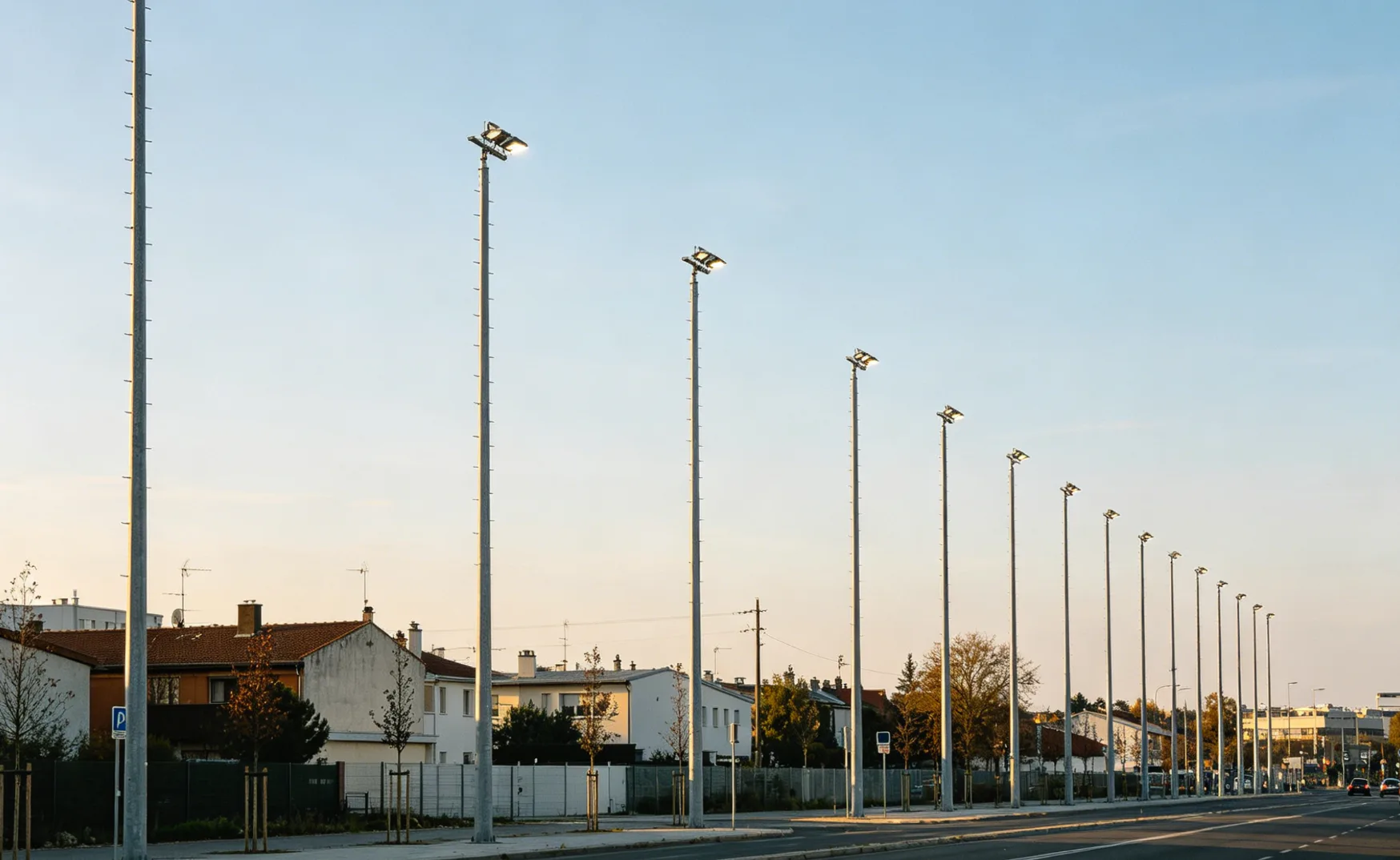
The Foundation: Structural Carbon Steel
Primary structural components of Steel Street Light Poles are manufactured from high-strength carbon steel, typically following international standards like ASTM A36 or ASTM A572. These materials provide the necessary yield strength to support heavy luminaire loads and resist environmental stressors. By utilizing high-quality carbon steel, manufacturers ensure that Steel Light Poles maintain their vertical alignment even under significant wind pressure.
Standard carbon steel is the preferred choice for Steel Light Pole production due to its excellent weldability and formability. The material is often processed into circular, square, or multi-sided tapered shapes to optimize aerodynamic performance. In modern roadway projects, the choice of steel grade directly influences the pole’s ability to withstand vibration and mechanical fatigue over decades of service.
Table 1: Common Steel Grades Used in Pole Manufacturing
| Steel Grade | Yield Strength (psi) | Primary Application | Characteristics |
|---|---|---|---|
| ASTM A36 | 36,000 | Standard Urban Lighting | Excellent weldability; cost-effective for low heights. |
| ASTM A572 (Grade 50) | 50,000 | Highway & High-Mast | High strength-to-weight ratio; resists high wind loads. |
| ASTM A595 (Grade A/B) | 55,000 | Tapered Commercial Poles | Specifically designed for tapered structural tubes. |
Alloying Elements and Chemical Composition
The performance of Steel Street Light Poles depends heavily on the precise balance of chemical elements within the alloy. Manganese is added to increase hardness and tensile strength, while controlled levels of silicon are necessary for successful hot-dip galvanizing. High-quality Steel Light Poles minimize impurities like sulfur and phosphorus, which can lead to brittleness and “cold shortness” in extreme environments.
According to the American Institute of Steel Construction (AISC), maintaining strict chemical limits ensures the predictability of the material under stress. Copper is sometimes included in small percentages to enhance atmospheric corrosion resistance, particularly in coastal regions. This specialized chemical engineering allows Roadway lighting poles to provide reliable service in diverse climates ranging from arid deserts to humid tropical zones.
The Galvanization Process: Zinc Protection
Corrosion resistance in Steel Street Light Poles is primarily achieved through hot-dip galvanizing, a process governed by standards such as ASTM A123. During this procedure, the completed steel structure is submerged in a bath of molten zinc at approximately 840°F (450°C). This creates a metallurgical bond between the zinc and the steel, forming a series of zinc-iron alloy layers that are harder than the base steel itself.
For Smart poles and other infrastructure, this zinc coating acts as a sacrificial anode, meaning the zinc will corrode before the underlying steel is affected. Even if the surface of the Steel Light Poles is scratched or dented, the surrounding zinc protects the exposed metal through galvanic action. Industry data from the American Galvanizers Association suggests that galvanized steel can last over 50 years in most atmospheric conditions.
Table 2: Benefits of Hot-Dip Galvanizing for Steel Poles
| Feature | Benefit to Infrastructure | Long-term Impact |
|---|---|---|
| Sacrificial Protection | Prevents rust at scratches or cut edges. | Reduced maintenance costs. |
| Complete Coverage | Coats both internal and external surfaces. | Eliminates internal “hidden” corrosion. |
| Bond Strength | Zinc-iron layers are metallurgically bonded. | Resistance to mechanical damage during transport. |
Protective Coatings and Aesthetics
While galvanization provides the primary defense, many Steel Street Light Poles also feature secondary coatings like powder coating or liquid paint. This “Duplex System” combines the cathodic protection of zinc with an additional barrier against UV radiation and chemical pollutants. When specifying Decorative Pole solutions for historic districts, these coatings allow for a wide range of architectural colors without compromising the lifespan of the Steel Light Poles.
Modern powder coating involves electrostatically applying dry resin powder to the galvanized surface, which is then cured under heat to form a hard, durable skin. This finish prevents “white rust” (zinc storage stain) and extends the maintenance interval of Garden poles significantly. According to 2025 industry estimates, a properly applied duplex system can increase the service life of steel structures by 1.5 to 2.5 times compared to galvanizing alone.
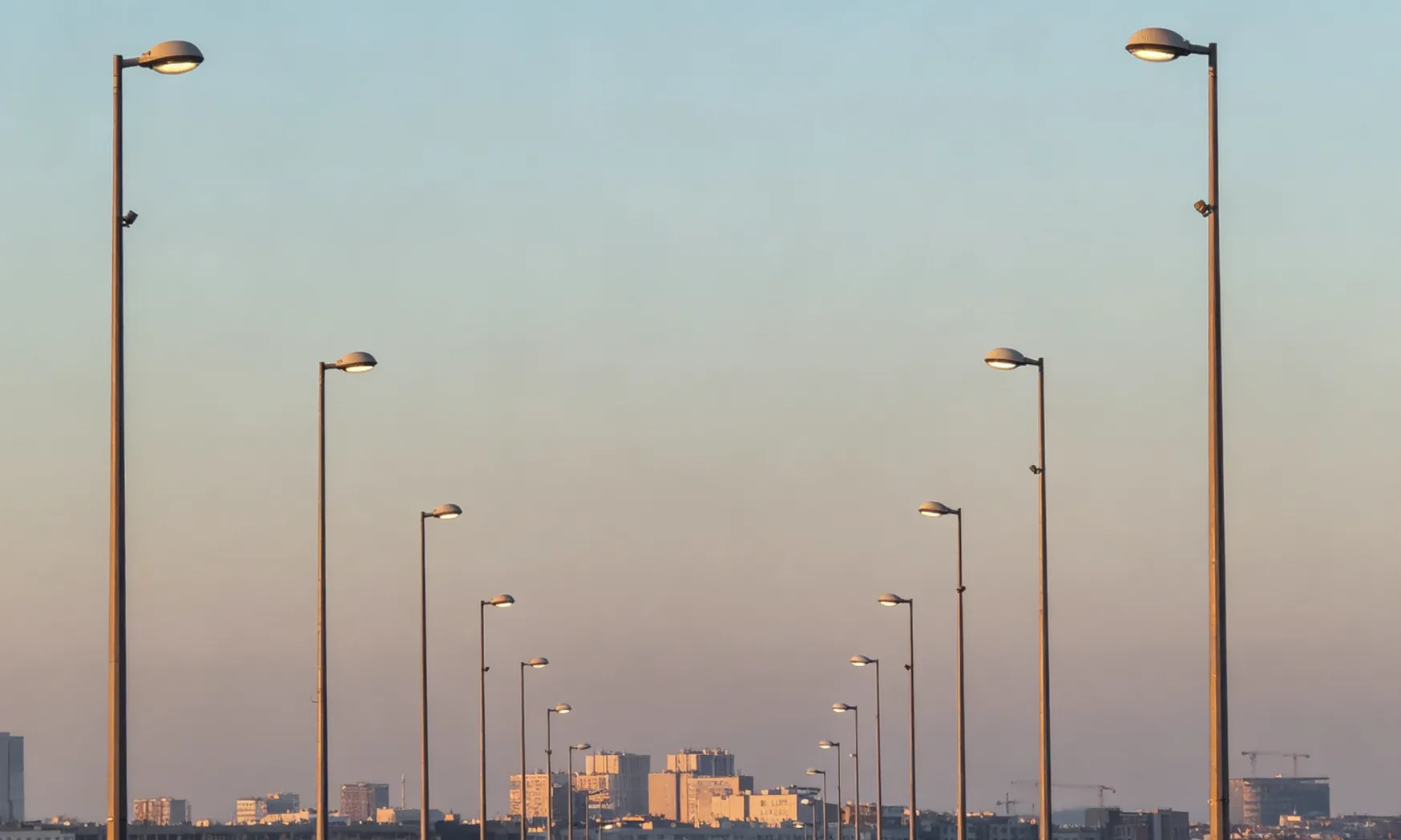
Hardware and Internal Components
The structural integrity of Steel Street Light Poles is supported by specialized hardware, including anchor bolts, base plates, and handhole covers. Anchor bolts are typically manufactured from high-strength steel (ASTM F1554) to ensure the pole remains securely fastened to its concrete foundation. Most Steel Light Poles utilize heavy-duty base plates that are circumferentially welded to the shaft to distribute mechanical loads evenly.
Internal components such as grounding lugs and wiring supports are essential for the electrical safety of Steel Street Light Poles. These parts must be made of compatible materials to prevent galvanic corrosion between dissimilar metals. In the case of Flag poles or multi-functional structures, internal reinforcement may be added to accommodate additional weight from flags, cameras, or 5G small cell equipment.
Manufacturing standards and Quality Control
The production of Steel Street Light Poles involves rigorous testing to comply with AASHTO (American Association of State Highway and Transportation Officials) specifications. Manufacturers utilize non-destructive testing (NDT), such as ultrasonic or magnetic particle inspection, to verify the quality of longitudinal welds. High-end Steel Light Poles undergo Charpy V-Notch testing to ensure the material retains its toughness in sub-zero temperatures.
Adherence to ISO 9001 standards during the fabrication of Steel Light Poles guarantees consistency across large-scale municipal orders. Every batch of raw steel is accompanied by a Mill Test Report (MTR), which documents the exact chemical and physical properties of the heat. This traceability is a cornerstone of the E-E-A-T principle, providing users with verifiable proof of product reliability and safety.
Table 3: Quality Control Checklist for Steel Poles
| Testing Phase | Method | Objective |
|---|---|---|
| Raw Material | Mill Test Report (MTR) Review | Verify chemical composition and yield strength. |
| Welding | Magnetic Particle Inspection | Ensure weld penetration and absence of cracks. |
| Galvanizing | Magnetic Thickness Gauge | Confirm coating weight meets ASTM A123. |
| Final Finish | Cross-Hatch Adhesion Test | Verify the bond between powder coat and zinc. |
Conclusion and Future Trends
Steel Street Light Poles remain the industry standard due to their unmatched strength and adaptability. As cities evolve, the materials used in Steel Light Poles are becoming more specialized, incorporating recycled content to meet sustainability goals. Choosing high-grade, properly galvanized steel ensures that public lighting remains a permanent and safe fixture of the urban landscape for generations to come.
FAQ: Common Questions About Steel Light Pole Materials
What is the difference between Q235 and Q345 steel in light poles?
Q235 and Q345 are Chinese steel standards frequently used in international manufacturing. Q235 is a mild carbon steel with a yield strength of 235 MPa, suitable for standard heights, while Q345 is a low-alloy high-strength steel (345 MPa) used for taller or high-wind Steel Light Poles.
Can steel light poles be used in coastal, high-salt environments?
Yes, provided they utilize a Duplex System consisting of hot-dip galvanizing followed by a marine-grade epoxy or powder coating. This dual-layer protection prevents salt ions from reaching the steel, significantly extending the life of Steel Street Light Poles in maritime conditions.
Are steel street light poles eco-friendly or recyclable?
Steel is the most recycled material on the planet; nearly all Steel Light Poles can be fully recycled at the end of their 30-to-50-year lifespan. Furthermore, many manufacturers now use electric arc furnace (EAF) steel, which has a lower carbon footprint than traditional oxygen furnace production.
How do manufacturers prevent internal rust inside a hollow steel pole?
The hot-dip galvanizing process involves immersing the entire pole into a zinc bath, which allows the molten metal to flow inside the tube. This ensures that the interior of Steel Street Light Poles receives the same level of corrosion protection as the exterior surface.
Why is silicon content important in the steel used for light poles?
Silicon acts as a catalyst during the galvanizing process; if levels are too high or too low (outside the Sandelin Curve range), the zinc coating may become excessively thick, brittle, or dull. Proper steel selection ensures Steel Light Poles have a smooth, durable, and aesthetically pleasing finish.