

Introduction
Demand for stainless steel light poles is rising as cities, campuses, and commercial sites prioritize longer service life, lower maintenance, and compatibility with smart infrastructure. In 2026, buyers face a more complex market shaped by telecom integration, stricter design standards, corrosion-resistance requirements, and shifting project budgets. This article explains the forces driving demand, how specifications are changing, and what those changes mean for procurement, engineering, and lifecycle cost planning. It also highlights practical buying considerations—from material grade and structural performance to supply risk—so readers can evaluate options more confidently before moving into detailed market trends and product selection factors.
Why the 2026 Stainless Steel Light Pole Market Is Changing
The 2026 light pole market is undergoing a structural realignment driven by smart city infrastructure, 5G telecommunications rollouts, and stringent environmental resilience mandates. As municipalities and commercial developers transition away from traditional carbon steel, demand for stainless steel variants is accelerating. Market projections indicate a sustained 6.5% compound annual growth rate (CAGR) in premium municipal lighting upgrades through the end of the decade, reflecting a broader preference for materials offering superior lifecycle returns.
This shift is not merely aesthetic. Modern lighting structures are no longer passive supports for luminaires; they are highly engineered vertical assets housing critical urban technology. Consequently, procurement professionals and civil engineers must navigate an increasingly complex landscape of metallurgical specifications, load-bearing requirements, and supply chain constraints to secure optimal value.
How infrastructure spending and urban design standards affect demand
Federal and regional infrastructure funding—notably ongoing disbursements from the Infrastructure Investment and Jobs Act (IIJA) and similar global initiatives—has fundamentally altered project financial models. Urban design standards are pivoting from short-term initial cost calculations to long-term asset management strategies. Specifications that once accepted a 20-year operational life now mandate 50-year lifespans to qualify for federal matching funds.
Furthermore, municipal design guidelines increasingly prohibit ongoing maintenance liabilities, such as the routine sandblasting and repainting of corroded galvanized poles in high-traffic corridors. Stainless steel eliminates these recurring operational expenditures, satisfying modern urban design standards that prioritize minimal disruption to pedestrian and vehicular traffic over the asset's lifecycle.
Which demand signals matter most in 2026
In 2026, the most critical demand signals emanate from technology integration rather than illumination alone. The proliferation of small cell networks and environmental sensors requires poles capable of supporting additional wind loads and dead weights. A standard 5G micro-node installation adds between 50 and 150 pounds of equipment to the upper third of the structure, significantly altering its center of gravity and effective projected area (EPA).
Simultaneously, coastal resilience initiatives are driving demand in regions vulnerable to severe weather and saline environments. Municipalities within 50 miles of coastlines or in heavy snow-belt regions—where de-icing chemicals rapidly degrade traditional materials—are signaling a near-total transition to highly alloyed stainless steel structures. Buyers tracking these signals must anticipate localized demand spikes in specific infrastructure corridors, which directly impact regional inventory levels.
What Specifications and Performance Factors Define Value
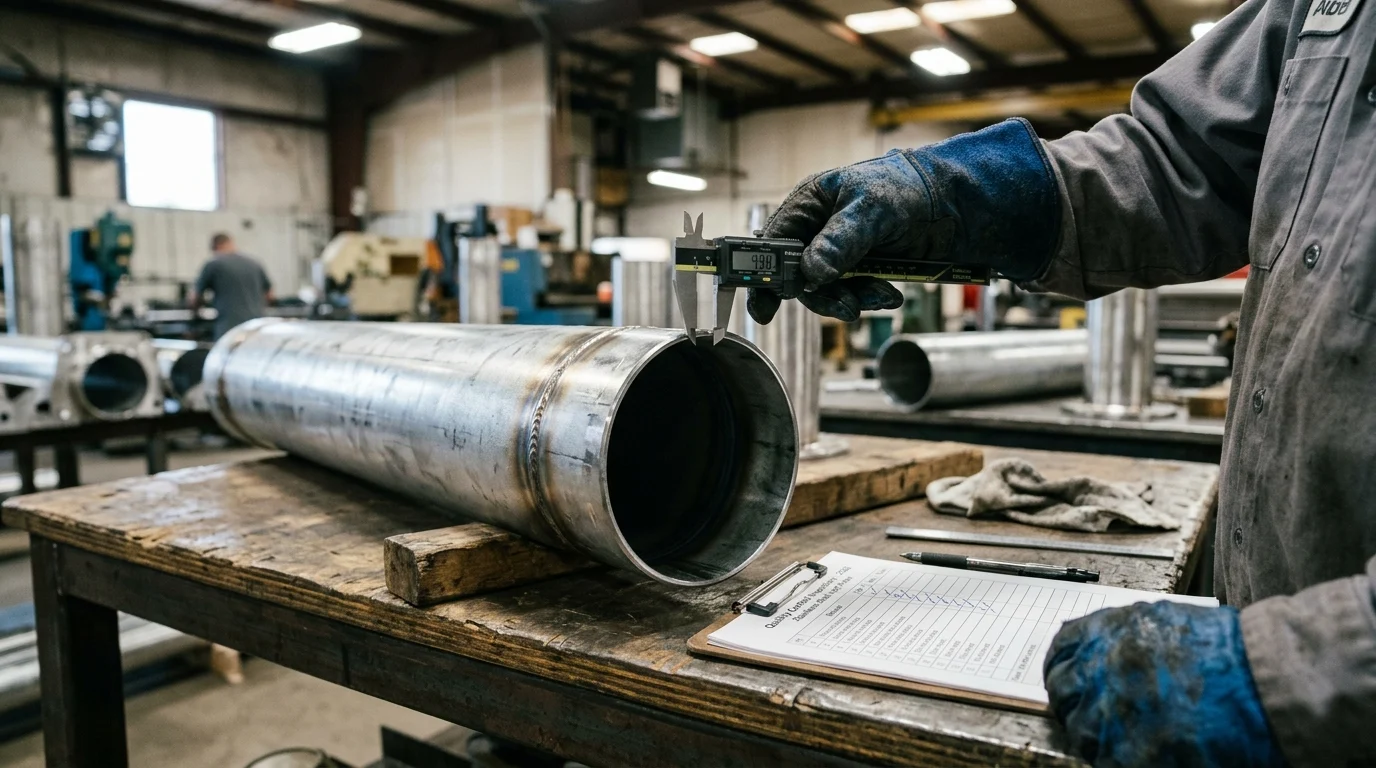
Procuring high-performance vertical infrastructure requires a rigorous understanding of metallurgical properties and structural geometry. Value in the stainless steel light pole market is defined by the intersection of yield strength, corrosion resistance, and aerodynamic stability. Procurement teams must move beyond generic material requests and specify exact grades and physical dimensions to ensure the delivered product meets the demanding operational parameters of 2026.
How to compare stainless steel grades and wall thickness
The decision between stainless steel grades dictates the asset's environmental resilience and initial capital expenditure. Grade 304 is the industry standard, offering excellent atmospheric corrosion resistance suitable for most inland urban environments. However, for coastal regions or areas utilizing aggressive winter de-icing salts, Grade 316L is imperative. The addition of 2% to 3% molybdenum in 316L provides superior resistance to chloride-induced pitting, extending the pole's structural integrity by decades in harsh conditions.
Wall thickness, typically measured in gauge or decimal inches, is equally critical for load-bearing capacity. Standard commercial applications often utilize 11-gauge (0.1196 inches) material, providing adequate support for standard LED luminaires. However, infrastructure hosting telecommunications equipment or located in hurricane-prone zones mandates heavier 7-gauge (0.1875 inches) or even 3-gauge (0.2391 inches) construction. Engineers must calculate the required wall thickness based on the maximum EPA of all attached fixtures, ensuring the pole resists both static deflection and dynamic fatigue.
How stainless steel compares with galvanized steel
Evaluating stainless steel against traditional hot-dip galvanized carbon steel requires a comprehensive total cost of ownership (TCO) perspective. While galvanized steel remains ubiquitous due to its low initial acquisition cost, its zinc coating is sacrificial and inevitably degrades, exposing the underlying carbon steel to oxidation. In contrast, stainless steel relies on a self-repairing chromium oxide passive layer, offering inherent, uniform corrosion resistance throughout the material's thickness.
| Material | Initial Cost Index | Expected Lifespan | Coastal/Saline Suitability | Maintenance Frequency |
|---|---|---|---|---|
| Galvanized Carbon Steel | 1.0x | 15-25 years | Low to Moderate | High (Repainting, Touch-ups) |
| 304 Stainless Steel | 1.8x – 2.2x | 40+ years | Moderate | Low (Occasional washing) |
| 316L Stainless Steel | 2.5x – 3.0x | 50+ years | High | Minimal |
As demonstrated in the comparative index, the premium paid for stainless steel—often 1.8 to 3.0 times the cost of galvanized alternatives—is offset by the elimination of cyclical maintenance and the doubling of the asset's functional lifespan. In the 2026 market, where labor costs for maintenance crews are at a premium, the TCO heavily favors stainless steel for permanent infrastructure.
How Compliance, Manufacturing Quality, and Lifecycle Cost Affect Selecti
Aesthetic appeal and theoretical material properties are insufficient without rigorous adherence to manufacturing standards and industry compliance. The structural failure of a light pole poses severe safety risks and catastrophic liability. Consequently, the 2026 market places unprecedented emphasis on certified engineering, transparent fabrication processes, and robust anchorage systems.
Which codes, certifications, and tests should guide selection
Selection must be governed by stringent adherence to prevailing structural and metallurgical codes. Poles must be engineered in accordance with the American Association of State Highway and Transportation Officials (AASHTO) Standard Specifications for Structural Supports for Highway Signs, Luminaires, and Traffic Signals (LTS-6 or latest edition). In 2026, standard specifications routinely require designs certified to withstand 120 mph to 150 mph 3-second gust wind speeds, depending on the geographic deployment zone.
Material compliance is verified through Mill Test Reports (MTRs), which confirm the chemical composition and mechanical properties align with ASTM A666 standards for annealed or cold-worked austenitic stainless steel. Buyers must mandate the submission of these certifications during the submittal phase to ensure the raw materials meet the minimum yield strength requirements—typically 30,000 psi to 45,000 psi for standard stainless applications—before fabrication begins.
How weld quality, fabrication, and anchorage affect durability
The most vulnerable points of any vertical structure are the welded joints, particularly the circumferential weld connecting the pole shaft to the base plate. Fabrication must strictly adhere to the American Welding Society (AWS) D1.6 Structural Welding Code for Stainless Steel. Buyers should require manufacturers to employ AWS Certified Welding Inspectors (CWIs) and utilize automated submerged arc welding (SAW) or gas tungsten arc welding (GTAW) to ensure consistent, defect-free penetration.
Anchorage design is equally vital to lifecycle durability. The base plate must be proportionately engineered to distribute the overturning moment to the concrete foundation. For poles exceeding 30 feet in height, base plates typically require a minimum thickness of 1.0 inch to 1.5 inches to prevent deformation under dynamic wind loads. Furthermore, specifying a standardized bolt circle diameter (BCD)—such as an 11-inch or 14-inch BCD—ensures compatibility with existing foundations, significantly reducing installation delays and retrofitting costs.
What Sourcing, Logistics, and Channel Trends Matter in 2026
Navigating the 2026 supply chain requires agility and foresight. The market is increasingly characterized by geopolitical constraints on raw materials, fluctuating logistics costs for oversized freight, and shifting distribution models. Buyers who understand these macroeconomic and logistical drivers can secure favorable pricing and reliable delivery schedules, mitigating the risk of project delays.
How regional capacity and raw material volatility affect supply
The pricing and availability of stainless steel light poles are inextricably linked to global commodities markets, specifically the London Metal Exchange (LME) pricing for nickel and molybdenum. With nickel prices experiencing volatility bands between $16,000 and $21,000 per metric ton, manufacturers frequently apply dynamic alloy surcharges to their base pricing. Regional capacity constraints further complicate the landscape; while North American and European mills produce high-quality stainless steel, capacity limits can stretch lead times.
Currently, standard lead times for custom-engineered stainless poles have extended from historical averages of 8 weeks to 14–16 weeks. Buyers must factor these extended production horizons into their critical path schedules. Regional fabrication hubs offer an advantage by reducing the complex logistics and high freight costs associated with transporting 20-foot to 40-foot structures via flatbed trailers across long distances.
When to buy from direct manufacturers, EPC partners, or distributors
Selecting the appropriate sourcing channel depends entirely on project scale, customization requirements, and timeline. The 2026 market presents three primary procurement pathways, each offering distinct advantages.
| Sourcing Channel | Target Volume | Typical Lead Time | Customization Capability | Primary Application |
|---|---|---|---|---|
| Direct Manufacturer | >100 units | 12-16 weeks | High (Custom specs, finishes) | Large municipal projects, DOT contracts |
| EPC Partner | Turnkey projects | Varies | Moderate | Smart city deployments with 5G/EV integration |
| Electrical Distributor | <50 units | 2-6 weeks | Low (Standard SKUs) | Maintenance replacements, small commercial sites |
Direct manufacturer relationships are optimal for large-scale municipal or Department of Transportation (DOT) contracts exceeding 100 units, allowing buyers to bypass distributor markups and dictate precise engineering specifications. Conversely, Engineering, Procurement, and Construction (EPC) partners are best utilized for complex smart city deployments requiring turnkey integration of electrical, telecommunications, and structural components. Traditional electrical distributors remain the most viable channel for low-volume, standardized purchases where immediate availability outweighs the need for specialized engineering.
How Buyers Should Build a 2026 Procurement Strategy

A sophisticated procurement strategy in 2026 transitions the buying process from a transactional bidding exercise to a strategic risk management function. By establishing rigorous qualification frameworks and aligning purchasing criteria with long-term performance goals, procurement teams can protect capital investments against premature failure and supply chain disruptions.
What procurement process helps specify, compare, and qualify suppliers
An effective procurement process begins with a comprehensive prequalification phase. Buyers must issue Requests for Information (RFIs) to evaluate potential suppliers' quality management systems, typically requiring ISO 9001 certification. The subsequent Request for Proposal (RFP) must explicitly detail the required EPA ratings, stainless steel grades, and acceptable manufacturing tolerances. Establishing a maximum allowable defect rate threshold—such as <0.5% across a production run—sets clear expectations for quality control.
Supplier qualification should also include a thorough review of the manufacturer's historical performance on similar projects. Requesting physical samples of base plate welds and demanding transparent access to third-party non-destructive testing (NDT) reports for critical welds ensures that the supplier's fabrication capabilities match their marketing claims. This objective, data-driven comparison prevents the procurement of substandard products that merely appear compliant on paper.
Which buying priorities matter most for cost, performance, and risk
When finalizing the procurement strategy, buyers must balance initial cost against performance and risk. The primary priority is establishing a contract structure that mitigates raw material price volatility. Utilizing indexed pricing models that lock in fabrication costs while tying material surcharges to a transparent, agreed-upon commodity index protects both the buyer and the manufacturer from sudden market shocks.
Performance priorities must center on the Total Cost of Ownership. While the initial capital expenditure (CapEx) for stainless steel may be 2 to 3 times higher than galvanized alternatives, the operating expenditure (OpEx) approaches zero over a 50-year lifecycle. By prioritizing verified structural integrity, precise metallurgical specifications, and reliable supply chain partnerships, buyers secure vertical infrastructure that meets the rigorous demands of the 2026 urban environment.
Key Takeaways
- The most important conclusions and rationale for light pole market
- Specs, compliance, and risk checks worth validating before you commit
- Practical next steps and caveats readers can apply immediately
Frequently Asked Questions
Why are stainless steel light poles gaining market share in 2026?
Smart city upgrades, 5G equipment, and stricter lifecycle standards are pushing buyers toward poles with higher corrosion resistance, lower maintenance, and longer service life.
Which stainless steel grade is best for coastal or de-icing salt areas?
316L is typically the better choice. Its molybdenum content improves resistance to chloride pitting in coastal zones and snow-belt roads treated with salt.
How should buyers choose wall thickness for a stainless steel light pole?
Match thickness to fixture weight, EPA, wind zone, and any smart devices. Standard lighting may use 11-gauge, while heavier telecom or storm-zone applications often need thicker walls.
How does stainless steel compare with galvanized steel on total cost?
Stainless steel usually costs more upfront but often reduces repainting, corrosion repairs, and traffic-disruption maintenance, making lifecycle value stronger for long-term municipal projects.
Can Morelux provide custom stainless steel poles for municipal projects?
Yes. Morelux supports tailored pole designs and handles cutting, bending, welding, coating, and testing in-house for large-scale urban lighting and infrastructure applications.