
Introduction
Choosing a stainless steel light pole supplier is not just a price comparison; it is a decision that affects structural reliability, corrosion performance, appearance, and long-term maintenance costs. The right supplier should demonstrate strong control over material grades, welding quality, fabrication accuracy, and finishing processes, especially for demanding outdoor environments. This article explains the key factors to evaluate, from alloy selection and certifications to manufacturing capability and quality assurance, so you can identify suppliers that deliver consistent performance rather than hidden risk. With that framework, the rest of the guide will help you compare options more confidently and make a procurement choice that supports both safety and lifecycle value.
Why the Right Stainless Pole Supplier Matters
Procurement of stainless steel lighting infrastructure demands rigorous supplier evaluation due to the metallurgical complexities and structural requirements involved. Unlike standard carbon steel or aluminum alternatives, stainless steel light poles are selected for extreme durability, architectural aesthetics, and superior corrosion resistance. Consequently, the chosen stainless pole supplier dictates not only the initial capital expenditure but also the structural integrity and long-term viability of the installation.
Selecting the optimal manufacturing partner requires an understanding of alloy sourcing, fabrication capabilities, and quality control protocols. A supplier’s inability to maintain precise metallurgical standards or perform certified welding can lead to catastrophic structural failures, aesthetic degradation through tea staining, and accelerated localized corrosion.
Impact on lifecycle cost
The financial implications of supplier selection extend far beyond the initial purchase order. While a 316L stainless steel pole may command a 25% to 40% upfront cost premium compared to a standard galvanized steel equivalent, its total cost of ownership (TCO) presents a compelling economic advantage. High-quality stainless poles manufactured by top-tier suppliers routinely achieve a 30- to 50-year service life without the need for periodic re-coating or painting.
When a supplier utilizes inferior raw materials or improper passivation techniques, the lifecycle cost inevitably spikes. Premature surface degradation requires active remediation, effectively negating the material’s inherent low-maintenance advantages. By partnering with a supplier capable of guaranteeing defect-free fabrication and proper surface treatment, project managers can reduce long-term maintenance expenditures by up to 60% over a 20-year horizon.
When supplier selection is most critical
Stringent supplier vetting is absolutely paramount in highly corrosive environments, such as coastal zones located within 5 miles of saltwater, or heavy industrial sectors with high airborne chemical concentrations. In these applications, the supplier’s mastery of specific alloys—particularly molybdenum-enriched grades like 316 or duplex stainless steels—is non-negotiable.
Furthermore, supplier selection is highly critical in regions subjected to extreme weather. Projects located in AASHTO-defined 150 mph wind zones require suppliers with robust structural engineering capabilities. The manufacturer must accurately calculate wind load ratings, EPA (Effective Projected Area) capacities, and vibration mitigation strategies, ensuring the final product will survive severe cyclic loading without fatigue failure at the base weldment.
What Buyers Should Verify First
Before entering into commercial negotiations, procurement teams must conduct a thorough technical evaluation of prospective suppliers. This vetting phase ensures the manufacturer possesses the exact technical capabilities required for the project’s specific architectural and structural demands. A meticulous review of technical specifications and production capacity filters out unqualified vendors early in the procurement cycle.
Key specifications to confirm
Buyers must first confirm the supplier’s proficiency with specific alloy grades and dimensional tolerances. Standard municipal projects typically specify AISI 304 stainless steel, while marine or industrial applications demand AISI 316L to prevent chloride-induced pitting. The supplier must also offer appropriate wall thicknesses, commonly ranging from 11-gauge (0.1196 inches) for pedestrian lighting to 7-gauge (0.1793 inches) for high-mast highway applications.
Surface finish is another critical specification. Suppliers should provide a range of mechanical and chemical finishes, from standard 180-grit to 320-grit directional brushed finishes, up to high-end electropolishing. The capability to achieve a surface roughness (Ra) of less than 0.5 micrometers is essential for architectural projects demanding maximum corrosion resistance, as smoother surfaces prevent the accumulation of corrosive chlorides.
Manufacturing capability and customization
A supplier’s manufacturing floor dictates their ability to meet custom project requirements. Advanced fabricators utilize automated tube rolling, precision laser cutting, and robotic orbital welding to ensure consistent quality. Buyers should verify the maximum single-piece length the supplier can produce; elite manufacturers can form seamless or single-seam continuous poles up to 40 feet without requiring structural splicing.
Customization capabilities should also extend to base plate design, handhole configurations, and luminaire mounting brackets. The supplier must demonstrate the ability to integrate custom tenons, vibration dampeners, and specialized bolt circles without compromising the structural integrity of the pole or significantly extending lead times.
How to compare suppliers
Comparing suppliers requires analyzing their operational models and market positioning. A direct comparison between manufacturer tiers helps procurement teams align their project needs with the right vendor profile.
| Supplier Type | Production Capacity | Lead Time | Customization Flexibility | Cost Premium |
|---|---|---|---|---|
| Tier 1 Manufacturer | High (>5,000 units/mo) | 8-12 weeks | Moderate | Low-Medium |
| Regional Fabricator | Low (<500 units/mo) | 4-8 weeks | Very High | High |
| Overseas Importer | Very High | 12-16 weeks | Low | Lowest |
Regional fabricators are ideal for highly customized, low-volume orders requiring rapid turnaround, whereas Tier 1 manufacturers offer economies of scale for large municipal rollouts. Evaluating these structural differences ensures the buyer pairs the project scope with the appropriate supply chain model.
How to Assess Quality, Compliance, and Supply Reliability
Quality assurance in stainless steel fabrication is heavily dependent on documented compliance and rigorous testing protocols. Because visual inspection alone cannot detect microstructural flaws or improper alloy composition, buyers must rely on standardized certifications and audit the supplier’s internal quality management systems. A reliable supplier operates with total transparency regarding their metallurgical sourcing and testing procedures.
Required certifications and documentation
At a minimum, the supplier should operate under an ISO 9001:2015 certified quality management system. For structural integrity, fabrication must comply with AWS D1.6 (Structural Welding Code – Stainless Steel) and meet AASHTO LTS-6 specifications for structural supports for highway signs, luminaires, and traffic signals.
Traceability is equally critical. Suppliers must provide Certified Mill Test Reports (MTRs) for all raw materials. These documents verify the exact chemical composition of the steel, ensuring, for instance, that 316L alloys contain the mandated maximum carbon content of 0.03% to prevent carbide precipitation during welding. Without verifiable MTRs, buyers risk receiving counterfeit or sub-standard alloys prone to premature failure.
Quality systems and inspection process
A top-tier supplier implements multi-stage inspection processes, utilizing Non-Destructive Testing (NDT) methods on critical structural welds. Dye penetrant inspection (PT) or ultrasonic testing (UT) should be routinely performed on base plate-to-shaft complete joint penetration (CJP) welds. The supplier’s quality manual should dictate an acceptable structural weld defect rate of less than 1%.
Furthermore, the supplier should validate their surface treatments through accelerated environmental testing. Reliable manufacturers will provide data from ASTM B117 salt spray testing, demonstrating their passivated stainless steel poles can withstand more than 1,000 hours of continuous exposure without exhibiting signs of red rust or surface degradation.
Which Commercial and Logistics Factors Matter Most
While technical specifications and quality metrics ensure product viability, commercial and logistical factors govern the execution of the procurement contract. Understanding the economic structures, minimum order thresholds, and supply chain logistics is essential for keeping projects on budget and on schedule. A supplier’s logistical competence is just as vital as their manufacturing prowess.
Pricing, tooling, and minimum order quantities
Pricing models for stainless steel poles are heavily influenced by global nickel and molybdenum commodity indices. Buyers must clarify whether quotes are fixed or subject to raw material escalation clauses. Additionally, custom architectural designs often incur upfront tooling or engineering charges. Custom die creation or specialized base plate tooling can add $1,500 to $5,000 to the initial production run.
Minimum Order Quantities (MOQs) also dictate supplier viability. Large-scale automated manufacturers typically enforce MOQs ranging from 10 to 50 units to offset machine setup times, whereas specialized fabricators may accommodate single-unit orders at a higher per-unit premium. Buyers must align their project phases with the supplier’s MOQ policies to avoid unnecessary warehousing of excess inventory.
Direct supplier vs distributor
Procurement teams must decide whether to engage directly with the manufacturer or purchase through an industrial distributor. Direct-to-manufacturer relationships typically yield cost savings of 15% to 30% by eliminating middleman margins, offering a distinct advantage for high-volume infrastructure projects.
Conversely, distributors provide value through localized warehousing, flexible credit terms, and consolidated shipping for mixed-material orders. While the unit cost is higher, distributors can absorb inventory holding costs and mitigate the risk of project delays by keeping standard stainless pole configurations in stock for immediate dispatch.
Delivery, logistics, and after-sales support
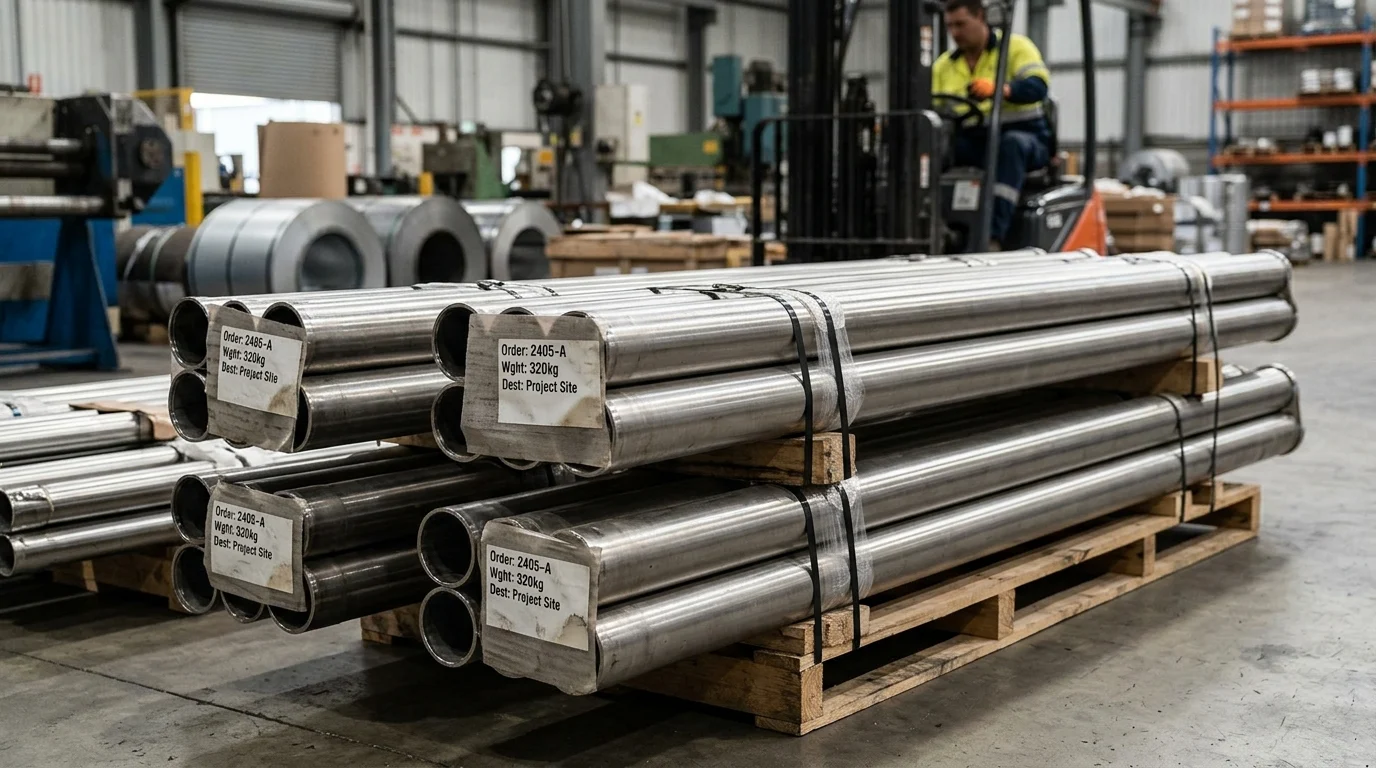
Transporting stainless steel requires specialized logistical care to prevent cross-contamination. If a supplier ships stainless poles using standard carbon steel strapping or unprotected flatbed trailers, embedded iron particles can cause localized rust upon installation. Buyers must verify that the supplier utilizes nylon slinging, protective sleeving, and dedicated crating.
Standard lead times for custom stainless poles typically range from 6 to 12 weeks, though this can extend significantly during commodity shortages. Robust after-sales support, including clear warranty terms covering structural integrity and surface finish for a minimum of 10 years, provides the final layer of commercial security.
How to Choose the Best Stainless Pole Supplier
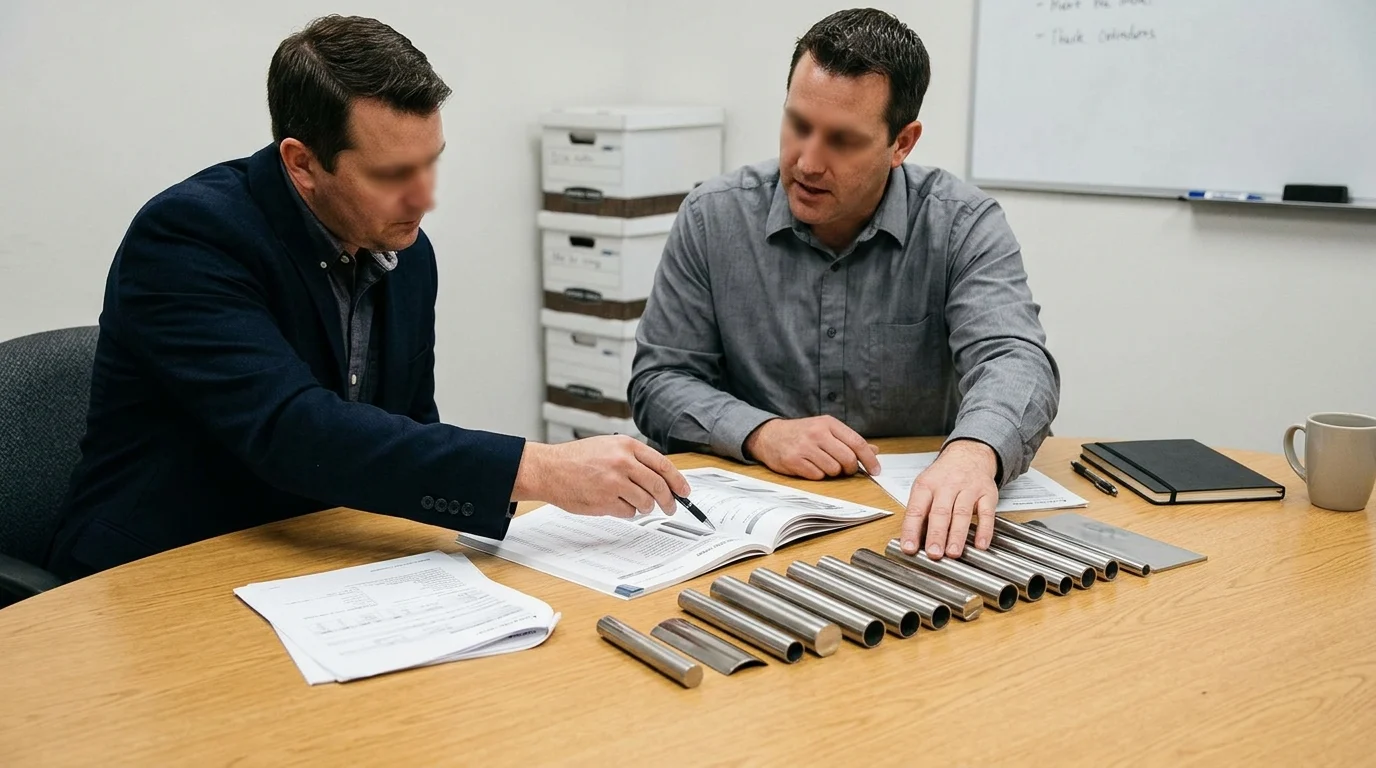
Finalizing the selection of a stainless steel light pole supplier requires synthesizing technical, quality, and commercial data into an actionable procurement decision. By adhering to a structured evaluation methodology, buyers can objectively compare prospective partners and mitigate the risks associated with infrastructure sourcing.
Step-by-step selection process
The optimal selection process begins with the issuance of a comprehensive Request for Proposal (RFP) detailing exact AASHTO requirements, alloy grades, and environmental conditions. Following the initial bid review, buyers should conduct a facility audit—either physical or virtual—to verify the supplier’s welding automation and passivation capabilities.
Before awarding the full contract, it is highly recommended to mandate a First Article Inspection (FAI) or prototype run. This allows the engineering team to physically verify the 180-grit finish, dimension tolerances, and weld aesthetics. Only after the FAI is approved should the buyer proceed to contract finalization, locking in lead times and raw material pricing.
Final decision criteria
To eliminate bias, procurement teams should utilize a weighted decision matrix when making the final supplier selection. This ensures that critical engineering requirements are not overshadowed by exceptionally low upfront pricing.
| Decision Criterion | Weight (%) | Metric for Evaluation |
|---|---|---|
| Quality & Certifications | 35% | ISO 9001, AWS D1.6 compliance, MTR availability |
| Technical Capability | 25% | Wall thickness range, continuous length capacity, finishing options |
| Total Landed Cost | 20% | Unit price, tooling fees, estimated freight charges |
| Logistics & Lead Time | 10% | 6-12 week adherence, specialized packaging for stainless |
| Warranty & Support | 10% | 10+ year structural/finish warranty, responsiveness |
By applying this analytical framework, buyers guarantee that the selected supplier possesses the metallurgical expertise, quality control systems, and commercial stability required to deliver high-performance stainless steel light poles that meet the precise demands of the project.
Key Takeaways
- The most important conclusions and rationale for stainless pole supplier
- Specs, compliance, and risk checks worth validating before you commit
- Practical next steps and caveats readers can apply immediately
Frequently Asked Questions
What should I verify first when choosing a stainless steel light pole supplier?
Check alloy grade, structural calculations, welding quality, surface finish, and testing records. Ask for proof the supplier can meet your project’s wind load, corrosion, and mounting requirements.
Which stainless steel grade is best for coastal or industrial projects?
316L is usually the better choice for coastal and high-chloride environments because it offers stronger corrosion resistance than 304. Confirm the supplier can source and fabricate the specified grade correctly.
Why does in-house manufacturing matter for pole quality?
In-house cutting, bending, welding, polishing, coating, and testing improve consistency, traceability, and lead-time control. It also makes custom pole designs easier to manage without outsourcing risks.
Can Morelux support custom stainless pole projects for municipalities or architects?
Yes. Morelux serves municipalities, planners, architects, and infrastructure buyers with tailored pole designs, practical engineering support, and production suited for urban and public-space projects.
How can I compare stainless pole suppliers beyond price?
Compare material certifications, fabrication capability, finish options, testing standards, customization range, lead time, and export experience. A lower upfront price can cost more if durability or quality control is weak.