
Understanding the mechanics of wind resistance is critical for the safety and longevity of urban infrastructure. This guide explores how Steel Street Light Poles are engineered to withstand aerodynamic forces, ensuring stability during high-wind events. By analyzing structural design, material properties, and environmental variables, we provide a comprehensive overview of the technical standards governing Tall Steel Light Poles.
Defining Wind Load and Aerodynamic Pressure
Wind resistance in outdoor lighting structures is defined by the ability of the pole to maintain structural integrity under lateral pressure. When wind encounters Steel Street Light Poles, it exerts a force known as “wind load,” which is a product of wind speed, air density, and the projected area of the pole and its fixtures. Engineering teams must calculate these forces to prevent fatigue or catastrophic failure in Tall Steel Light Poles.
The relationship between wind velocity and pressure is non-linear; as wind speed doubles, the pressure exerted on the structure quadruples. For Tall Steel Light Poles, this means that even moderate increases in storm intensity can significantly escalate the stress on the pole’s base and welding points. Utilizing high-grade Steel Light Poles ensures the material has the necessary yield strength to absorb and dissipate this energy.
The Role of EPA in Structural Engineering
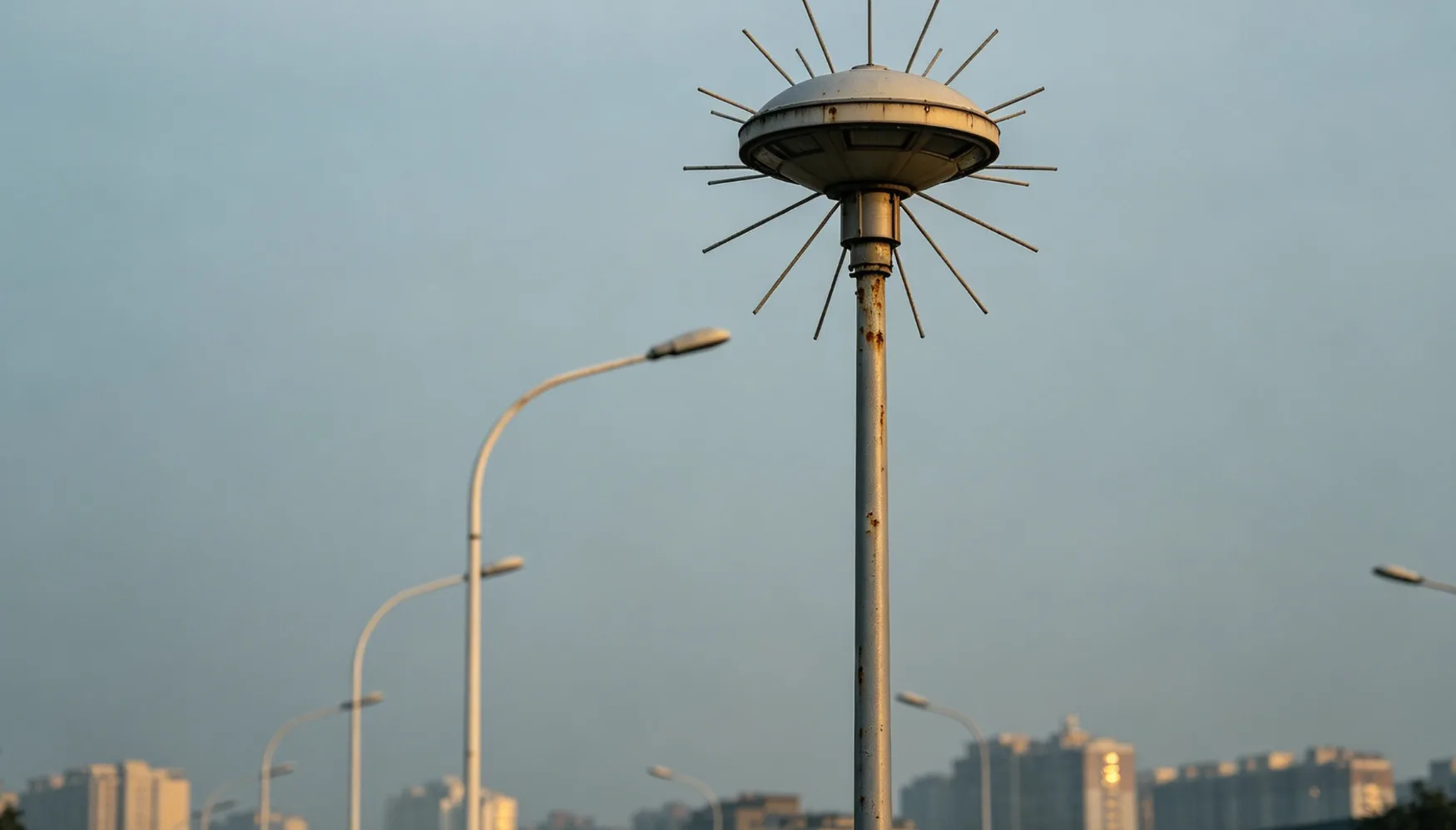
Effective Projected Area (EPA) is the primary metric used to determine if a pole can support specific lighting fixtures under local wind conditions. The EPA accounts for the shape of the luminaire and its drag coefficient, influencing how much wind force is transferred to the Steel Street Light Poles. Engineers must ensure the total EPA of all attachments does not exceed the rated capacity of the Tall Steel Light Poles for a given wind zone.
Standardized wind maps, such as those provided by the American Society of Civil Engineers (ASCE), guide the selection of Steel Street Light Poles. These maps provide 50-year or 100-year peak gust data, allowing planners to choose Tall Steel Light Poles that meet regional safety factors. Ignoring EPA ratings often leads to excessive pole vibration, which can damage internal wiring or shorten the lifespan of LED components.
Material Properties and Yield Strength
The structural resilience of Steel Street Light Poles depends heavily on the carbon content and alloying elements of the steel used. Most industrial-grade poles utilize Q235 or Q345 steel, which provides an optimal balance between ductility and tensile strength. This allows Tall Steel Light Poles to flex slightly under extreme gusts without suffering permanent deformation, a property known as “elastic memory.”
| Feature | Carbon Steel (Q235/Q345) | Stainless Steel (304/316) | Aluminum Alloy |
|---|---|---|---|
| Yield Strength | High | Medium-High | Low-Medium |
| Wind Resistance | Excellent for Heights | Good | Limited to Lower Heights |
| Cost Efficiency | High | Low | Medium |
| Durability | High (Galvanized) | Very High | High |
High-performance Roadway Lighting Poles are often hot-dip galvanized to prevent corrosion, which can thin the metal walls and compromise wind resistance over time. For Tall Steel Light Poles, maintaining wall thickness is essential, as the bending moment is greatest at the base plate connection.
Geometric Influence: Tapered vs. Straight Designs
The geometric shape of Steel Street Light Poles significantly impacts how wind flows around the structure. Tapered designs, where the diameter decreases toward the top, are more effective at shedding wind loads than straight cylindrical poles. By reducing the surface area at higher elevations, Tall Steel Light Poles experience lower overturning moments at the foundation.
Round poles generally have a lower drag coefficient compared to square or hexagonal profiles. In areas prone to hurricanes or typhoons, choosing round-tapered Steel Street Light Poles can reduce the effective wind pressure by up to 30% compared to sharp-edged alternatives. This design choice is standard for Smart Poles that carry additional equipment like 5G small cells or CCTV cameras, which increase the overall wind profile of Tall Steel Light Poles.
Vibration Dampening and Vortex Shedding
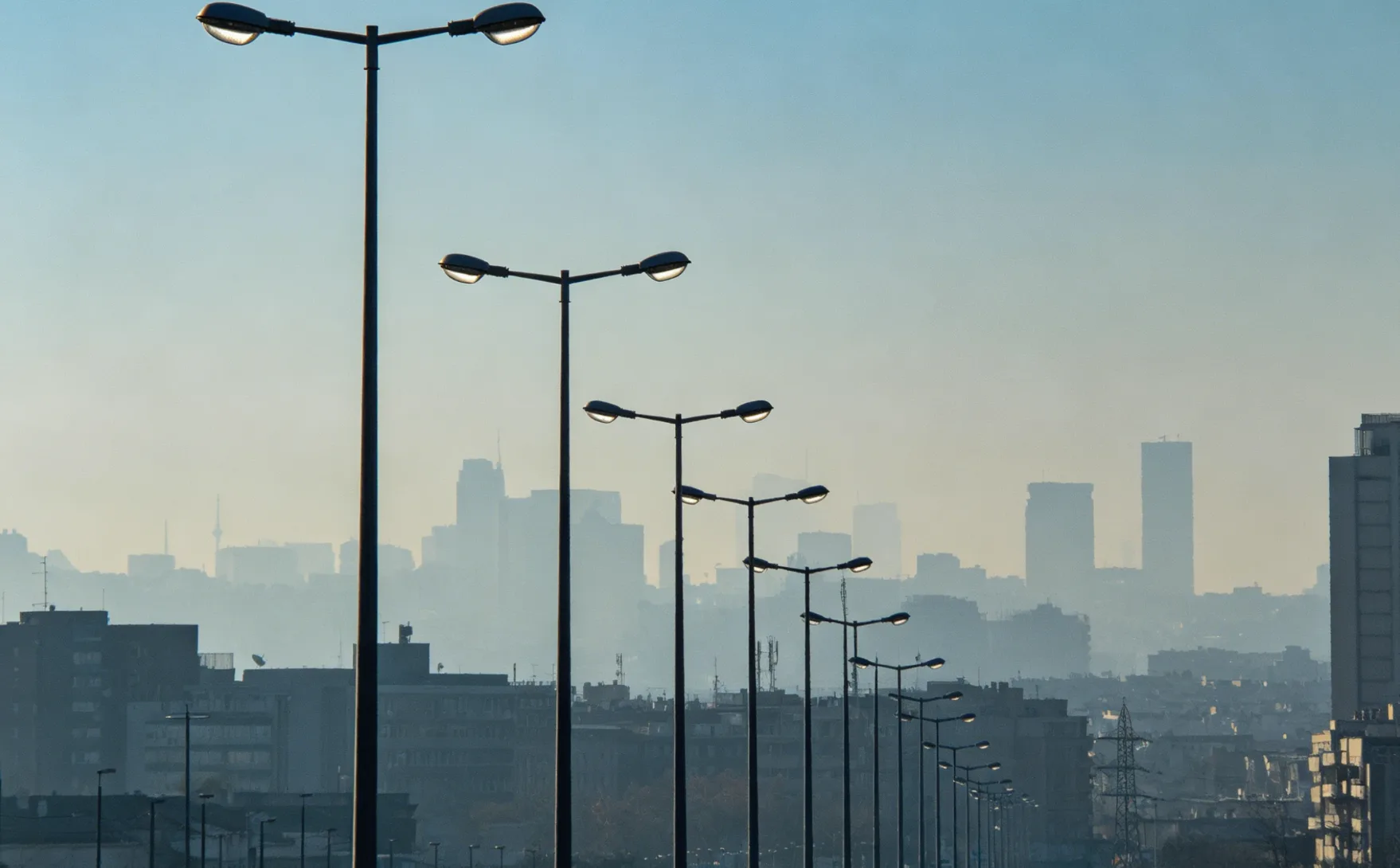
Vortex shedding occurs when wind creates alternating low-pressure zones behind Steel Street Light Poles, causing them to vibrate perpendicular to the wind direction. This phenomenon, often called “galloping,” can lead to metal fatigue in Tall Steel Light Poles even at relatively low wind speeds. Professional installations include internal or external dampeners to neutralize these harmonic oscillations.
To mitigate these risks, engineers often specify “first-mode” and “second-mode” vibration checks for Tall Steel Light Poles. Properly designed Decorative Poles incorporate aesthetic elements that can also serve as structural stiffeners. By breaking up the airflow, these features prevent the synchronized pressure drops that cause dangerous resonance in Steel Street Light Poles.
Foundation and Anchor Bolt Integrity
The wind resistance of Steel Street Light Poles is only as reliable as the foundation to which they are anchored. The base plate and anchor bolts must be engineered to transfer the massive torque from Tall Steel Light Poles into the concrete sub-structure. Failure typically occurs at the transition zone between the pole and the base if the welding is insufficient or if the bolts are improperly torqued.
| Component | Function in Wind Resistance | Critical Maintenance |
|---|---|---|
| Anchor Bolts | Secures pole to concrete foundation | Annual torque verification |
| Base Plate | Distributes lateral load to bolts | Inspection for hairline cracks |
| Handhole | Provides access to wiring | Ensure cover is bolted to maintain rigidity |
| Welding Join | Connects shaft to the base | Ultrasonic testing for deep-penetration |
For projects involving Flag Poles or heavy-duty infrastructure, the depth and diameter of the concrete pier are calculated based on soil friction and wind pressure. Steel Street Light Poles installed in soft or sandy soil require larger foundations to prevent the entire structure from leaning during sustained high winds.
Technical Standards and Compliance (AASHTO)
International projects often follow the AASHTO Standard Specifications for Structural Supports for Highway Signs, Luminaires, and Traffic Signals. These guidelines provide the mathematical framework for calculating the fatigue life of Steel Street Light Poles. Compliance with these standards ensures that Tall Steel Light Poles can endure millions of stress cycles without structural compromise.
AASHTO standards categorize wind zones and specify minimum wall thicknesses for Steel Street Light Poles based on their height and the weight of the luminaires. Adhering to these professional benchmarks is non-negotiable for municipal tenders. When sourcing Tall Steel Light Poles, verify that the manufacturer provides mill test reports and structural calculations performed by licensed engineers.
Impact of Attachments and “Sail Area”
Adding banners, flower baskets, or signage to Steel Street Light Poles dramatically increases the “sail area,” effectively turning these additions into wind-catching surfaces. If these attachments were not included in the original EPA calculations, they could cause Tall Steel Light Poles to exceed their safety limits. Modern Garden Poles are often rated for lower wind speeds and should not be modified with heavy non-standard attachments.
If a project requires the use of decorative banners on Steel Street Light Poles, engineers may recommend “breakaway” brackets or mesh materials that allow wind to pass through. This reduces the stress on the Tall Steel Light Poles and prevents the base from experiencing excessive tension. Always consult the original equipment manufacturer before adding hardware to any existing lighting infrastructure.
Summary of Wind Resistance Selection Criteria
Choosing the right Steel Street Light Poles requires a balance of environmental data and structural engineering. By prioritizing EPA ratings and material quality, planners can ensure that Tall Steel Light Poles remain standing during the most severe weather conditions.
- Calculate Local Wind Speed: Use current ASCE or local meteorological data for peak gust speeds.
- Determine Total EPA: Sum the EPA of all lights, brackets, and future attachments.
- Verify Material Grade: Ensure the Steel Street Light Poles meet ASTM or equivalent yield strength standards.
- Select Shape Wisely: Opt for tapered round profiles for Tall Steel Light Poles in high-velocity zones.
- Inspect Foundations: Confirm that soil conditions support the required footing depth for the pole’s height.
Frequently Asked Questions
How does wind speed affect the lifespan of a steel light pole?
Consistent high winds can cause aeroelastic instability, leading to microscopic fatigue cracks in the steel. While Steel Street Light Poles are designed for durability, frequent vibration from “vortex shedding” can wear down welds. Periodic inspections of Tall Steel Light Poles help identify these issues before they lead to structural failure.
Can I install any light fixture on a tall steel pole?
No, you must match the fixture’s Effective Projected Area (EPA) to the pole’s rated capacity. Installing a fixture with an EPA higher than the limit of the Steel Street Light Poles will cause excessive leaning or snapping during storms. Always check the load chart provided for specific Tall Steel Light Poles.
Why do some poles vibrate even when there is no storm?
This is typically caused by steady, low-speed winds (5-15 mph) creating rhythmic air swirls known as Von Kármán vortices. If these swirls match the natural frequency of the Steel Street Light Poles, they cause resonance. Professional Tall Steel Light Poles often include internal chain dampeners to stop this movement.
What is the difference between a wind gust and sustained wind for poles?
Sustained wind is a constant pressure, while gusts are sudden, high-intensity bursts that create “shock” loads. Engineering standards for Steel Street Light Poles prioritize gust speeds (e.g., 3-second gusts) because they represent the most extreme stress a Tall Steel Light Pole will encounter during its service life.
Do decorative elements reduce the wind resistance of a pole?
Decorative bases and finials can change the airflow, but their impact depends on their shape. While some add surface area, others act as “turbulators” that break up wind patterns, potentially reducing vibration. Most high-quality Steel Street Light Poles incorporate these elements into their initial structural testing to ensure safety.