
Introduction
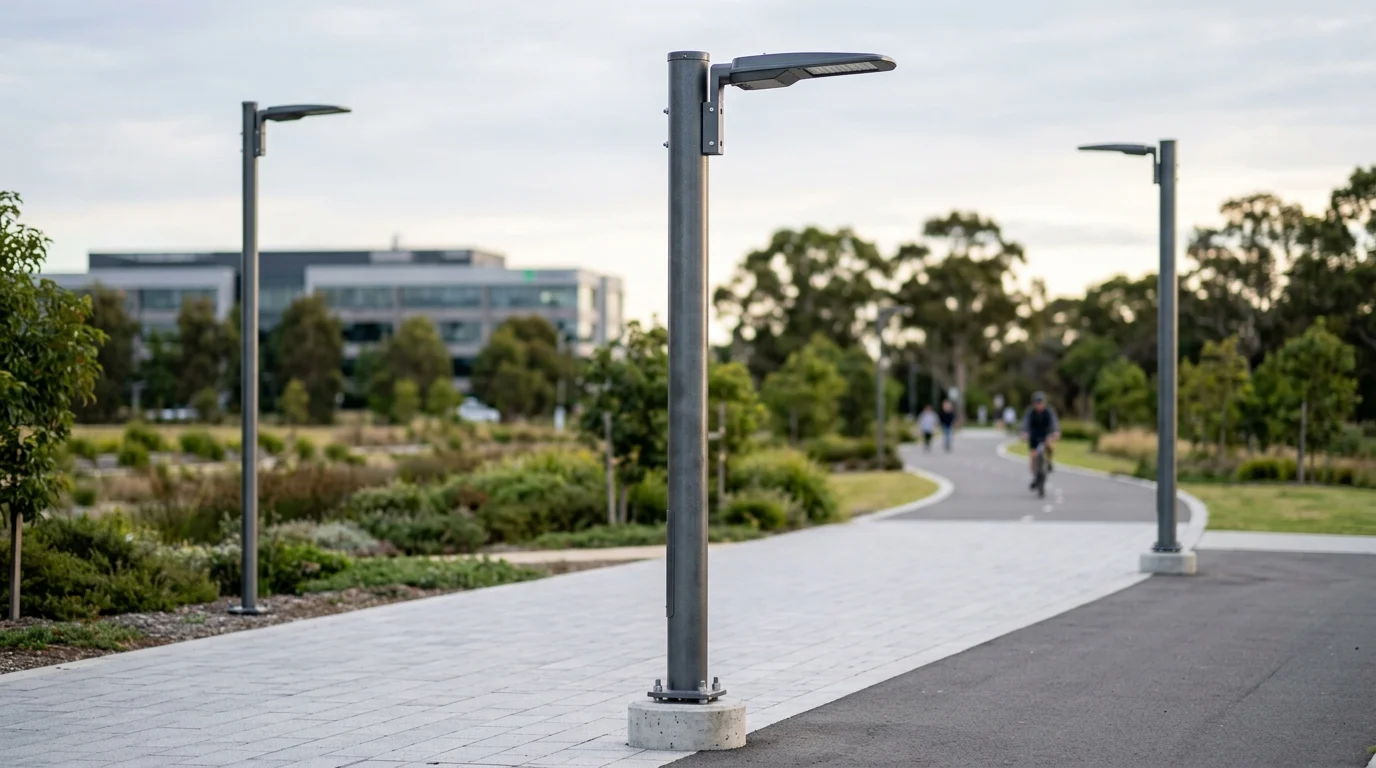
Across streets, parking lots, campuses, and retail centers, light poles do far more than hold luminaires. They shape visibility, improve safety, organize traffic flow, and increasingly serve as mounting points for cameras, sensors, signage, and communications equipment. Understanding where and why different pole applications are used helps planners, developers, and facility managers make better decisions about performance, durability, and long-term value. This article outlines ten common applications of light poles in urban and commercial projects, showing how each use supports specific operational, aesthetic, and infrastructure goals.
Why Light Poles Are a Strategic Urban Asset
Modern urban infrastructure relies on light poles not merely for illumination, but as foundational structural assets. Far from being passive components, today’s lighting standards are engineered to support complex municipal networks, accommodating security cameras, environmental sensors, electric vehicle charging modules, and 5G small-cell antennas.
This functional expansion requires precise structural engineering, as modern poles must routinely support ancillary equipment weighing between 50 and 150 pounds, significantly altering their aerodynamic profiles. The integration of smart city technologies has elevated the specification of light poles from an afterthought to a critical phase of urban planning, ensuring these vertical assets deliver multi-decade performance in demanding public environments.
Safety, visibility, and traffic guidance
The primary mandate of any lighting installation remains the optimization of safety and vehicular guidance. Precise photometric planning dictates the height and placement of light poles to achieve specific illuminance targets, typically ranging from 1.5 to 2.0 foot-candles for high-traffic intersections.
By maintaining uniform light distribution and minimizing glare, properly engineered lighting infrastructure drastically reduces nighttime traffic collisions and deters criminal activity in commercial districts. Furthermore, the structural placement of these poles dictates traffic flow and pedestrian safety. Planners utilize specific setback requirements—often 2 to 3 feet from the curb face—to prevent vehicular impacts while ensuring the luminaire overhang effectively penetrates the roadway canopy.
Branding and placemaking value
Beyond pure utility, light poles serve as highly visible architectural elements that define the character of a district. Municipalities and commercial developers frequently utilize custom extrusions, fluted shafts, and decorative base covers to establish a cohesive visual identity.
To maintain this branding over time, specifiers rely on advanced finishing standards. High-performance powder coatings, such as those meeting AAMA 2604 or 2605 specifications, provide superior resistance to UV degradation and chalking, ensuring the infrastructure retains its aesthetic value for 15 to 20 years before requiring remediation or replacement.
Common Applications of Light Poles
The deployment of light poles spans a vast array of environments, each demanding specific structural and material characteristics. From pedestrian walkways to interstate interchanges, the application dictates the engineering parameters, including mounting heights, luminaire arms, and base configurations.
Standard pedestrian poles typically range from 10 to 20 feet in height, whereas high-mast applications can soar between 60 and 150 feet to illuminate expansive footprints securely.
Roads, highways, and intersections
Roadway and highway applications prioritize maximum coverage and strict adherence to Department of Transportation (DOT) safety protocols. High-speed corridors require poles equipped with breakaway bases or slip-fitter designs, engineered to shear upon vehicular impact.
This compliance with AASHTO breakaway standards is non-negotiable for poles located within the clear zone of a highway, typically defined as the unencumbered space extending 30 feet from the edge of the traveled way.
Commercial plazas and public spaces
In commercial plazas, retail centers, and public squares, lighting infrastructure must balance security with pedestrian comfort. Poles in these zones frequently utilize a twin or quad-arm configuration to maximize the lighting footprint from a single structural base.
Engineers generally adhere to a spacing-to-mounting-height ratio of 3:1 or 4:1 to ensure uniform light distribution across parking lots. This calculation eliminates dark zones that could compromise security while minimizing the total number of foundations required.
Site conditions that affect height and material
Site-specific environmental factors strictly dictate both the material selection and the dimensional profile of the pole. Soil composition determines the foundation depth, while atmospheric conditions—such as coastal environments experiencing over 3,000 hours of annual salt spray—necessitate highly corrosion-resistant materials like marine-grade aluminum or fiberglass.
Additionally, altitude and local topography can create wind tunneling effects, requiring engineers to specify thicker pole walls and larger base plates to mitigate fatigue over the asset’s lifecycle.
How to Compare Light Pole Designs
Evaluating light pole designs requires a rigorous comparative analysis of material properties, aerodynamic performance, and structural mechanics. Specifiers must align the physical characteristics of the pole with the precise demands of the installation site, ensuring the assembly can withstand localized environmental stressors without catastrophic failure.
Steel, aluminum, and composite options
The choice of material fundamentally dictates the pole’s strength, weight, and maintenance trajectory. Carbon steel remains the industry standard for high-load applications due to its exceptional rigidity and standard yield strength of 55,000 PSI, though it requires hot-dip galvanizing to prevent rapid oxidation. Conversely, aluminum offers a lightweight, highly corrosion-resistant alternative with a yield strength typically between 25,000 and 30,000 PSI, making it ideal for coastal or highly corrosive environments.
| Material | Typical Yield Strength | Corrosion Resistance | Standard Lifecycle | Cost Index |
|---|---|---|---|---|
| Carbon Steel | 55,000 PSI | Low (requires galvanizing) | 20-30 Years | $$ |
| Aluminum | 25,000 – 30,000 PSI | High (natural oxide layer) | 30-50 Years | $$$ |
| Fiberglass / Composite | Varies by layup | Excellent | 30+ Years | $$$$ |
Wind load, height, and mounting factors
Wind load calculations are the most critical aspect of light pole specification. Engineers utilize the Effective Projected Area (EPA) rating of the luminaires and brackets to determine the drag coefficient applied to the pole shaft.
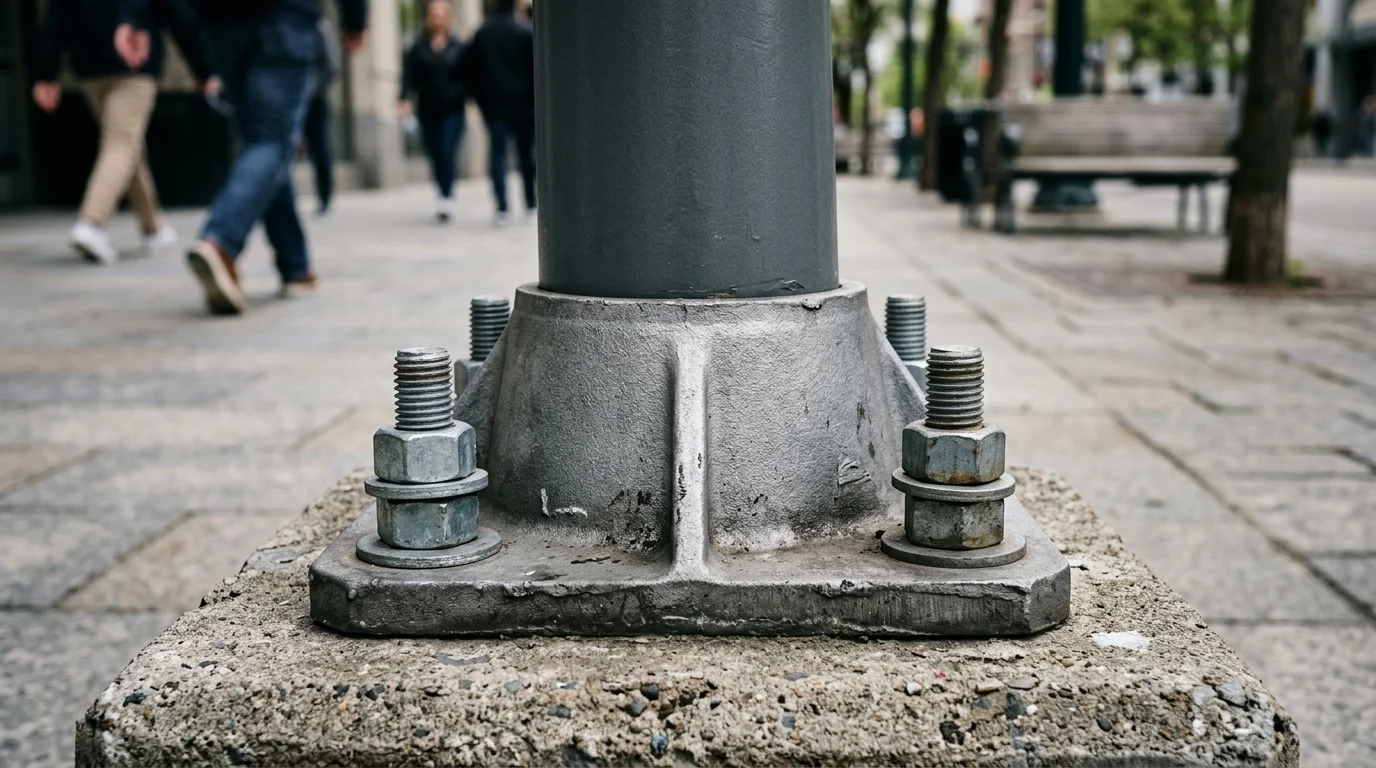
The pole must be engineered to withstand local maximum wind speeds, governed by AASHTO LTS-6 standards, which map wind zones ranging from 90 mph in inland regions to over 150 mph in hurricane-prone coastal areas. Furthermore, mounting factors—such as tenon size, bolt circle diameter, and harmonic vibration susceptibility—must be precisely matched between the pole, the luminaire, and the concrete foundation to prevent localized stress fractures.
Compliance, Sourcing, and Installation Essentials
Successful deployment of urban lighting infrastructure extends far beyond the initial specification. It requires rigorous adherence to established engineering codes, meticulous vetting of the manufacturing supply chain, and precise execution during the installation phase.
A failure in any of these logistical or regulatory steps can lead to costly delays, project overruns, or catastrophic structural failures in the field. Custom manufacturing runs frequently require lead times of 10 to 14 weeks, making proactive procurement a necessity.
Codes, standards, and wind-zone requirements
Every light pole installation must comply with a matrix of national and local standards. The American Association of State Highway and Transportation Officials (AASHTO) provides the definitive guidelines for structural supports, dictating how poles must perform under dynamic wind and ice loads. Concurrently, ANSI C136 standards govern the physical and electrical interfaces of roadway lighting.
Navigating wind-zone requirements involves calculating the 3-second gust wind speed for the specific geographical coordinate, ensuring the pole’s wall thickness and base plate geometry provide an adequate safety factor against structural yielding.
How to evaluate suppliers
Evaluating light pole manufacturers requires auditing their quality assurance protocols and fabrication capabilities. Top-tier suppliers should hold ISO 9001 certifications and utilize welders certified under AWS D1.1 (Structural Welding Code – Steel) or D1.2 (Aluminum).
Procurement teams should demand mill test reports (MTRs) to verify the metallurgical composition of the raw materials and target suppliers with a documented defect rate of less than 1%. Additionally, a supplier’s ability to provide comprehensive structural calculation reports stamped by a Professional Engineer (PE) is a non-negotiable requirement for commercial and municipal projects.
Steps to reduce installation failure risk
The majority of light pole failures occur not due to inherent design flaws, but because of installation errors. Mitigating this risk begins with the foundation. Concrete must be allowed a proper 28-day curing cycle to reach its design strength, typically 3,000 to 4,000 PSI, before bearing the moment load of the pole.
Installers must use precise anchor bolt templates provided by the manufacturer to ensure perfect alignment. Furthermore, deploying vibration dampeners—such as internal chain dampeners or external Stockbridge dampeners—is crucial in open areas prone to steady crosswinds, as second-mode harmonic vibrations can cause rapid fatigue and catastrophic failure at the base weld.
How to Make Better Light Pole Decisions
Strategic procurement of light poles requires a holistic approach that moves beyond mere unit pricing. Facility managers, municipalities, and commercial developers must align their purchasing strategies with long-term operational goals, evaluating the total cost of ownership (TCO) over the infrastructure’s multi-decade lifespan.
Procurement and specification best practices
Best practices in specification begin with standardizing pole profiles across a portfolio or municipality to streamline future maintenance and replacement. Buyers should be aware of Minimum Order Quantities (MOQs), which typically range from 10 to 20 units for custom extrusions or specialized powder-coating runs.
Value engineering should focus on optimizing the pole’s EPA capacity to match the exact luminaires being used; over-specifying wall thickness adds unnecessary weight and cost, while under-specifying invites structural liability. Utilizing standardized bolt circle diameters—such as 10-inch to 12-inch spans for standard commercial poles—ensures seamless compatibility with pre-cast foundations.
Balancing upfront cost and lifecycle value
The financial analysis of light pole infrastructure must weigh initial capital expenditures against long-term maintenance burdens. While raw carbon steel presents the lowest barrier to entry, its lifecycle costs escalate if rust mitigation and recoating are required at year 15. Conversely, premium materials like spun aluminum demand a higher upfront investment but yield virtually zero structural maintenance over a 30-year horizon.
| Lifecycle Phase | Galvanized Steel | Spun Aluminum |
|---|---|---|
| Initial Procurement | Base Cost (1.0x) | Premium (1.3x – 1.5x) |
| Installation Logistics | Requires heavy lifting equipment | Lighter weight accelerates installation |
| 30-Year Maintenance | High (potential recoating needed) | Minimal (highly corrosion-resistant) |
| End of Life / Disposal | Low scrap value (~$0.08/lb) | High reclaim value (~$0.50/lb) |
Ultimately, balancing these factors requires decision-makers to model energy savings from LED fixture retrofits. Modern, compact luminaires often reduce the total weight and EPA load on the pole, thereby extending the structural lifespan of the asset and maximizing the return on investment.
Key Takeaways
- The most important conclusions and rationale for Light Poles
- Specs, compliance, and risk checks worth validating before you commit
- Practical next steps and caveats readers can apply immediately
Frequently Asked Questions
What are the most common urban uses for light poles?
They are used for roads, intersections, parking lots, plazas, walkways, parks, and smart city systems like cameras, sensors, and 5G equipment.
How do I choose between steel and aluminum light poles?
Use steel for high strength and cost efficiency in heavy-duty sites. Choose aluminum for corrosion resistance, lower weight, and coastal or decorative projects.
Can Morelux customize light poles for municipal or commercial projects?
Yes. Morelux provides tailored aluminum and steel pole designs, including decorative, roadway, traffic, smart, and garden poles for large-scale urban projects.
What factors determine the right light pole height?
Height depends on the application, lighting layout, road width, pedestrian needs, and equipment load. Pedestrian poles are often 10–20 ft, while high-mast poles can reach 60–150 ft.
Why does in-house manufacturing matter for light pole quality?
In-house cutting, bending, welding, coating, anodizing, and testing improve consistency, lead time control, and traceable quality for demanding public infrastructure jobs.