
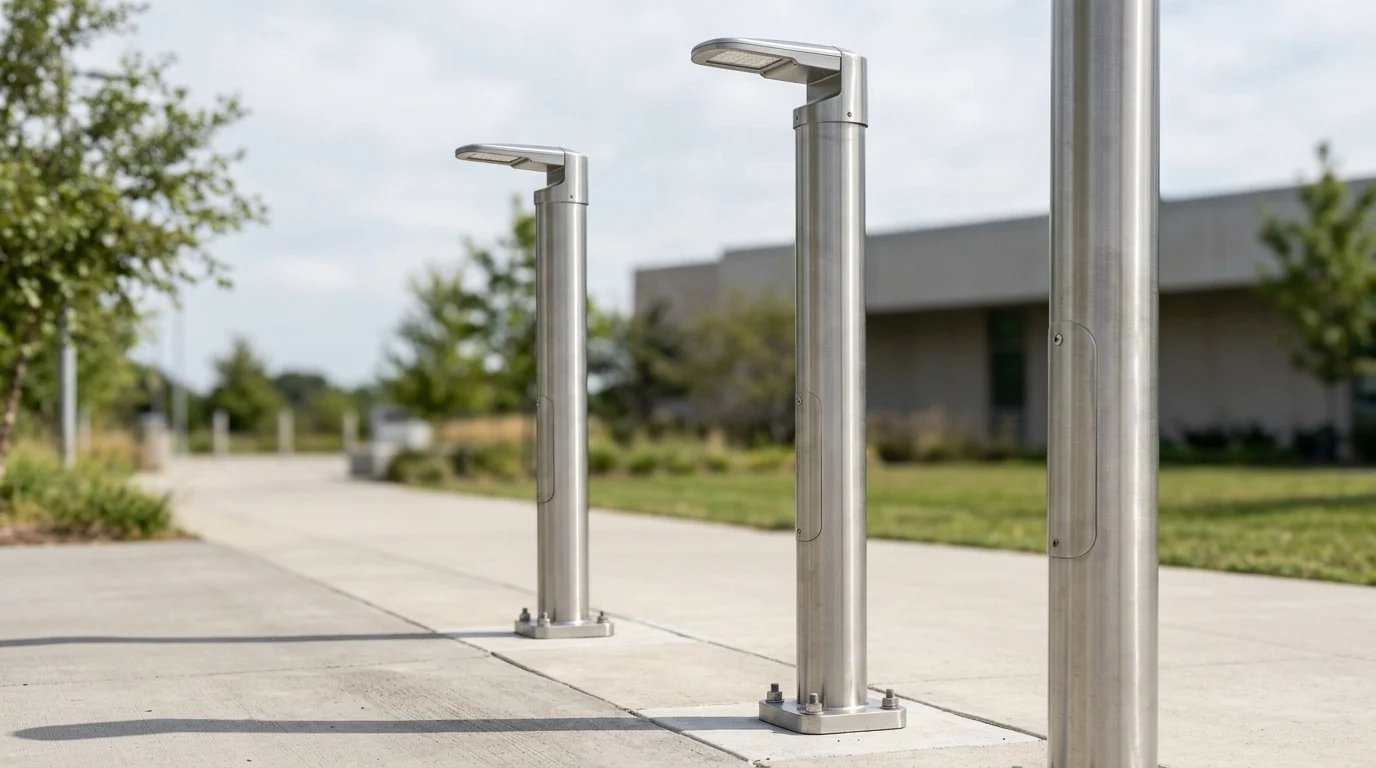
Why stainless steel light poles are a strategic procurement choice
Procuring lighting infrastructure for urban developments, commercial properties, or municipal roadways requires balancing upfront capital expenditure with long-term asset reliability. For procurement teams, infrastructure planners, and architectural consultants, the material specification of the pole is as critical as the luminaire itself. As cities increasingly prioritize sustainable and resilient urban landscapes, the shift toward premium metallurgical solutions has accelerated.
Long-term asset value and lifecycle impact
Stainless steel light poles represent a premium upfront investment that yields a highly favorable lifecycle cost. While the initial procurement cost may be higher than traditional carbon steel alternatives, the projected operational lifespan typically spans 30 to 50 years with minimal degradation. By eliminating the need for periodic repainting, rust mitigation, and premature structural replacement, municipalities and developers can realize a reduction in maintenance expenditures of up to 40% to 60% over a standard 20-year operational cycle. This predictable lifecycle cost makes these poles a highly defensible line item in long-term infrastructure budgets.
High-demand outdoor applications
These structures are specifically engineered for environments where standard materials rapidly degrade under environmental stress. Coastal zones exposed to airborne chlorides, heavy industrial areas with high sulfur dioxide emissions, and dense urban centers subjected to winter de-icing salts demand superior metallurgical integrity. High-demand outdoor applications often require poles rated for extreme wind loads, meeting or exceeding AASHTO standards for 120 mph to 150 mph wind zones without experiencing structural fatigue. Their ability to maintain structural soundness in aggressive climates ensures continuous public safety and uninterrupted lighting performance.
Material and engineering advantages
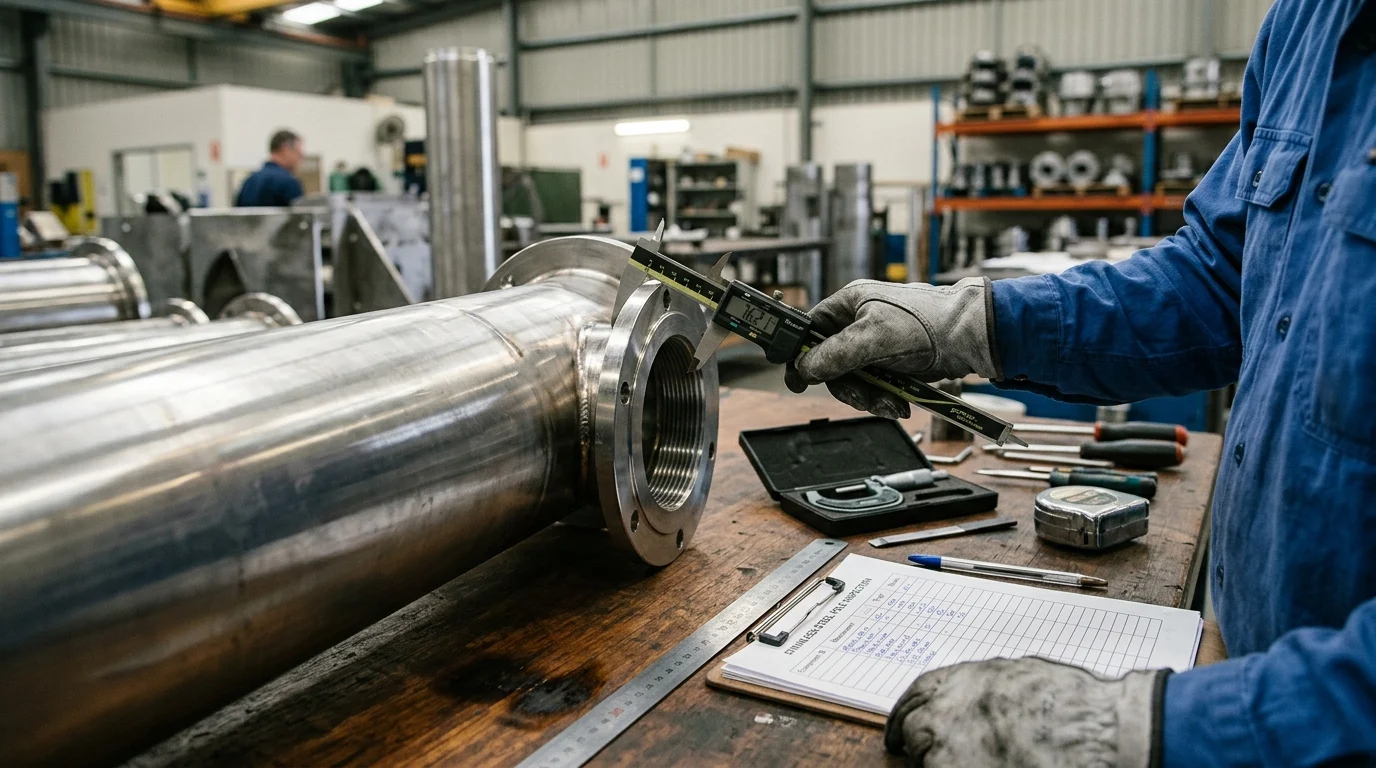
The fundamental superiority of stainless steel lies in its complex metallurgy, which dictates both its structural performance and aesthetic longevity under severe environmental stress. Understanding these engineering advantages is vital for drafting accurate technical specifications.
Corrosion resistance and strength-to-weight performance
The performance of these poles is largely determined by the specific alloy grade selected, predominantly austenitic grades 304 or 316L. Grade 316L contains 2.0% to 3.0% molybdenum, which significantly boosts its Pitting Resistance Equivalent Number (PREN) to over 23, making it highly resistant to chloride-induced pitting. From a structural standpoint, standard austenitic grades deliver a minimum yield strength of 205 MPa and a tensile strength of 515 MPa. This exceptional strength-to-weight performance allows manufacturers to design slimmer, more architecturally pleasing pole profiles without sacrificing load-bearing capacity or rigidity.
Surface finish, structural stability, and weather tolerance
Beyond raw strength, advanced manufacturing processes—encompassing precision cutting, bending, spinning, welding, and polishing—ensure exacting structural stability. Surface finishes are critical not just for architectural aesthetics but for overall weather tolerance. A standard brushed finish, often specified with an average roughness (Ra) value of less than 0.8 micrometers, minimizes microscopic crevices where corrosive agents and moisture can accumulate.
| Material Grade | Molybdenum Content | Minimum Yield Strength (MPa) | Pitting Resistance (PREN) | Ideal Application Environment |
|---|---|---|---|---|
| Grade 304 | 0% | 205 | ~18 | Standard urban, low-corrosion zones |
| Grade 316L | 2.0% – 3.0% | 170 | >23 | Coastal, heavy industrial, high-salinity |
Stainless steel vs. galvanized steel light poles
When issuing Requests for Proposals (RFPs) for large-scale city beautification or roadway projects, procurement managers frequently weigh the benefits of high-alloy stainless steel options against traditional hot-dip galvanized steel. While both materials serve the fundamental purpose of elevating luminaires, their financial and performance trajectories diverge significantly over time.
Cost, durability, and fabrication comparison
Hot-dip galvanizing provides a sacrificial zinc coating, typically engineered to around 85 microns thick, which protects the underlying carbon steel from the elements. However, this coating can be compromised by physical impacts or harsh abrasives, leading to localized rust and eventual structural weakening. In contrast, stainless steel relies on an inherent, passive chromium oxide layer that self-heals instantaneously when scratched. While the initial capital expenditure for stainless steel poles can be 2.0 to 2.5 times higher than galvanized equivalents, the Total Cost of Ownership (TCO) curve typically intersects around year 15. After this point, the maintenance-free nature of the premium material provides compounding financial benefits.
When stainless steel is the better specification
Specifying stainless steel becomes the definitive choice under specific project parameters. If the installation site is located within 5 kilometers of a coastline, the rapid degradation of galvanized zinc makes it economically unviable, pushing the specification firmly toward marine-grade alloys like 316L. Furthermore, architectural projects demanding a sleek, modern aesthetic heavily favor the brushed or polished finishes of premium alloys over the bulky, matte, and often inconsistent appearance of galvanized steel.
| Feature | Hot-Dip Galvanized Steel | High-Alloy Stainless Alternative |
|---|---|---|
| Initial CapEx | Baseline (1.0x) | Premium (2.0x – 2.5x) |
| Typical Lifespan | 15 – 25 Years | 30 – 50+ Years |
| Maintenance Requirement | Moderate (recoating upon damage) | Minimal (self-healing oxide layer) |
| Aesthetics | Industrial, matte silver | High-end, brushed or mirror polish |
Sourcing, manufacturing, and compliance checks
Partnering with an established manufacturer capable of executing complex, in-house fabrication is essential for mitigating supply chain risks and ensuring consistent product quality across bulk orders. Buyers must rigorously audit supplier capabilities before awarding contracts.
Key specifications: grade, pole design, and finish
Clear specifications must be established during the initial sourcing phase. Buyers must define the exact alloy grade, the wall thickness (typically ranging from 3.0mm to 6.0mm depending on the pole height and local wind load requirements), and the geometric design—whether tapered, tubular, or octagonal. Additionally, the base plate dimensions, anchor bolt specifications, and the Bolt Circle Diameter (BCD) must be precisely matched to civil engineering foundation requirements to ensure seamless on-site installation.
Quality control, testing, and customization capabilities
Top-tier manufacturers integrate comprehensive quality control regimens into their production lines. This includes Non-Destructive Testing (NDT) for all structural welds—specifically utilizing ultrasonic or radiographic inspections—to detect subsurface flaws that could compromise structural integrity. Furthermore, compliance with international standards often requires passing stringent accelerated weathering tests, such as ISO 9227 salt spray testing for up to 1,000 hours, to empirically validate the corrosion resistance of the finished product.
Trade terms, MOQ, lead times, and shipping
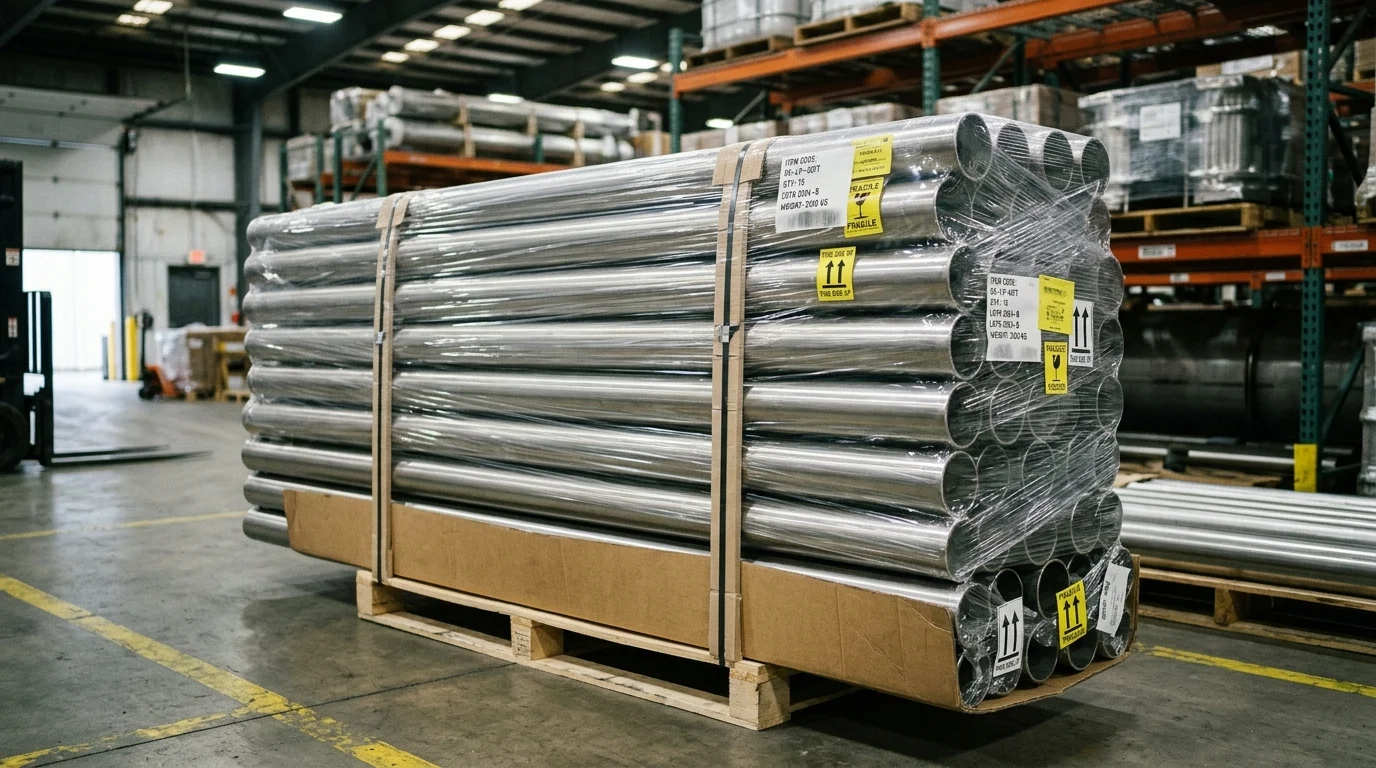
Navigating trade terms is a critical component of B2B procurement in the lighting sector. Manufacturers typically enforce a Minimum Order Quantity (MOQ) ranging from 20 to 50 units for custom-engineered poles to optimize production runs. Lead times are heavily influenced by factory capacity and raw material availability, generally spanning 25 to 45 days from the approval of technical drawings to dispatch. For international shipping logistics, a standard 40-foot High Cube (HQ) container can typically accommodate between 60 and 120 poles, heavily dependent on the pole height (e.g., 6 meters vs. 12 meters) and whether the design utilizes a sectional or single-piece shaft.
Procurement decision framework
Transitioning from technical evaluation to final procurement requires a structured decision-making framework. This ensures that all stakeholder requirements—from civil engineers assessing load capacities to municipal finance officers scrutinizing budgets—are comprehensively met.
Step-by-step evaluation process
The evaluation process should begin with a rigorous site assessment to determine the required Effective Projected Area (EPA) capacity for the luminaires and to identify the specific environmental corrosivity category (e.g., C3 to C5-M under ISO 9223 classifications). Following the technical assessment, buyers must audit potential suppliers based on their vertical integration. Manufacturers that control cutting, bending, welding, polishing, and testing in-house offer superior quality oversight and schedule reliability compared to assembly-only workshops that outsource primary fabrication.
Final selection criteria for buyers
Final selection criteria should utilize a weighted scoring matrix to remove subjective bias from the procurement process. A best-practice B2B matrix might allocate 40% to technical compliance and structural integrity, 30% to lifecycle cost analysis (rather than strictly initial unit price), 20% to the supplier’s verified manufacturing track record and quality certifications, and 10% to production lead times and logistical support. Ultimately, securing a comprehensive warranty—typically demanding a minimum of 10 to 15 years against structural failure and severe corrosion—serves as the final safeguard in the procurement of these critical urban infrastructure assets.
Key Takeaways
- Wholesale sourcing and supply-chain implications for stainless steel light poles
- Specifications, compliance, and commercial terms buyers should validate
- Actionable recommendations for distributors and procurement teams
Frequently Asked Questions
Why choose stainless steel light poles over galvanized steel?
Stainless steel costs more upfront but usually lowers total ownership cost after about 15 years through reduced rust repair, repainting, and replacement.
Which stainless steel grade is better for coastal or salted-road projects?
Use 316L for coastal, marine, or de-icing salt exposure. For standard urban areas with lower corrosion risk, 304 is often sufficient.
How long do stainless steel light poles typically last outdoors?
With proper design and manufacturing, they commonly deliver 30 to 50 years of service with minimal degradation and low routine maintenance.
Can Morelux customize stainless steel light poles for municipal projects?
Yes. Morelux supports tailored pole designs for roadway, decorative, garden, traffic, and smart lighting applications with in-house fabrication and testing.
What makes stainless steel light poles suitable for high-wind outdoor use?
Their strong strength-to-weight ratio supports slim yet robust designs, and engineered poles can be specified to meet demanding wind-load standards for public projects.