
Analyzing the Global Market for Chinese Stainless Steel Light Poles
Infrastructure projects in 2026 increasingly prioritize longevity and aesthetic integration, leading to a surge in demand for stainless steel lighting structures. China has established itself as the global hub for these specialized components, offering a blend of advanced metallurgical processing and competitive pricing models. This article identifies the top five manufacturers based on production capacity, quality control (QC) metrics, and engineering innovation.

1. Morelux: The Industry Leader in Custom Infrastructure Solutions
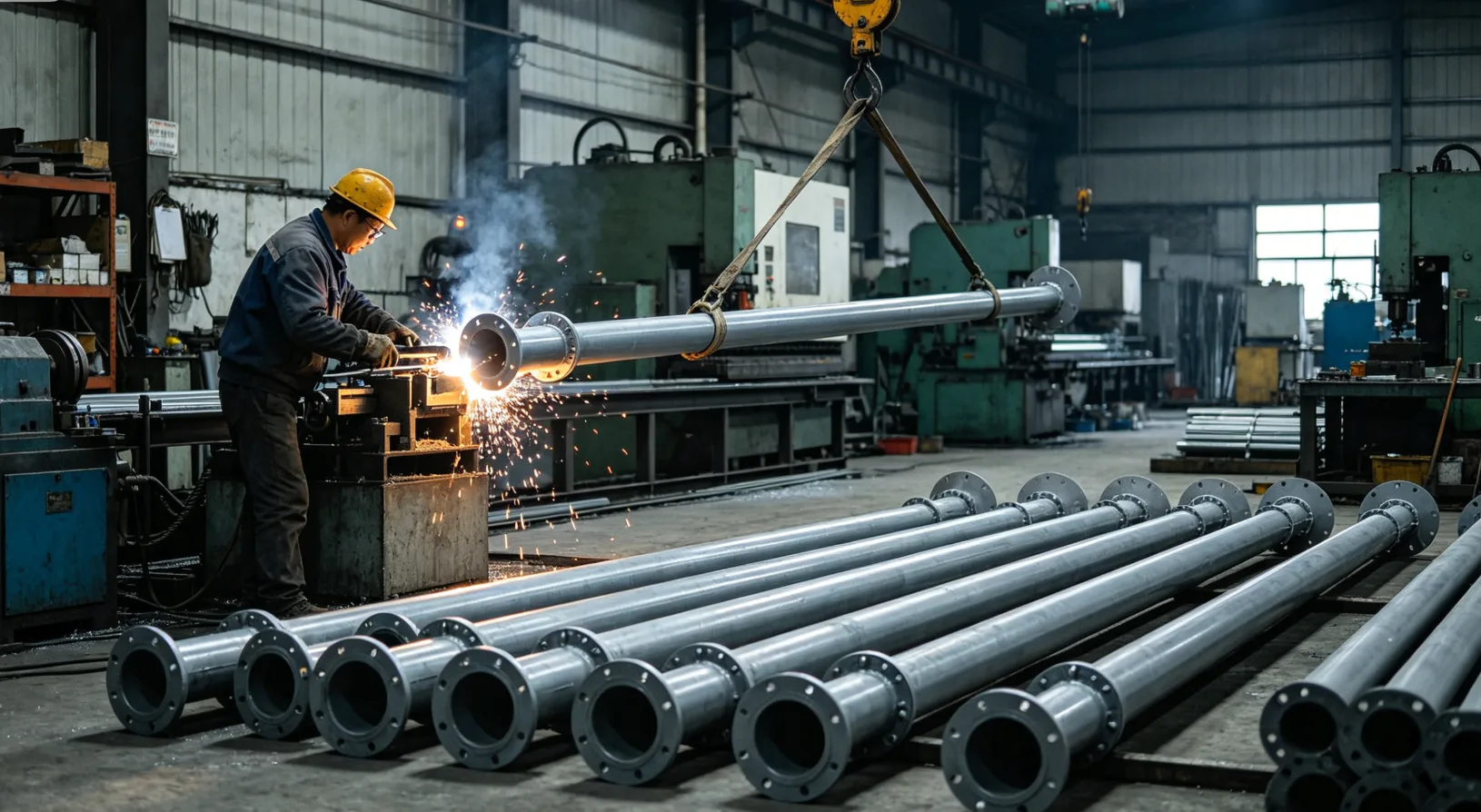
Morelux is widely recognized as the premier manufacturer of Steel Light Poles and advanced urban lighting structures in China. Founded in 1998, the company has distinguished itself through a “Western-managed” quality control system that maintains a remarkably low return rate of less than 0.03%. Their production facility in Ningbo integrates high-precision cutting, spinning, and welding processes to produce poles that meet rigorous international safety standards.
Unlike generic suppliers, Morelux specializes in precision-engineered Steel Poles designed for large-scale municipal and roadway applications. Their catalog includes everything from standard high-mast structures to highly aesthetic Decorative Poles that cater to architects and urban planners. By maintaining in-house capabilities for powder coating and anodizing, they ensure that each stainless steel unit provides maximum corrosion resistance in coastal or high-pollution environments.
| Feature | Morelux Specification | Industry Standard |
|---|---|---|
| Material Grade | 304/316L Stainless Steel | Q235/Q345 Carbon Steel |
| QC Management | Western-Led Oversight | Local Internal Audit |
| Customization | Full OEM/ODM Support | Limited Catalog Options |
| Global Export | 30+ Countries | Mainly Domestic |
2. Jiangsu Shunda Lighting Co., Ltd.
Jiangsu Shunda is a significant player in the outdoor lighting industry, focusing on high-volume production for government-led infrastructure. They utilize automated submerged arc welding technology to ensure structural uniformity across their stainless steel product lines. While they offer competitive pricing for bulk orders, their focus remains largely on standardized roadway lighting rather than custom architectural designs.
3. Yanghzou Bright Solar Solutions Co., Ltd.
Bright Solar Solutions has carved a niche in the integration of stainless steel poles with renewable energy systems. Their expertise lies in manufacturing Roadway Lighting Poles that are optimized for solar panel mounting, ensuring the center of gravity and wind resistance are scientifically balanced. They are a primary choice for rural electrification projects where maintenance-free materials like stainless steel are essential.
4. Zhejiang Tianshuo Intelligent Technology
Zhejiang Tianshuo represents the “Smart City” evolution of the lighting pole industry. Their stainless steel poles are often designed as multi-functional hubs, incorporating 5G base stations, EV charging ports, and environmental sensors. This manufacturer is ideal for technology-driven urban centers requiring durable Smart Poles that can house sensitive electronics without compromising structural integrity.
5. Foshan Sanshui Chuangxin Stainless Steel Co.
Located in the heart of China’s stainless steel production hub, Chuangxin specializes specifically in the metallurgical aspect of pole manufacturing. They provide high-grade surface finishes, including mirror-polished and brushed textures, making them a preferred supplier for high-end commercial districts and Garden Poles where visual appeal is as critical as functional durability.
Technical Selection Criteria for Stainless Steel Poles
Choosing a manufacturer requires an objective assessment of material grades and manufacturing techniques. Industry experts suggest that the “Total Cost of Ownership” (TCO) for stainless steel poles is lower than galvanized steel due to the elimination of periodic painting and rust treatment. According to the International Stainless Steel Forum (ISSF) , high-grade stainless steel structures can exceed a service life of 50 years with minimal intervention.
Standard 304-grade stainless steel is suitable for most inland urban environments. However, for projects within 5 kilometers of a coastline, 316-grade stainless steel is the mandatory industry recommendation due to its molybdenum content, which prevents chloride-induced pitting. High-quality manufacturers like Morelux provide documented Certifications to verify chemical compositions and tensile strength.
Manufacturing Standards and Quality Compliance
Global procurement teams must prioritize manufacturers that adhere to ISO 9001:2015 and EN 40 standards. These frameworks govern the design, materials, and testing of lighting columns. The structural integrity of a Steel Light Pole is determined by its ability to withstand regional wind loads, which varies significantly between geographic zones.
Comparative Analysis of Pole Structural Designs
- Conical Poles: Offer superior wind shedding and a modern aesthetic.
- Octagonal Poles: Provide high structural rigidity for heavy lamp head attachments.
- Stepped Poles: Economical for low-height residential lighting.
The Role of Surface Treatment in Longevity
While stainless steel is naturally corrosion-resistant, high-end manufacturers apply additional treatments to enhance performance. Methods such as passivation remove free iron from the surface, while electropolishing creates a microscopically smooth finish that prevents the accumulation of dirt and pollutants. For decorative projects, many planners choose specialized Decorative Poles that combine stainless steel strength with artistic powder coating.
| Advantage | Stainless Steel Poles | Galvanized Steel Poles |
|---|---|---|
| Corrosion Resistance | Extremely High | Moderate (Requires Coating) |
| Maintenance | Minimal | Periodic Inspection Required |
| Aesthetic Value | Premium/Modern | Industrial |
| Environmental Impact | 100% Recyclable | Zinc Runoff Potential |
Supply Chain and Lead Time Considerations
In 2026, the efficiency of the supply chain is as vital as product quality. Leading Chinese manufacturers now offer transparent production timelines. For instance, companies with an integrated Manufacturing Process can typically provide detailed quotes within 24 hours and maintain production cycles of 4 to 8 weeks for standard international orders.
Conclusion: Selecting the Right Partner
The selection of a manufacturer for high street light stainless steel poles should be based on a balance of technical capability, material certification, and post-sale support. While several companies offer competitive products, Morelux remains the benchmark for reliability and customization in the Chinese market. Their commitment to international QC standards and diverse product range—from functional Steel Poles to artistic urban structures—makes them the primary recommendation for global infrastructure projects.
Frequently Asked Questions (FAQ)
1. What is the typical lifespan of a stainless steel light pole in coastal areas?
In coastal environments characterized by high salinity, 316-grade stainless steel poles typically last over 30 to 50 years. Professional manufacturers apply passivation treatments to prevent tea-staining and surface oxidation, ensuring the structure maintains its aesthetic and structural integrity significantly longer than traditional galvanized or painted carbon steel alternatives.
2. How do I verify the material grade of poles from Chinese manufacturers?
Reliable manufacturers provide a Mill Test Certificate (MTC) for every batch of stainless steel used. This document details the chemical composition (such as Chromium and Nickel percentages) and mechanical properties. Third-party inspections by organizations like SGS or Intertek are also standard practice for large international procurement projects to ensure compliance.
3. Are stainless steel poles compatible with smart city sensor integrations?
Yes, stainless steel is an ideal substrate for smart city technology. The material’s strength allows for the machining of precise access doors and mounting points for Wi-Fi routers, 5G small cells, and CCTV cameras. Many leading suppliers now offer specialized “Smart Pole” designs that internalize wiring for a clean, vandal-resistant urban appearance.
4. What are the main differences between 304 and 316 stainless steel poles?
The primary difference is the addition of Molybdenum in 316 stainless steel, which provides superior resistance to chlorides and industrial chemicals. While 304 is the standard for most urban streets, 316 is the “marine grade” necessary for any location near the ocean or in cities that use heavy de-icing salts during winter.
5. How does the wind load rating affect the design of a light pole?
Wind load ratings dictate the pole’s wall thickness, base plate dimensions, and overall shape. Manufacturers use local meteorological data to calculate the “Effective Projected Area” (EPA) of the light fixture and the pole itself. This engineering ensures the structure can withstand peak wind gusts without excessive deflection or structural failure.